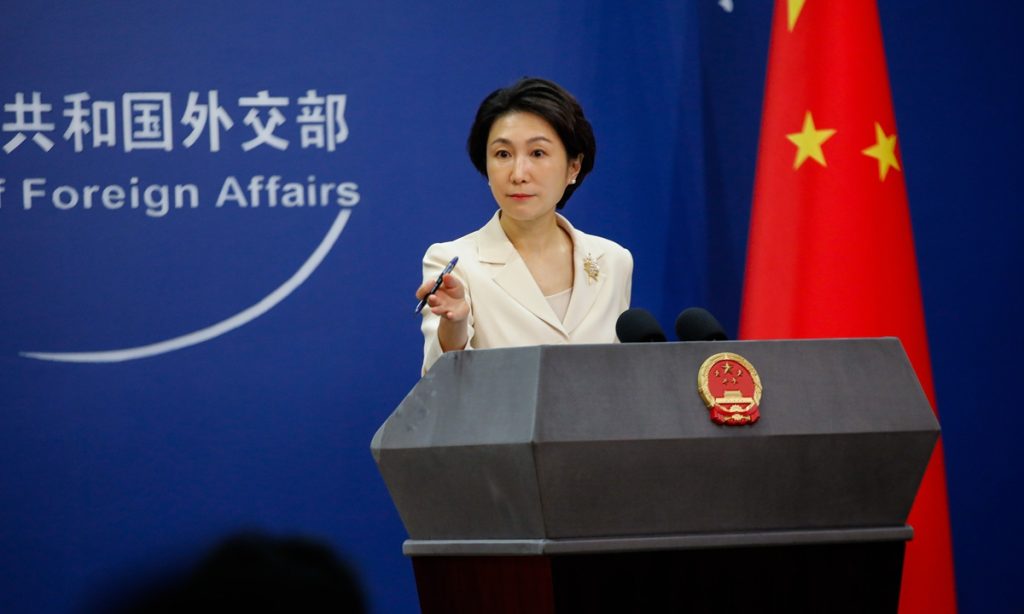
In response to a reporter’s question about European companies’ concerns regarding China’s export controls on rare earths, Chinese Foreign Minister Wang Yi stated on Thursday during a joint press conference with German Foreign Minister Johann Wadephul that rare earth exports have never been, and should not become, an issue between China and Europe. He emphasized that as long as export control regulations are followed and necessary procedures are fulfilled, the legitimate needs of European companies will be guaranteed.
Imposing necessary controls on dual-use items is an exercise of national sovereignty and an international obligation for all countries. China’s policy aligns with international norms and serves to safeguard global peace and stability. Chinese authorities have even established a “fast track” mechanism for European enterprises. Any attempt to stir up this issue between China and Europe is driven by ulterior motives, according to Wang.
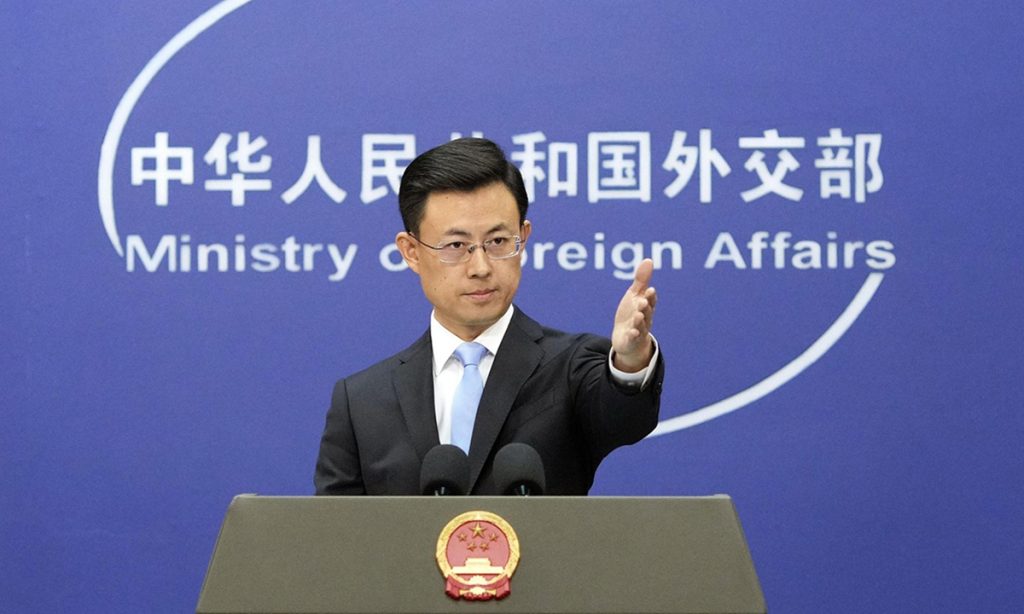
Question: According to media reports, the US side recently invited representatives of Taiwan's military forces to observe the joint air exercise of the US and its allies. Lately, the US House Appropriation Committee approved the Fiscal Year 2026 Defense Appropriation Act, which includes a US$500 million budget for military assistance to Taiwan. What's your comment?
Zhang Xiaogang: We firmly oppose any form of military collusion between the US and China's Taiwan region. Such collusion, be it military aid, arms sale or under any other excuse, reveals the extremely malicious intention of the US to mislead Taiwan into the flames of war, harming Taiwan itself and destroying its interests. We urge the US side to abide by the one-China principle and the three China-US joint communiqués, and stop sending wrong signals to the "Taiwan independence" separatist forces. We warn the DPP authorities that "soliciting US support for independence" is doomed to fail, and "resisting reunification by force" is a dead end.
Yangzhou Zhuyuwan Zoo issued a nationwide matchmaking notice on June 22 for a female capybara named Doubao, who had escaped from the zoo earlier this year.
After Doubao returned home from a two-month adventure, she was met with the cold shoulder from her companions. Despite multiple mediation attempts by the keepers proving ineffective, the zoo is now inviting proposals from zoos across China to find her perfect match.
The matchmaking notice includes a detailed, light-hearted introduction to Doubao's personality and habits. "Doubao is a model of a new-era independent female in the animal kingdom. She is passionate and bold, unafraid to show her affections, and always touches those around her with sincerity and warmth," the notice read.
"She enjoys lazily rolling on the grass and sunbathing, and is eager to making friends with all kinds of small animals. With her unique charm, she has become a beloved 'popular star' and gained a large fan base," the notice said.
The notice adds that this free-spirited soul seeks an equally remarkable capybara partner nationwide. Together, they'll write a warm, romantic love story at Zhuyuwan Zoo.
At the end of the notice, the zoo emphasized that no bride price is required—just "bring bags and move in." The partner will enjoy official accommodation, and the dowry includes a luxury villa and a private swimming pool.
A zoo staff member explained that the matchmaking is an "urgent need." "Doubao is currently in heat, so we're looking for a male capybara for her," the staff member said. As the notice was just released, no matching proposals from other zoos have been received yet, the staff said.
Previously, after Doubao escaped from the zoo for two months, the zoo issued a humorous reward notice seeking her return, which sparked widespread affection among netizens.
The Chinese People's Liberation Army (PLA) Air Force considers China's domestically developed J-16D electronic warfare aircraft "irreplaceable," a top designer recently revealed.
Wang Yongqing, chief expert of the Shenyang Aircraft Design and Research Institute under the state-owned Aviation Industry Corporation of China, made the remarks, cctv.com reported on Saturday.
The J-16D is a dedicated electronic warfare aircraft developed from a fighter jet platform. Citing the assessment from the military, Wang said it is an indispensable and irreplaceable asset in the PLA Air Force's arsenal.
The J-16D was first unveiled at the Airshow China 2021 held in Zhuhai, South China's Guangdong Province. The aircraft was put on static ground display, showing four jamming pods beneath its wings and air inlets, as well as two missiles under its belly, in addition to the two electronic warfare pods on the wingtips.
According to information provided at the exhibition, the J-16D is a new electronic warfare variant developed from the J-16 fighter jet. It integrates reconnaissance, offensive and defensive capabilities, and is designed to effectively counter advanced air defense systems, including early warning and detection, communication, interception, and strike components.
The J-16D is designed to enhance the PLA Air Force's electronic attack capabilities and strengthen its overall systematic combat capacity, reads the description.
In November 2021, shortly after the Airshow China, the military channel of China Central Television reported that the J-16D had begun conducting combat exercises.
The report noted that the J-16D electronic warfare aircraft and the J-20 stealth fighter can operate in tandem, forming a comprehensive aviation electronic warfare system.
Wang Ya'nan, editor-in-chief of Beijing-based Aerospace Knowledge magazine, told the Global Times that the J-16D can fly in formation with other fighter jets. It is capable of conducting electronic suppression and deception missions, and can also launch missiles to destroy hostile radar installations or early warning aircraft.
He added that the J-16D can further enhance the J-20's stealth capabilities. By jamming enemy radar, it can even enable non-stealth aircraft to achieve a degree of de facto stealth.
Future warfare is expected to take place in highly contested electronic environments, and the competition over theelectromagnetic domain could be fierce, Wang Ya'nan said, emphasizing the importance of the J-16D.
Iran's military said it carried out a "devastating and powerful" missile attack on the Al Udeid US airbase in Qatar following Tehran's threat to retaliate for US airstrikes, Reuters reported on its official X account.
Iran's semi-official Tasnim news agency reported that Tehran had begun a missile campaign dubbed the "Annunciation of Victory," targeting US bases in both Iraq and Qatar, Xinhua News Agency reported early Tuesday morning.
Bahrain has temporarily closed its airspace, state news media said, citing the country's transportation and telecommunications ministry, New York Times reported. Earlier on Monday, the Chinese Embassy in Qatar has once again called on Chinese nationals in the country to remain highly vigilant, closely monitor security risks, and continuously improve their personal safety measures, according to a statement released on Monday via the embassy's official WeChat account.
Chinese nationals are advised to minimize unnecessary outings based on their individual circumstances and avoid visiting sensitive areas such as the Al Udeid Air Base to ensure personal safety, said the statement.
Al Udeid Air Base in Qatar is the largest US base in the Middle East, CBS News reported.
Mark Schwartz, a former lieutenant general in the US Army and a defense researcher at the Rand Corporation, said the personnel, aircraft and installations at Udeid would be "extremely vulnerable" given its "close proximity" to Iran, AFP reported.
The US Embassy in Qatar warned American citizens on Monday to shelter in place, and a few hours later, Qatar's foreign ministry announced the country would be closing its air space temporarily, CBS News reported.
Liu Jinsong, Director-General of the Department of Asian Affairs of the Chinese Foreign Ministry, met with Philippine Ambassador to China Jaime A. FlorCruz on Tuesday to lodge a stern representation over a series of recent negative actions by the Philippine side concerning Taiwan-related issues and regional security.
On the same day, when asked to comment on the claims by Philippine Navy spokesperson Roy Vincent Trinidad that the Philippine military and the Taiwan region are discussing the so-called "international cooperation," and are now just one step away from joint exercises, the spokesperson of Chinese Embassy in Philippines said China firmly opposes any form of official contacts between countries that have established diplomatic relations with China with the Taiwan region.
Taiwan is a province of China and an inalienable part of China's territory. The Taiwan question is at the core of China's core interests. The one-China principle is the general consensus of the international community and the political foundation of China-Philippines relations, the embassy said in a statement on Tuesday.
"We urge the Philippine side to abide by the one-China principle, stop any form of official contacts with the Taiwan authorities and stop sending wrong signals to the 'Taiwan independence' separatist forces," the spokesperson said.
"We advise the relevant people on the Philippine side to refrain from provocations on the Taiwan question, as those playing with fire will get burnt," the spokesperson added.
Chinese Foreign Minister Wang Yi met with Kyung-wha Kang, president of the Asia Society, here on Tuesday.
Wang, also a member of the Political Bureau of the Communist Party of China Central Committee, said that recently, progress has been made in the high-level economic and trade meeting between China and the United States, which proves that equal dialogue, mutual respect, and properly handling each other's legitimate concerns align with the common interests of both countries.
Meanwhile, the United States has continued to suppress China's legitimate development rights, and China strongly opposes the unilateral bullying, Wang said.
He called on both countries to achieve positive interactions in the Asia-Pacific region first, thereby establishing a correct way for them to get along with each other and finding effective channels for win-win cooperation.
Noting that the Asia Society has a deep understanding of China's thousands of years of cultural heritage, Kang expressed the willingness to continue sharing fact-based and objective insights about China, and build a dialogue platform to eliminate misunderstandings and promote mutual understanding, together with people with vision in the United States.
Japanese Prime Minister Shigeru Ishiba and Vietnamese Prime Minister Pham Minh Chinh on Monday agreed to maintain a free trade regime in the face of tariffs imposed by the US, while also establishing a "two-plus-two" framework to enhance security cooperation, according to media reports.
Ishiba is also expected to visit the Philippines and discuss intelligence sharing and coast guard cooperation during his trip, media reported.
Analysts said Japan is reaching out to ASEAN countries to alleviate tariff pressures from the US. However, they warned that Tokyo's security cooperation in the region should not "target any third party."
Ishiba arrived in Vietnam on April 27. According to the Japanese news outlet Asahi, both Ishiba and Chinh affirmed their commitment to cooperate in the international community by contributing to the maintenance and strengthening of a free and open international order based on the rule of law.
In the area of security, Ishiba and Chinh agreed to establish a "two-plus-two" framework, with the first meeting of foreign and defense vice ministers to be held in Japan by the end of this year, Japanese media said.
Lü Chao, an expert at the Liaoning Academy of Social Sciences, told the Global Times that against the backdrop of the US waging a global tariff war, Japan is reaching out to ASEAN countries to strengthen ties and consolidate new markets.
Da Zhigang, director of the Institute of Northeast Asian Studies at Heilongjiang Provincial Academy of Social Sciences, said Japan's trade negotiations with the US have not gone smoothly due to Washington's tariff policies, fueling strong domestic calls in Japan to improve relations with other Asia countries. In countering the US tariff war, seeking cooperation with other countries is crucial for Japan - both to expand markets and to offset economic losses, Da said.
Ishiba is scheduled to fly to the Philippines on April 29. Some Japanese media said Ishida aims to deepen Japan's economic and security ties with Southeast Asian nations during his tour as the US administration's involvement in the region "grows increasingly uncertain."
During his stay in Manila starting Tuesday, Ishiba will hold talks with Philippine President Ferdinand Marcos Jr. and is expected to agree to begin discussions on an intelligence-sharing pact and hold joint drills between the two countries' coast guards, according to Kyodo News.
Ishiba claimed before departing Haneda Airport in Tokyo on Sunday, that China "unilaterally attempts to change the status quo by force" in the East and South China seas, according to Kyodo News on Sunday.
"Japan's engagement with ASEAN members should not target any third party. While dispatching senior ruling-party figures to visit China recently, Tokyo is simultaneously courting other countries to counter China, which reveals its ambivalence," Lü said.
Da said that Japan's attempts to deepen security and military cooperation with Southeast Asian countries will be a destabilizing factor in the region.
The US Senate on Tuesday (local time) confirmed David Perdue as the new US Ambassador to China with a vote of 67 in favor and 29 against, CCTV news reported on Wednesday.
US President Donald Trump had previously announced on social media on December 5, 2024 (local time) his nomination of David Perdue for the position.
A Republican, Perdue served as a US Senator from Georgia from 2015 to 2021.
The Chinese Embassy in Chile on Thursday firmly opposed the recent actions and statements by the US over a China-Chile astronomical cooperation project, condemning them as "outright Neo-Monroe Doctrine behavior."
During a recent US Senate hearing, ambassador nominee Brandon Judd disregarded Chile's sovereignty and its right to choose its partners, claiming that he would seek to "restrict China's access to Chile's resources." At the same event, US Senator Jeanne Shaheen criticized China-Chile astronomical cooperation.
Additionally, former US ambassador to Chile Bernadette Meehan pressured the Chilean government to cancel the China-Chile astronomical cooperationTransient Objects Monitoring(TOM)project before leaving office.
In its statement, the Chinese Embassy detailed the TOM project, short for Transient Objects Monitoring, which focuses on time-domain astronomy and aims to observe phenomena such as supernovae, gamma-ray bursts, gravitational wave counterparts and solar system objects using survey telescopes.
This project is of great significance, aiming to uncover fundamental questions such as the origin and evolution of stars, the nature of black holes, the state of neutron stars and the origin of superheavy elements in the universe, the embassy said.
Many survey instruments like TOM are around the world, the embassy said in a statement. In Chile, there is the large synoptic survey telescope (LSST) at the Vera C. Rubin Observatory, which was installed in January this year with investment from the US government, as well as the next generation transit survey at the Paranal Observatory, a collaboration between Chile and European countries.
Additionally, there are important projects such as the Pan-STARRS in the US, the Sloan Digital Sky Survey, the Catalina Sky Survey, and China's Mozi Wide Field Survey Telescope, all of which are key roles in cosmic exploration, it said.
The US side deliberately ignores that its LSST telescope at the Vera C. Rubin Observatory is completely consistent with the scientific nature of the TOM project and covers all the scientific research objectives, the embassy said.
By spreading disinformation about TOM and obstructing normal China-Chile scientific cooperation, it is engaging in outright Neo-Monroe Doctrine behavior.
The TOM project is a collaborative initiative between the National Astronomical Observatory of the Chinese Academy of Sciences and the Catholic University of the North, based on mutual interests and conducted under the principles of equality, mutual benefit, openness, and transparency, the embassy introduced.
In line with Chilean laws and regulations, the project will be jointly built. Once completed, both parties will not only conduct joint observations but will also publicly solicit observation applications from international astronomical institutions, share observation time and engage in collaborative research.
Additionally, the project will support science outreach and astronomy education in Chile and Latin America by organizing scientific seminars and conducting educational activities for young people, according to embassy.