Romance and suspense are carrying Chinese AI micro-dramas abroad. What comes next?

In the evening bustle of Shanghai, a middle-aged woman sits in a metro train car, head down, scrolling through short videos on her phone. She flicks past dozens of clips, yet can hardly find a single micro-drama shot with real actors and cameras.

"At a glance, it's all AI-generated faces and scenes. If you don't look closely, you can barely tell what's real and what isn't," she told the Global Times.

Deep into the night in New York, in a college dorm room, a student comes across a Chinese-made suspense micro-drama on TikTok. Its eerily realistic post-apocalyptic landscapes and subtle character expressions make him think at first that he is watching a trailer for a new Hollywood release.

"Wait… this is actually AI-generated?" he writes in the comments, shocked at how real it looks.

These two seemingly distant scenes are connected by the same thread: Chinese AI-generated micro-dramas. In just the past year or two, they have swept across users' phone screens in China, and, carried by the currents of the internet, are now streaming into global markets.

According to DataEye, a leading industry platform, the global market for AI-produced dramas and animated dramas overseas was expected to be worth about $100 million in 2025, before surging to $650 million in 2026 - a staggering year-on-year increase of 550 percent.

Drawn by this unprecedented boom, what is the current state of Chinese AI micro-dramas going abroad? And what does the industry's broader development look like inside China? The Global Times recently spoke with some Chinese AI micro-drama creators, overseas distribution service providers and industry observers who shared their on-the-ground observations and insights into this fast-growing sector.

Go overseas

An AI-generated micro-drama, The Persian Revenge, reportedly cost just 3,000 yuan ($443) to make, yet within 72 hours of going live on international platform YourChannel, it had generated more than $500,000 in paid revenue, the Hubei Daily reported on May 20.

That more than 1,000-fold return on production costs made the series one of the standout moments in the overseas expansion of China's AI micro-drama industry this year. "Three thousand yuan is only enough for a traditional crew to rent a location in some overseas cities for half a day," read the report.

The use of AI has dramatically lowered production costs across film and television. And, according to Ni Kaomeng, a veteran observer of the AI micro-drama industry and initiator of the China AIGC (AI generated content) Industrial Alliance, the first wave of China's AI micro-dramas going global was driven largely by one thing: saving money.

Before AI technology matured, China's micro-dramas entering overseas markets followed a capital-intensive model, Ni said. In previous years, he recalled, localization often meant filming abroad, or building sets in China and hiring foreign actors. The process was expensive and time-consuming.

AI has changed that cost equation almost overnight. According to the Hubei Daily, in the past, merely translating a micro-drama for overseas release could cost tens of thousands of yuan. Now, AI-powered translation and dubbing can reduce the cost by more than 90 percent, while pushing accuracy above 95 percent.

"As early as the end of 2024, we learned that some teams had already begun using AI to make micro-dramas for overseas audiences," Ni told the Global Times. "There's no need to hire foreign actors, no need to build sets, and translation and dubbing can be generated with a single click. Costs have fallen sharply." And later, this model quickly evolved from simple translation and face-swapping, into something more sophisticated: the creation of dedicated "actor asset libraries" and "scene asset libraries," enabling the industrial-scale production of AI micro-dramas.

As the overseas short drama market continued its explosive growth, the Securities Daily reported on June 1 that orders for China's AI micro-dramas abroad had recently entered a boom phase, "with full-year growth expected to reach as much as 50-fold." Some of the dramas have become highly popular overseas, drawing not only strong viewership but also viral traction from clipped excerpts on social media. Revenge of XXL Wife, for example, has surpassed 200 million cumulative views across related clips.

The surge in output, however, has also brought uneven quality. Ni observed that overseas AI short dramas now show clear stratification.

"The highest-quality productions are directly benchmarked against the standards of US television, and some have even been sold to Netflix," said Ni. Such premium overseas productions are typically polished, narratively complex and far more lucrative than their ordinary Chinese domestic peers, he said.

China's AI micro-dramas going overseas are not a simple matter of "one-size-fits-all" content export. Different countries and regions have different viewing preferences.

According to a white paper on the development of China's micro-drama industry, romance still accounts for more than 70 percent of global micro-drama viewership, with classic tropes such as "dominant CEO romance" and "marriage of convenience" proving especially popular among women aged 45 to 64 in Europe and the US. In Latin America and Germany, audiences tend to favor crime and revenge stories, while younger viewers in Southeast Asia are drawn to fantasy narratives. These preferences largely apply to AI short dramas as well, the Xinhua News Agency reported.

Booms under pressure

As the number of AI micro-dramas going overseas has surged, the "escort fleet" supporting them has also begun to take shape.

"AI-created content is not short of good stories; what it lacks is a complete chain that runs from rights confirmation to going global, from a work to an asset," said a director at Vobile Group, a leading provider of digital copyright protection services. "We're building that path for creators."

Earlier this year, a drama titled Ma: The Word We're Born With went viral and also won several awards at home and abroad. But success quickly brought new challenges. AI-generated content is easier to copy, clip and misuse. However, when the team tried to monetize the work on overseas platforms, they found they were still unable to clear even the basic entry threshold - YouTube channels must meet certain subscriber and watch-time requirements before they can apply for its Partner Program, and only then can they begin earning revenue, according to the director.

"First, we used digital fingerprinting and watermarking technologies to make the drama identifiable, traceable and protected; second, we opened the route to overseas distribution, enabling the drama to be successfully published on foreign platforms and truly begin generating creative income," the director said.

As an industry insider, she has observed a strong push for Chinese AI micro-dramas to go global over the past year or two. "The market now includes both high-quality works that have won praise on mainstream overseas platforms, and fast-paced content tailored to broader audience preferences," she told the Global Times. "Overall, growth has been rapid."

Some service providers also offer copyright protection for AI micro-dramas going overseas, including registering creators' works in a database and embedding digital watermarks. "If infringement occurs, they can help hold the infringers accountable globally," Ni told the Global Times.

At the policy level, for instance, Shanghai released a series of support policies for AI micro-dramas in May, emphasizing the need to strengthen copyright protection, according to the Shanghai Municipal Administration of Culture and Tourism website.

Still, with a flood of players rushing in, the AI micro-drama overseas market is becoming increasingly crowded.

"Intense internal competition has already emerged," said Song Donghuan, a veteran AI short drama creator and founder of StoryStorm, a community for tens of thousands of Chinese AI content creators. Song said that prices for AI micro-dramas purchased by overseas buyers have been falling.

"Last year, some overseas platforms were paying four to five thousand yuan per minute. This year, because of the rapid iteration of domestic AI models and therefore a sharp drop in production barriers, some have driven it down to as low as 500 yuan per minute," Song told the Global Times.

The price barely covers computing costs, and that may be an unhealthy, discouraging trend, he noted. "But creators are still taking the work, because there are so many people in the field. If you don't do it, someone else will."

Culture over code

The sprint into overseas markets is just one reflection of the broader boom in China's AI micro-drama industry.

Data showed that about 128,000 micro-short dramas were launched in the first quarter of 2026, of which roughly 122,000 were AI-generated, accounting for more than 95 percent, the Guangming Daily reported on May 1.

The sector's surge has also triggered an explosive rise in the number of practitioners. Song estimates that around 2 million people in China are now involved in AI micro-drama-related work, including many who have shifted over from the traditional drama industry. "Those who got in earlier did so, in many cases, out of passion and foresight."

Bona Film Group was among the first film companies to make an early bet on AI products. In early 2024, when much of the industry was still using AI only to create a few seconds of brief material, the company set up an AIGMS (AI Generated Movie/Series) production center and began producing AI-driven content in earnest.

"The theme we chose was probably one of the toughest nuts to crack - China's Sanxingdui Ruins site," Quji Xiaojiang, head of Bona Film Group's AIGMS production center, told the Global Times. Back then, the ancient Chinese civilization site, steeped in mystery, was extremely difficult for AI to generate convincingly. It took the team five months of trial and error to produce the first season: a 12-episode AI animated micro-drama titled Sanxingdui - Future Revelation.
"Because of the then technical limitations, we had AI generate the content first, and then we wrote the story based on what it produced," she recalled. A central character in the show was a "humanity's last warrior," a concept that actually came from an image of a doomsday scene generated by AI almost by accident. "That image gave us a lot of inspiration," she said.

As one of the early standout productions in China's AI micro-drama space, Sanxingdui - Future Revelation later proved to be both critically acclaimed and commercially successful, added Quji. She mentioned that the first season achieved strong viewership and earned multiple international industry accolades, including the Official Selection of the American Filmatic Arts Awards 2025.

The entry of professional film companies has been seen by some observers as a victory for the "regular army." But Ni believes the market as a whole remains sharply polarized.

"High-quality productions may account for less than 10 percent, and there is still a huge amount of shoddy AI content on the market," Ni told the Global Times. He nonetheless believes that Chinese domestic AI micro-dramas have already moved beyond their wild-growth phase. "The industry will inevitably become more refined and more standardized."

So what does a "high-quality" AI micro-drama look like? Near the end of the interview, Ni shared with the Global Times reporter a few China-made AI micro-dramas being released overseas. When one of them was opened, a suspense thriller with a cool, desaturated palette, carefully composed shots, nuanced facial expressions and perfect musical scoring immediately drew the viewer into its fictional world. Without the small "AI-generated" label at the beginning, few might be able to tell it apart from a Netflix original.

"Today, technology is no longer the biggest barrier. Storytelling, cultural expression and compliant operations are the real core competencies of AI micro-dramas," Ni said. He predicted that Chinese AI short dramas will continue to deepen their presence in global markets, while also incorporating interactive elements, branching narratives and other new formats. "It is time to bring Chinese original stories to a wider world through AI-powered digital imagery."
Exclusive: China’s newest Antarctic station achieves green energy breakthrough as 50% power supplied by renewables during polar night: station director

China's Qinling Station, the country's newest Antarctica outpost, has achieved a major breakthrough in green energy use, with renewable energy accounting for around 50 percent of its electricity supply even during the harsh polar night, Wang Tao, head of the station, told the Global Times on Tuesday.

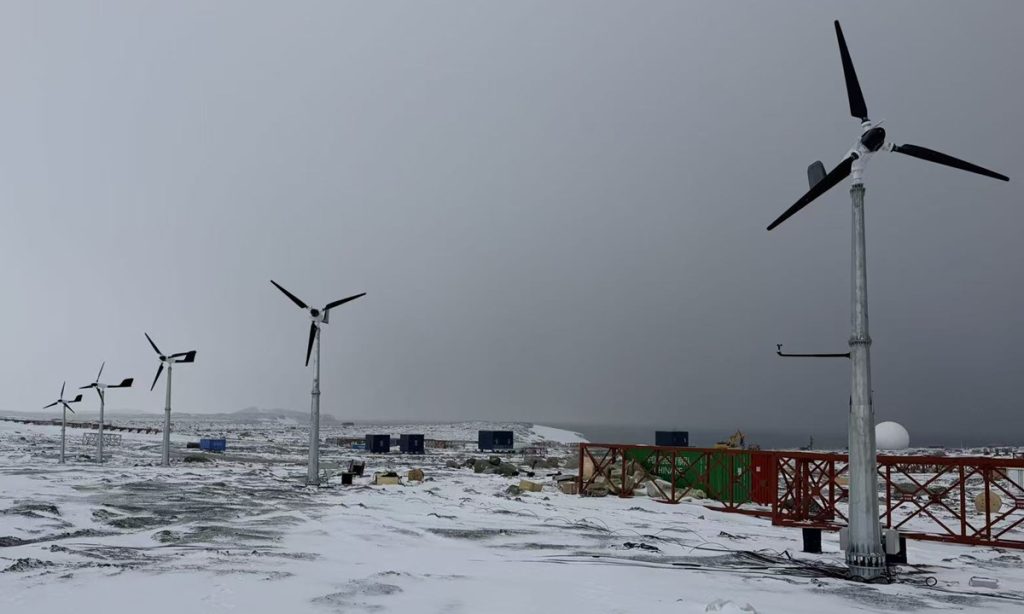
Located on Inexpressible Island in the Ross Sea region, Qinling Station, China's fifth Antarctic research station, uses a wind-solar-hydrogen-storage multi-energy complementary system to reduce reliance on traditional fossil fuels and improve energy sustainability in one of the world's most challenging and bio-vulnerable environments, according to Wang.

China's efforts to tackle the Antarctic power challenge have been closely followed by media. Reuters previously reported on the Qinling Station's energy system, describing it as "a move aimed at helping observe changes on the southern continent and supporting the global response to climate change." Intimedia also highlighted the project as "a green leap on the frozen continent."

Wang said the exploration of clean energy solutions at China's Antarctic stations has been a gradual process. Earlier, China's Taishan Station had already introduced a domestically developed renewable energy system, using wind power and photovoltaic generation as an initial trial.

"Compared with the hydrogen energy system we use now, the system at Taishan Station was relatively simple. It mainly relied on two renewable energy sources: wind power and solar power," Wang said.

He explained that Taishan Station's smaller scale and shorter operational period meant it had lower energy demands compared with a year-round station like Qinling Station. Therefore, when Qinling Station was designed, reducing fossil fuel consumption and building a greener energy supply system became one of the key objectives.

Over the past decade, China's renewable energy technologies have advanced rapidly, providing stronger technical support for extreme environments such as Antarctica. Based on these advancements, Qinling Station was equipped with an integrated energy system combining wind power, photovoltaic generation, hydrogen energy, energy storage batteries and diesel generators.

According to Wang, the system is designed to ensure stable power supply under Antarctica's highly variable conditions. During the austral summer, when the region experiences continuous daylight, photovoltaic power generation can operate efficiently, allowing clean energy to account for more than 60 percent of the station's electricity needs.

Even during the polar night, when there is no sunlight for months, renewable energy can still contribute about 50 percent of the station's power when wind conditions are favorable, Wang said.

"Solar power is greatly affected by the polar day and polar night cycles. During the polar night, photovoltaic generation cannot operate, while wind power also depends heavily on wind conditions," Wang explained. "Therefore, diesel generators remain part of the system to work together with renewable energy and ensure reliable operation of the station."

The green energy system has significantly reduced Qinling Station's dependence on fuel. Without the renewable energy system, the station could consume at least 200 tons more diesel each year. Reducing fossil fuel use not only cuts carbon emissions but also lowers the logistical burden, as "all the fuel has to be shipped from China across over 10,000 kilometers. The savings in transportation costs and time are considerable," Wang said. 

China has been exploring renewable energy applications at Antarctic research stations for years. Qinling Station, officially completed and put into operation in 2024, expanded the approach by integrating multiple energy technologies into a more comprehensive microgrid system.

The operation of Qinling Station's green energy system marks a step forward in China's efforts to build more sustainable polar research infrastructure, offering a potential model for reducing emissions and improving energy resilience at future Antarctic facilities, Wang said.

Exclusive: The Philippines’ latest provocation off China's Huangyan Dao flops again as fuel leak pollutes waters

Two Philippine public vessels (MMOV 3012 and MMOV 3018) ignored repeated dissuasion and warnings from the Chinese side and obstinately intruded into the waters under China's jurisdiction at Huangyan Dao on Thursday. The China Coast Guard (CCG) took necessary countermeasures in accordance with the law to track, monitor and block the Philippine vessels, compelling them to leave the area. The on-site operations by the Chinese side were professional, standardized, legitimate and lawful, the CCG announced in a statement on Thursday. 

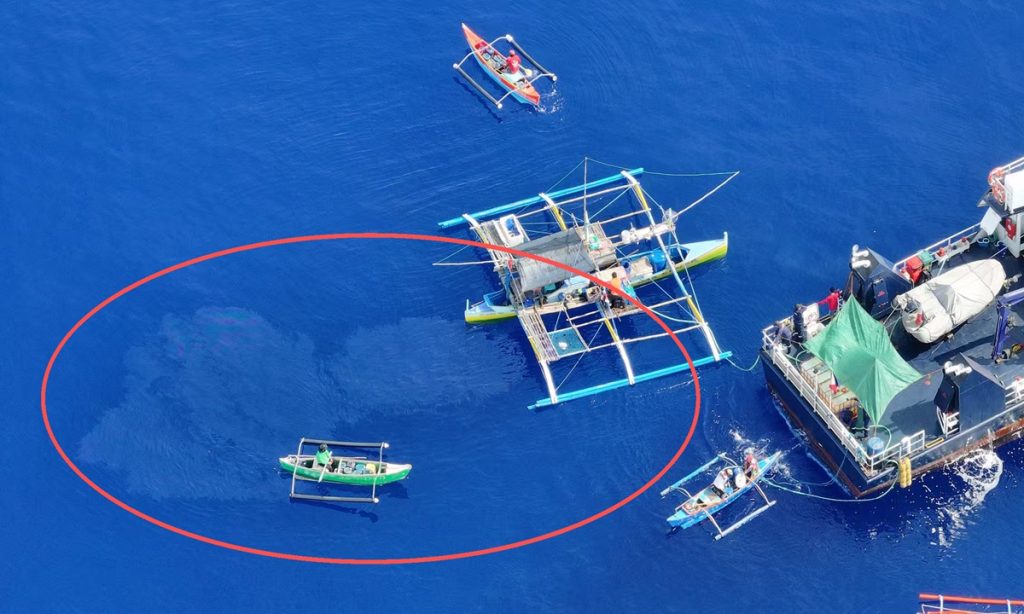
Video footage obtained by the Global Times shows that during this operation, the Philippine official vessels were tasked with two objectives. They not only attempted to forcibly break into waters off China's Huangyan Dao, but also acted as "supply vessels," seeking to transfer materials to Philippine outrigger fishing boat. Adopting an "ant relocation" tactic, they aimed to deliver supplies to Philippine "armed fishermen" conducting harassment and infringement operations around Huangyan Dao.

However, both tasks ended in failure. Subjected to water cannon dispersal, the vessels were effectively kept outside the territorial waters of China's Huangyan Dao by CCG ships. Furthermore, during the attempted ship-to-ship transfer of materials, improper operations caused massive leakage of fuel supplies, creating ecological hazards in the sea areas surrounding Huangyan Dao.

Shortly after major diplomatic events, the Philippines has hastily staged another farce of intruding into the adjacent waters of China's Huangyan Dao. Such acts seriously violate China's territorial sovereignty and maritime rights and interests, laying bare its ugly attempt to take the initiative to stir up South China Sea issue. Moreover, the fuel leakage caused by its clumsy operations further exposes the country as a genuine saboteur of marine ecology in the South China Sea, Chen Xidi, an expert from the China Institute for Marine Affairs under the Ministry of Natural Resources, told the Global Times on Thursday.

The fuel leakage has directly threatened the marine ecological environment around Huangyan Dao. The oil film formed after fuel enters seawater will trigger a sharp drop in dissolved oxygen in the water, while various toxic compounds contained in the fuel will directly poison fish, plankton and other marine organisms. Adhered oil stains may lead to coral bleaching and death. The resulting damages can also spread through the food chain, posing severe ecological risks to the marine environment across a large surrounding area, Chen said.

The Global Times also learned from a source close to the matter that under the pretext of the so-called "New Hero-Fisherfolk" program, the Philippines has mobilized more than 30 outrigger fishing boats to conduct harassment operations against China in waters of Huangyan Dao. These small fishing boats, which are only capable of operating in the offshore waters of the Philippines, lack adequate living support facilities and necessary waste disposal equipment. Their large-scale long-distance operations in open waters will inevitably trigger local marine pollution incidents.

Chen further explained that some Philippine fishermen, under government instructions, have long conducted invasive activities in the waters of Huangyan Dao. Domestic sewage and production waste discharged by their vessels have caused continuous and chronic damage to the local marine ecology. 

The massive illegal gathering and lingering of Philippine fishing boats — which lack basic waste disposal conditions and effective management — has resulted in arbitrary discharge of pollutants into the sea. These vessels are also suspected of adopting destructive fishing methods to catch endangered aquatic wildlife. The cumulative impact of such behaviors continuously undermines the health of the coral reef ecosystem at Huangyan Dao, according to the expert.

"More worryingly, Philippine vessels have frequently carried out illegal activities and provocative traversals in relevant South China Sea waters in recent years, greatly increasing the risks of vessel collisions, oil spills and other maritime accidents. Facts have proven that the Philippines is the real destroyer and major risk source of the marine ecological environment in the South China Sea," Chen added.

Taiwan personnel's attempts to seek spotlight at various events and engage in separatist acts are doomed to fail: FM spokesperson

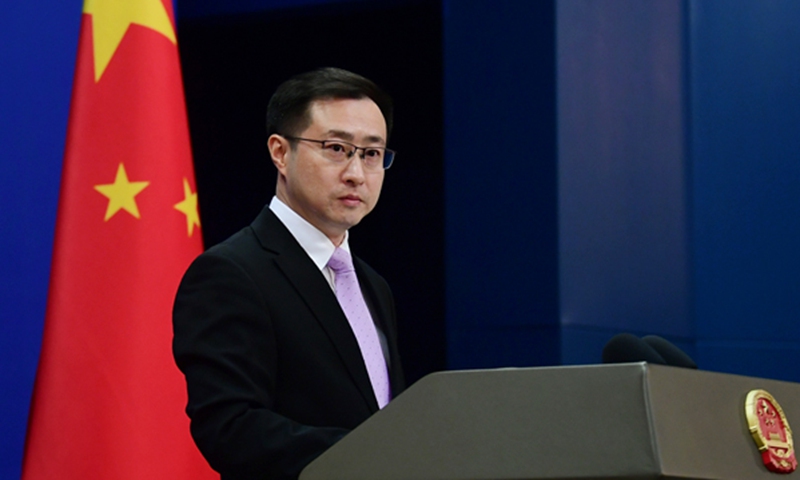
Attempts by personnel of the Taiwan authorities to attend various events in a bid to seek spotlight and engage in separatist activities for "Taiwan independence" are doomed to fail, Chinese Foreign Minister spokesperson Lin Jian said at a press briefing on Friday.

The remarks were made in response to a foreign reporter's question over a reported incident at an Australian Labor Party Conference. Media reports claimed Chinese mainland diplomats asked a representative from Taiwan island to leave the venue, and later left the conference after the Australian Labor Party refused to remove the Taiwan island's participant. 

China urges relevant parties to earnestly abide by the one-China principle, properly handle Taiwan-related issues, and refrain from offering any convenience or platform for "Taiwan independence" separatist acts, Lin said. 

China raises flood-control emergency response for Jiangxi, Hunan, Guangdong

China's Ministry of Water Resources on Sunday upgraded its flood-control emergency response for Jiangxi, Hunan and Guangdong provinces from Level IV to Level III, amid high risks of mountain floods due to the impact of Typhoon Noul.

Jiangxi is in east China, Hunan in central China and Guangdong in south China.

Risk assessments show that 43 counties in contiguous areas across these three provinces will face red-alert-level risks of mountain floods from 8 a.m. on Sunday to 8 a.m. on Monday, indicating a high likelihood of such disasters.

The ministry dispatched two additional working teams to Jiangxi and Hunan to assist and guide flood-control efforts on the front lines.

The ministry called on local water resources authorities to closely monitor the typhoon's path and impact, with particular attention to high-risk locations like mountain rivers, populated areas near mountain gullies, construction sites, tourist attractions in valleys, and areas upstream and downstream of bridges.

It also urged the full use of monitoring and early-warning systems, the prompt delivery of warnings to residents in threatened areas, and timely and decisive evacuations to safeguard people's lives.

China allocates 50 mln yuan for disaster relief in Hubei, Gansu

China's Ministry of Finance and Ministry of Emergency Management on Wednesday allocated 50 million yuan (about 7.34 million US dollars) in central natural disaster relief funds to support emergency rescue and relief work in Hubei and Gansu provinces.

Central China's Hubei Province was recently hit by rare tornadoes, while a landslide occurred in Tanchang County, northwest China's Gansu Province, causing casualties and property losses.

Of the total, 20 million yuan will go to Hubei to support the relocation and resettlement of affected residents and the restoration and reconstruction of damaged homes, while 30 million yuan will be used in Gansu for search and rescue, evacuation, emergency geological disaster response, and checks for potential secondary disaster risks.

China is facing a severe and complex flood-control situation, the Ministry of Finance said, adding that it will closely monitor disaster developments and strengthen funding support for local prevention and relief efforts.

Xi makes instructions on shoe factory fire in east China; blaze reportedly causes major casualties

Chinese President Xi Jinping has made important instructions following a fire at a shoe factory in Jinjiang City under Quanzhou City, east China's Fujian Province, urging all-out efforts to carry out search and rescue operations, identify the cause of the accident and hold those responsible strictly accountable, Xinhua News Agency reported on Thursday. 

The fire broke out at around 12 pm on Thursday, causing major casualties, according to Xinhua.

A total of 183 firefighters and 35 fire engines were sent to the scene. As of now, the open flames have now been extinguished, and the exact cause is still under investigation. Firefighters said that a large amount of clutter had been piled up in the factory building's stairwells, severely hampering firefighting efforts and hindering rescue operations, according to China Central Television (CCTV) News in its latest coverage of the development. 

Earlier, firefighters rushed to the factory of the Huiteng Shoe Industry Co., Ltd in Chendai town shortly after the fire, but as of 3:20 pm on Thursday, rescuers were still unable to enter the burning building as operations to extinguish the blaze and locate missing individuals continued, Xinhua reported. 

According to a report from CCTV News, the fire has resulted in casualties. And following the incident, China's Ministry of Emergency Management has demanded that all resources be mobilized to extinguish the fire, immediately verify the casualty situation, and make effort to rescue those still trapped while providing urgent medical treatment to the injured. 

A joint working group has been dispatched to the site to oversee rescue operations, according to CCTV News.  

Jinjiang is one of China's leading footwear manufacturing hubs and the world's production base for sports shoes. According to official records, Jinjiang's footwear and apparel industry generated an annual output value exceeding 250 billion yuan ($36.74 billion) in 2024, with annual sports shoe production surpassing 1.2 billion pairs — accounting for 20 percent of global output. 

The city is home to more than 7,000 footwear manufacturers and upstream and downstream supporting enterprises, forming a complete industrial chain and production ecosystem.

DPP authorities called ‘traitors to the Chinese nation’ by mainland spokesperson for hype over certain countries’ ‘concern’ over coast guard patrols

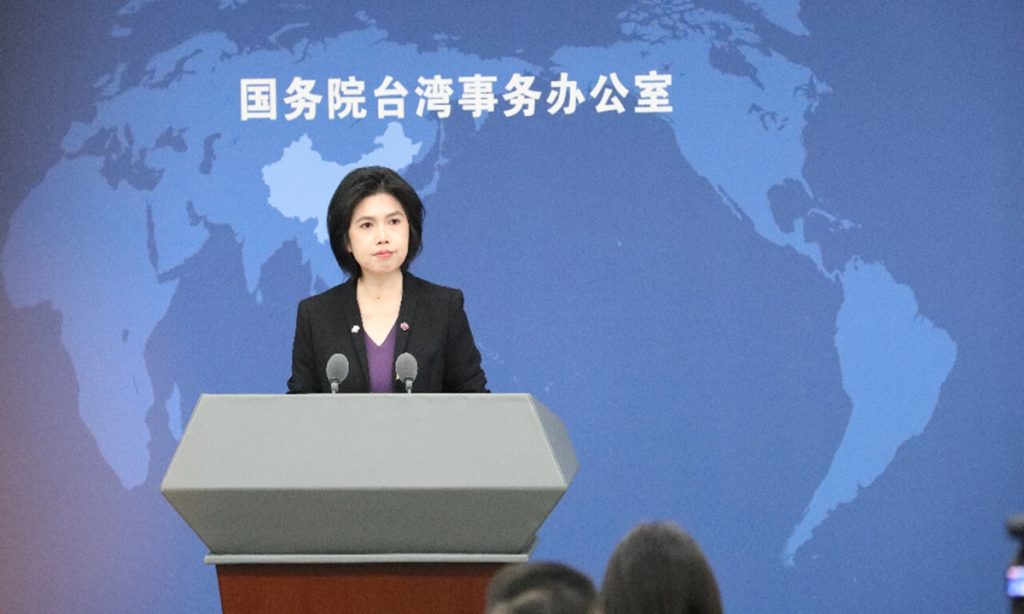
The Taiwan regional Democratic Progressive Party (DPP) authorities have not only compromised and made concessions to Japan and the Philippines, but have also sided with external forces in support of actions that infringe upon China's rights and interests. In doing so, they have harmed the overall interests of the Chinese nation, the shared interests of compatriots on both sides of the Taiwan Straits, and the vital interests of Taiwan's fishermen, Zhu Fenglian, spokesperson of the Taiwan Affairs Office of the State Council said on Thursday. 

Zhu made the remarks when asked to comment on the so-called "concern" expressed by the US, the UK, France, and Germany over law enforcement patrols conducted by China Coast Guard vessels in waters east of Taiwan region, which Taiwan's regional authorities have hyped up.

The DPP authorities have become traitors to the Chinese nation, have already been rejected by compatriots on both sides of the Straits, and will inevitably face reckoning of history, said Zhu. 

China to hold gathering marking CPC's 105th founding anniversary

China will hold a gathering to celebrate the 105th founding anniversary of the Communist Party of China (CPC) at 10 a.m. Wednesday at the Great Hall of the People in Beijing.

Xi Jinping, general secretary of the CPC Central Committee, will confer the July 1 Medal, the Party's highest honor, on model CPC members.

Xi, also Chinese president and chairman of the Central Military Commission, will deliver an important speech.

Outstanding Party members, Party workers, and primary-level Party organizations from across the country will also be honored at the gathering.