At India’s Chinatown, I witnessed two ancient civilizations weathering 200 years as one community

Editor's Note:

In an era of profound global shifts and increasingly complex regional dynamics, a proper understanding of the world must be rooted in "grounded experience" and localized insights. Global Times English edition, in collaboration with the Academy of International and Regional Communication Studies, Communication University of China, is proud to launch "Local Insights," an English-language column dedicated to original, field-based observations.

We invite Chinese scholars and professionals who are studying, conducting exchanges, or working outside China, as well as international students and friends living and studying in China who are familiar with the social contexts of their home countries or third countries, to begin from first-hand field experience and engage with social, cultural, and contemporary issues beyond China. The third article in this column features a Chinese scholar witnessing the two-century-long civilizational integration, mutual accommodation and resilient people-to-people bonds between China and India through her on-site exploration of Kolkata's centuries-old Chinatown and in-depth conversations with local Chinese-Indian residents and Bengali neighbors.
When I got out of a yellow taxi, and stepped onto the narrow, bustling lanes of Tangra in eastern Kolkata, the air was thick with a sensory symphony I had long anticipated but never fully experienced until that moment. The sharp sizzle of woks mixing with the sweet aroma of incense, the distant hum of Bengali conversations and the faint, earthy scent of leather from the old tanneries created an atmosphere that felt both foreign and profoundly familiar. For someone who has spent many years immersed in the study of South Asian politics, history and society - poring over archives, conducting interviews across Eastern and Northern India, and mastering Bengali to better understand local voices - this was not merely another academic field visit. It was a visceral return to the living roots of the China-India friendship, a dimension that no policy paper or diplomatic communiqué could ever fully capture.
Centuries of roots where civilizations converge

Kolkata's Chinatown, widely regarded as India's oldest and historically the largest Chinese community in the subcontinent, represents more than two centuries of grassroots exchange between China and India. Its origins trace back to the late 18th century, when a pioneering Chinese trader, Tong Achew (also known as Yang Dazhao), received a land grant from British Governor-General Warren Hastings around 1778. Achew established a sugar plantation and piggery near what is now Achipur, laying the foundation for what would become a thriving migrant hub. Soon, successive waves of Hakka and Cantonese migrants from Guangdong and Fujian provinces arrived, seeking opportunities in carpentry, trade, shoe-making and small businesses under British colonial rule. By the early 20th century, the community had concentrated in two main areas: the older settlement around Tiretta Bazaar in central Kolkata and the newer, more industrial enclave in Tangra to the east.

What makes this history particularly compelling is the way these migrants, arriving in a colonial context far from their homeland, forged organic bonds with local Bengali society. Unlike state-orchestrated exchanges that dominate modern diplomacy, these early interactions were born of everyday necessity and mutual benefit.

The Hakka community, renowned for its resilience and entrepreneurial spirit, transformed marshy, underdeveloped land in Tangra into a bustling industrial zone centered on the leather tanning industry. Its expertise not only supplied high-quality leather goods to local markets but also generated employment for local Bengali workers, creating interdependent economic ties that transcended ethnic lines. Restaurants and street food stalls became another enduring legacy. The fusion cuisine that emerged, such as Hakka noodles, chili chicken, crispy fried momos, sweet-and-sour dishes, has become an inseparable part of Kolkata's culinary identity, enjoyed by Bengalis, Indians from across the country and even international visitors. This culinary bridge, born from adaptation and innovation, illustrates how people-to-people exchanges can embed themselves into the daily fabric of a society.

As a scholar fluent in Bengali, I found myself uniquely positioned during my visit to engage directly with both elderly Chinese-Indian residents and their Bengali neighbors, bypassing the barriers that often limit outsider perspectives. One afternoon in a quiet Tangra lane, I sat with an 82-year-old Hakka grandmother whose family has operated a modest shoe shop for three generations. Switching effortlessly between the Hakka dialect, English and fluent Bengali, she recounted how her grandfather arrived in the 1930s seeking work opportunities. Her stories were rich with details of community life, including clan associations that provided support networks, schools where children learned both Chinese traditions and Bengali language, and festivals that drew mixed crowds. Nearby, a local Bengali shopkeeper joined our conversation, praising the Chinese community's contributions and sharing memories of joint celebrations. He spoke warmly of how Chinese New Year lion dances and lantern processions have become fixtures on Kolkata's cultural calendar, enriching the city's vibrant multicultural tapestry.

These interactions, along with conversations over shared plates of stir-fried vegetables and momos, and laughter echoing in narrow alleys, reminded me that true people-to-people ties are not abstract concepts. They are tasted in food, heard in code-switching languages and felt in the quiet continuity of neighborhoods that have weathered colonial rule, partition and independence together.

The temples stand as powerful symbols of this cultural syncretism. The iconic Chinese Kali Temple in Tangra, for instance, features Taoist deities alongside Hindu rituals, with incense, Bengali-style offerings and prayers blending seamlessly. During my visit, I witnessed devotees from both communities performing rituals side by side, a living testament to hybrid identities forged over generations. Similar fusion appears in the older Tiretta Bazaar area, where historic buildings and community halls evoke the community's peak influence in the early to mid-20th century. These spaces once hosted schools, drama societies and social gatherings that fostered not only cultural preservation but also genuine integration with Bengali society.

Of course, the history of Kolkata's Chinatown has not been one of uninterrupted harmony. The 1962 China-India border conflict cast a long and painful shadow over the community. Many Chinese-Indian residents, who were born in India and integrated into local life, suddenly faced suspicion, internment in distant camps, social ostracism and economic hardship. Properties were damaged or seized in the wake of riots, and families endured years of uncertainty. The population of Chinese community in Kolkata shrank dramatically from its mid-20th-century peak, dropping to roughly 2000 to 4000 today as younger generations emigrated to China, Canada or elsewhere in search of better opportunities and less fraught identities. Walking past faded shop signs, half-empty community halls and aging structures, one senses the tangible human cost of geopolitical tensions. Families that stayed often pivoted to new professions such as dentistry, restaurants and small-scale businesses, demonstrating remarkable adaptability.
History continues in the coexistence of civilizations

Yet resilience defines the story as much as adversity. Many Chinese-Indian families have remained deeply rooted in Kolkata, contributing quietly to the city's economy and culture. Recent years have seen modest revival efforts, including heritage preservation initiatives by Chinese-Indian associations in collaboration with local authorities and cultural organizations. Annual events, like dragon dances, Mid-Autumn Festival gatherings and food festivals, continue to draw crowds, while younger members of the community are increasingly exploring their dual heritage through education and entrepreneurship. These developments offer hope that the community's legacy can be sustained and even strengthened.

From the vantage point of a decade spent studying India's complex political landscape, economic transformations and societal dynamics, Kolkata's Chinatown provides a profound and often overlooked lens on China-India relations. While contemporary discourse frequently fixates on border frictions, strategic competition or high-level diplomacy, this historic enclave reminds us that the deepest foundations of ties between our two ancient civilizations lie in the lived experiences of ordinary people, like traders, artisans, cooks and neighbors, who have coexisted, intermarried, adapted and created shared culture for over 200 years. In an era when some voices advocate decoupling or view relations through a zero-sum lens, such living bridges underscore the enduring value of mutual respect, pragmatic cooperation and grassroots understanding.

As I departed Tangra in the evening, carrying a bag of still-warm Indo-Chinese pastries and listening to the distant sound of evening prayers drifting from the temple, a renewed sense of optimism washed over me. The challenges facing the China-India relationship are real, but so too are the opportunities embedded in places like Kolkata's Chinatown. Strengthening people-to-people exchanges through expanded youth visits, joint cultural festivals, language and heritage tourism programs, academic collaborations, and even digital storytelling initiatives can help build empathy and foster the mutual trust our two nations need.

For China and India, Kolkata's Chinatown is far more than a relic of colonial-era migration. It is a living invitation to write the next chapter of our shared history together - one conversation, one shared meal and one forward-looking step at a time.

Exclusive: Alleged 'new structure' on China's Huangyan Dao is a temporary research facility

Recently, the Philippine side has repeatedly hyped up an alleged "new structure" that was observed inside the lagoon of China's Huangyan Dao. On Wednesday local time, the Philippine authorities held a briefing, releasing what it called "details" of the so-called floating structure found at China's Huangyan Dao, along with related aerial images, while making irresponsible remarks about China's normal activities at Huangyan Dao.

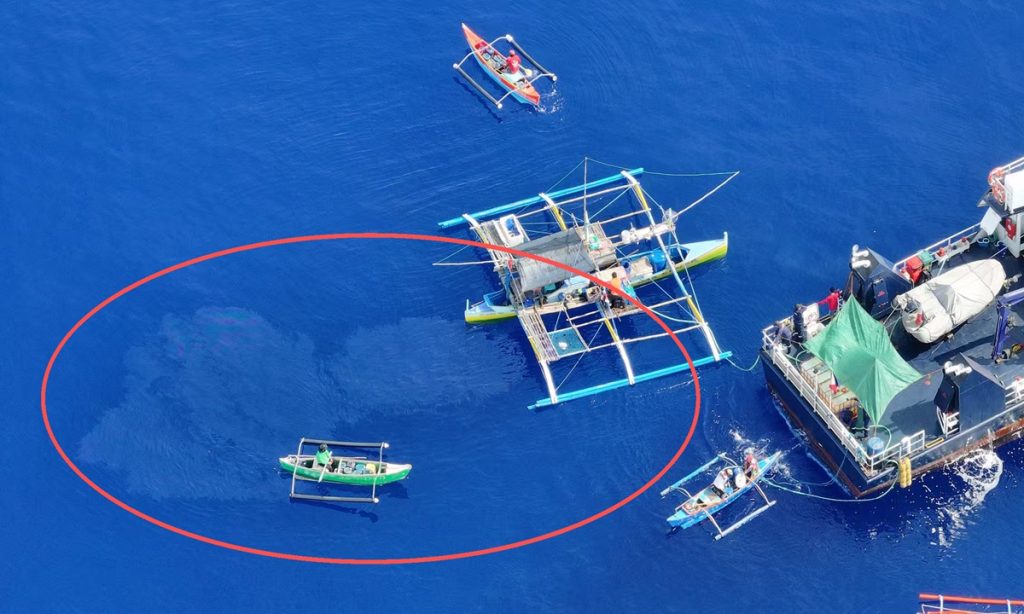
The Global Times reporter has learned that the so-called "new structure" at Huangyan Dao recently hyped by the Philippine side is in fact a temporary scientific research facility set up there by the South China Sea Institute of Oceanology under the Chinese Academy of Sciences. The floating in-situ sampling and experimental platform is designed to improve ecological monitoring, research and forecasting at Huangyan Dao.

Regarding the Philippine side's hype over the so-called "new structure" at Huangyan Dao, Chinese Foreign Ministry spokespersons responded twice at regular press conferences respectively on June 5 and June 9. The spokespersons said China has indisputable sovereignty over Huangyan Dao and its adjacent waters. Any activities carried out by China at Huangyan Dao, including scientific research, are the legitimate rights of a sovereign country.

New hype

According to Philippine media outlets including ABS-CBN, Philippine Coast Guard spokesperson Jay Tarriela displayed photos of the so-called "new structure" recently taken by the Philippine Coast Guard at a briefing on June 10 local time. Tarriela described the so-called "new structure" as a movable floating platform with a deck area of more than 30 square meters and fitted with metal poles.

The chief of staff of the Armed Forces of the Philippines, Gen. Romeo Brawner claimed in an official statement that the structure appeared to be equipped with antennas and that personnel were seen on it. As for the scientific research activities that China had made public, Tarriela gave a vague response, claiming he did not know its specific purpose. Some Philippine officials also claimed that China's activities could be a precursor to more permanent facilities.

After Philippine officials repeatedly sought to play up the issue, the South China Sea Institute of Oceanology under the Chinese Academy of Sciences, which conducted the research activity, released information on Wednesday about the operation and its findings.

The South China Sea Institute of Oceanology said that since May 20, 2026, it has led a comprehensive scientific expedition on the development, evolution and ecological resilience of Huangyan Dao. The expedition aims to deepen understanding of the patterns and trends in the development and evolution of Huangyan Dao's islands and reefs, the mechanisms sustaining coral reef biodiversity, and their ecological connectivity with islands and reefs in the Xisha and Nansha areas. So far, the research team has conducted a comprehensive survey covering the entire Huangyan Dao atoll.

The so-called "new structure" hyped by the Philippine side is in fact a floating in-situ sampling and experimental platform set up by the research team in the waters of Huangyan Dao. The platform can be used for core sampling, time-series observation of environmental factors, and in-situ experiments.

The samples and experimental data obtained from the expedition are of great value for studying the historical development process of Huangyan Dao, the physiological and ecological responses of coral reef organisms to changes in environmental factors, assessing geomorphological evolution and ecological changes in the protected area, and predicting the impact of global climate change, overfishing and other human activities on the ecological security of Huangyan Dao.

"The Philippine side should clearly recognize that the Huangyan Dao National Nature Reserve established by the Chinese government will not exist in name only. Instead, China will only step up its protection of Huangyan Dao," Yang Xiao, a research fellow at the Institute of Peaceful Development under the Chinese Academy of Social Sciences, told the Global Times.

Yang said such protection is reflected in two aspects: On the one hand, China will not allow Philippine personnel to enter Huangyan Dao and its adjacent waters to carry out destructive activities; on the other hand, China will make the protection of Huangyan Dao's ecology a priority, not only reducing the impact of human activities on the ecological security of Huangyan Dao, but also intensifying scientific research and accelerating ecological restoration there.

He further noted that Philippine officials often speculate that China may build "permanent facilities" at Huangyan Dao - such smears are in fact a case of "judging others by one's own petty standards." China has exercised effective control over Huangyan Dao, with maritime rights protection and law-enforcement forces maintaining a regular presence there.

"We can see that since last year, the Southern Theater Command of the Chinese People's Liberation Army and the China Coast Guard have issued monthly updates on combat-readiness patrols and law-enforcement patrols in the territorial waters, airspace and surrounding areas of China's Huangyan Dao," Yang said.

Yang said the Philippine side should recognize the reality that it cannot "meddle in" China's Huangyan Dao, face up to China's continued, peaceful and effective exercise of sovereignty and jurisdiction over Huangyan Dao, and stop its crude and meaningless sensationalization.

Sanctions

China's foreign ministry on Thursday announced sanctions against Philippine Defense Secretary Gilberto Teodoro Jr. who repeatedly made irresponsible remarks on China, which undermines China's legitimate interests and sabotages China-Philippines relations.

To uphold China's sovereignty, security and development interests, China has decided to prohibit Gilberto Teodoro Jr. and his spouse and child from entering the Chinese mainland, Hong Kong and Macao, and not allow organizations and individuals in China to engage in any transaction, cooperation or other activities with him and his spouse and child.

Before China's announcement of the sanction against Gilberto Teodoro Jr., on Wednesday, Philippine Secretary of Foreign Affairs Maria Theresa Lazaro claimed that establishing clear maritime boundaries between the Philippines and Japan is of vital importance to the country's national defense and "has nothing to do" with China. She added, "We should continue with our delimitation talks," even if China keeps objecting or increases pressure, Nikkei Asia reported.

Chinese experts on Thursday said the so‑called Japan-Philippines maritime delimitation talks concern an area east of China's Taiwan island. They noted the move carries ulterior purposes beyond bilateral discussions.

Ding Duo, Director of the Research Center for International and Regional Issues at the National Institute for South China Sea Studies, told the Global Times that the collusion between Japan and Philippines aims beyond "delimitation," but serves as stepping stone to squeeze China's maritime operational space in the waters east of the Taiwan Island.

After so-called delimitation, they could scheme to carry out security cooperation, military collaboration and naval exercises, confining China's maritime activities in this area, Ding elaborated.

The so-called cooperation between Japan and the Philippines cater to both countries' respective ambitions and carries strong Cold War undertones, analysts said, warning against Japan's dangerous neo-militarist resurgence and Philippines' adventurist tendency.

Kyrgyzstan secures first UN Security Council non-permanent seat as Germany suffers historic setback

A closely watched United Nations (UN) Security Council election delivered a mix of continuity and change on local time Wednesday, as Austria, Portugal, Trinidad and Tobago, Zimbabwe, and first-time member Kyrgyzstan secured seats as non-permanent member of the Security Council, while Germany suffered a notable setback, according to UN News.

The election came against the backdrop of widening geopolitical divisions and repeated deadlock within the UN body in resolving conflicts and preventing wars. The five countries were elected by the 193-member General Assembly to serve as non-permanent members of the Security Council for two-year terms beginning on January 1, 2027.

Austria and Portugal won the two seats allocated to the Western European and other States Group, while Trinidad and Tobago was elected from the Latin American and Caribbean Group and Zimbabwe from the African Group.

Kyrgyzstan secured the Asia-Pacific seat after defeating the Philippines in four rounds of voting. Germany, however, suffered what the media refers to as "a historic defeat" in the election, breaking its winning streak.

The Security Council has 15 members: five permanent members with veto power - China, France, Russia, the UK and the US - and 10 non-permanent members elected by the General Assembly for staggered two-year terms.

Bahrain, Colombia, the Democratic Republic of the Congo, Latvia and Liberia will remain on the Council through the end of 2027, providing continuity in its work.

The Security Council has the authority to impose sanctions, authorize peacekeeping missions, establish international tribunals and, in exceptional circumstances, authorize the use of force.

Although non-permanent members of the UN Security Council do not possess veto power, they can directly participate in the deliberation, voting, and agenda-shaping of issues concerning international peace and security. Their institutional influence should not be underestimated, Gao Wanni, the deputy dean of the School of Politics and International Relations at Lanzhou University, told the Global Times on Thursday.

Chen Hong, director of the Asia-Pacific Studies Center at East China Normal University, told the Global Times the election outcome reflects the UN member states' response to the principles of geographical balance, fair representation, and the broader trend toward a multipolar world.

Making history

One of the most dramatic and striking moment of the Wednesday election was the win for Kyrgyzstan. This marked not only a major diplomatic breakthrough for Bishkek, but also the return of Central Asian representation to the Security Council for the first time in nearly a decade, following Kazakhstan's 2017-2018 term, according to the UN official news site release and Central Asian media reports.

"A Truly Historic Moment! Thank You for Your Trust!" the Ministry of Foreign Affairs of Kyrgyzstan wrote in a post on X, attaching a video of the announcement of the final round of voting where Kyrgyzstan defeated the Philippines. In the final round, 142 countries voted in favor of Kyrgyzstan, a two-thirds majority.

After the victory, Kyrgyzstan's Foreign Minister Jeenbek Kulubayev told reporters "we understand now is a turbulent time" and said Kyrgyzstan will work together with other council members, the AP reported on Thursday.

The Philippine local media Inquier.net covered the close contest between the two countries while highlighting that "Kyrgyzstan is among 59 UN member states that have never served on the Security Council."

According to the Philippine News Agency, Malacanang presidential palace on Thursday said domestic political tensions may have contributed to the Philippines' unsuccessful bid for a non-permanent seat in the UN Security Council.

Pass Blue, an independent, US-based digital publication that monitors and reports on activities by the UN, reported on Wednesday that Kyrgyzstan campaigned on a commitment to the UN Charter, multilateralism and conflict prevention. The permanent representative, Aida Kasymalieva, described the race as a milestone in the country's post-independence development.

"This is not only about a seat," she said during a World Federation of United Nations Associations (WFUNA) session on May 20. "It's about the completion of a long chapter of state-building, democratic transition, national consolidation, and international engagement."

Kyrgyzstan's election reflects a deeper demand for representation. Among UN member states, there are numerous landlocked small and medium-sized countries like Kyrgyzstan, yet they have long remained on the margins of the Security Council agenda. In this election, a country that has never held a Security Council seat before defeated the Philippines — which possesses a stronger traditional diplomatic network — by a wide margin of 142 votes to 49. This in itself is a clear signal, Gao said.

The victory also carries broader regional significance. Central Asia sits at the intersection of several issues regularly discussed at the Security Council, including counterterrorism, water security, transnational crime and regional stability. Kyrgyzstan's term is expected to give the region a more direct platform in Council deliberations, the Times of Central Asia report noted.

Bitter defeat

Western media services such as Reuters emphasized more over the fallout of Germany, stating that Germany, which had lobbied hard for a seat, came third for the two places contested by the Western European and Others Group, with 104 votes, against 134 for Portugal and 131 for Austria.

Germany's leading role in rallying support for Ukraine and its close relations with Israel may have cost Berlin the chance of a seat ‌on the UN Security Council, German Foreign Minister Johann Wadephul said on Wednesday, Reuters reported in another report on Wednesday.

Speaking to the press after the vote, Wadephul called the outcome "a real disappointment." German Chancellor Friedrich Merz said: "We applied with conviction. We did not achieve our goal," local media DW reported.

According to RFI, this marks Germany's seventh bid for a non-permanent UN Security Council seat and its first-ever defeat. As Europe's largest economy, a G7 member and one of the major UN contributors, Germany had won all six previous campaigns.

DW noted that Germany is the second-largest contributor to the UN. The DW report also said that Wadephul, who had traveled to the UN in New York for the occasion, told the press afterwards that Germany's positions on the wars in Ukraine and Gaza may have influenced how states voted.

"It also may have cost us votes that Germany must always assume a special responsibility to Israel with regard to the Middle East conflict," Wadephul said.

Euronews wrote that diplomatic circles also viewed critically the fact that the German federal government had failed to clearly describe either the US or the Israeli attacks on Iran as violations of international law. Observers saw this as a potential handicap for the candidacy.

The Times headlined its report "Germany suffers historic UN Security Council defeat." A loss to Austria denies Berlin a seat, breaking a winning streak in the periodic ballots, per the Times.

Germany has been a non-permanent member of the Security Council six times to date: 1977/1978, 1987/1988, 1995/1996, 2003/2004, 2011/2012 and 2019/2020, per the federal government.

The defeats of Germany and the Philippines — both close US allies — show reliance on US-style alliances and bloc confrontation is no longer widely supported by the international community, Li Haidong, a professor at China Foreign Affairs University, told the Global Times on Thursday.

Through unilateral measures such as slashing UN funding, successively withdrawing from multilateral mechanisms, and selectively engaging in international affairs, the US has further worsened the international community's perception of the American-style global governance model, said the experts.

According to Li, the election signals expectations that global governance should shift toward greater equity, balance and stability.

Chinese climber completes Qomolangma-Lhotse ascent in 48 hours, conquers summit from both sides, becoming national first

Luan Yukun, a 33-year-old climber from North China's Hebei Province, completed a consecutive climb of Mount Qomolangma and Mount Lhotse in less than 48 hours, becoming the first Chinese mountaineer to have accomplished both the Qomolangma-Lhotse consecutive climb and earlier ascents of Mount Qomolangma from its southern and northern routes, China Central Television News (CCTV) reported on Sunday.

According to CCTV, Luan reached the summit of Mount Qomolangma at 11:33 am on May 20 and, instead of descending from Camp 4, he continued toward Mount Lhotse, reaching its summit at 11:31 am on May 22, according to CCTV. He had previously summited Mount Qomolangma from the south face of the mountain (on the Nepalese side) in 2023 and from the northern slope of China's Xizang Autonomous Region, in 2024. 

In a close-up image of Luan posted by CCTV in its coverage, on the summit of Mount Lhotse, Luan looked weathered by the climb, with deep marks from his oxygen mask pressed into his face. He said one finger was badly frostbitten and had turned slightly dark, while his right hand and feet were also affected. "The frostbite was quite serious this time," Luan said. "It is a mark left by the climb, and in a way, also a gift."

After serving in the military, Luan carried that drive into work and mountaineering. He climbed the first high-altitude snow mountain of his life in 2017 and summited Muztagh Ata in 2022. A failed Qomolangma-Lhotse attempt in 2023 became "a regret and a motivation." In 2024, he summited Qomolangma from the tougher northern route.

After returning from more than 8,000-meter to lower altitudes, Luan is often asked why he keeps climbing, he says the feeling is hard to explain, but "everything feels worth it." Mountaineering may not always be enjoyable at the moment, he said, yet the happiness and growth it brings last far longer. "A ship is safest in harbor, but that is not what ships are built for," Luan said.

Individuals punished for cyberbullying village official after spreading rumors about her wearing 'gold earrings' during flood relief work

Several individuals have been administratively punished for cyberbullying a village Party secretary in Central China's Hunan Province after spreading rumors about her wearing "gold earrings" while engaged in flood relief work, the Xinhua News Agency reported on Tuesday, citing China's Ministry of Public Security.

According to the report, Shimen County in Hunan Province was recently hit by heavy rainfall. A village cadre remained on the front line of flood control and disaster relief for several consecutive days, going door to door to alert residents, organizing evacuations, arranging temporary shelter, and delivering supplies. Her dedication moved many netizens.

However, while society was rallying to support disaster-relief efforts, a small number of netizens made groundless accusations against her because of the accessories she wore during an interview. They speculated that "the earrings weigh two liang (about 100 grams)," and posted belittling and mocking comments such as "ordinary rural women can't afford gold earrings" and "it would be more touching if she donated the earrings." Their actions interfered with flood relief efforts and created a highly negative impact, according to the Xinhua report.

Public security and cyber security authorities moved swiftly to investigate the case and handled 15 incidents of cyberbullying in accordance with the law. A 44-year-old man surnamed Qin, and a 45-year-old man surnamed Wei, among others, were given administrative penalties in accordance with the law, per Xinhua.

The cyber security department of the public security authorities said it will continue its "Clean Internet" campaign, focusing on tackling prominent online problems such as cyberbullying, online trolls, and online rumors, while cracking down on related illegal and criminal activities to safeguard the lawful rights and interests of the public and maintain order in cyberspace.

China and France open a new chapter in joint exploration of nuclear energy after 40 years of partnership and trust

At the invitation of French President Emmanuel Macron, Chinese President Xi Jinping kicked off his state visit to France on May 5. It coincides with the 60th anniversary of the establishment of diplomatic ties between China and France, and is of great significance to building on past achievements and opening up new prospects for bilateral relations.

During this visit, achieving carbon neutrality goals will, once again, be an important consensus reaffirmed by China and France, in relation to which, the joint promotion of nuclear energy cooperation and development as an important cornerstone for the two countries to achieve carbon reduction goals has attracted great attention.

Yu Jianfeng, Chairman of China National Nuclear Corporation (CNNC), and Jean-Bernard Lévy, Chairman and Chief Executive Officer of Electricité de France (EDF) jointly released A Prospective Study on "Bluebook" on Nuclear Energy to Support for Low Carbon on Monday in Paris.

"China and France, as major nuclear energy-producing countries in the world, play an irreplaceable role in promoting nuclear energy to address climate change and low-carbon transformation," Yu said.

He noted that nuclear energy cooperation is an important part of the comprehensive strategic partnership between China and France. Under the strategic guidance of President Xi and President Macron, nuclear energy enterprises in the two countries have adhered to the principle of "walking on the two legs of technological cooperation and industrial cooperation," and have achieved fruitful results.

The Global Times learned from the CNNC that the cooperation between the CNNC and the EDF opens a new chapter in the two countries' nuclear energy cooperation. This not only reflects the concrete implementation of the important consensus reached by the top leaders of the two countries, but also marks the 40th anniversary of the two countries' nuclear energy cooperation and witnesses the 60th anniversary of the establishment of diplomatic relations between China and France.

The move will also support China in building an innovative nuclear energy international cooperation network. In the future, the two countries will leverage their strengths to build a new pattern of cooperation and development that is interconnected and driven by innovation, supported by industry to promote the improvement of global nuclear governance, and make greater contributions to the economic and social development of China and France, as well as the construction of a global community of shared future for mankind.

One of the most stable cooperation areas

The nuclear energy cooperation between China and France has a long history and continues to deepen. Since the signing of the first cooperation agreement on the peaceful use of nuclear energy in 1982, China and France have always adhered to the principle of equal emphasis on scientific and industrial cooperation. Nuclear energy cooperation has become one of the most stable cooperation areas between the two countries.

As one of the earliest international nuclear energy companies to cultivate business in China, the EDF has been operating in China for more than 40 years and has become one of the largest foreign investors in China's power generation and energy services industry.

For a long time, the EDF has developed and deepened its partnership with the CNNC. The two sides regularly hold high-level meetings, and their cooperation covers multiple areas such as nuclear power research and development, construction, operation and maintenance, and fuel, achieving numerous results.

The CNNC and the EDF have actively participated in the interactive activities of international organizations, sending experts to support the work of international organization technical groups, conducting international research projects, and promoting international coordination and standardization. For example, they participated in the International Atomic Energy Agency (IAEA)'s nuclear safety standards development work, especially the recent Nuclear Harmonization and Standardization Initiative (NHSI) small modular reactor regulatory forum activities initiated by the IAEA, which is aimed at promoting the development of universal standards for small modular reactors, coordinate unified regulatory requirements, and promote the safe and reliable deployment of small modular reactors worldwide.

The EDF and the CNNC have also made important contributions to the standardization work of international standardization organizations and the International Electrotechnical Commission.

As the main force of China and France's nuclear energy technology cooperation, the CNNC has established long-term friendly cooperation relationships with French partners and achieved fruitful cooperation results. In the more than 40 years of nuclear energy technology cooperation, the CNNC and the French Atomic Energy Commission have established seven collaborative laboratories in areas such as reactor thermal hydraulics, severe accident management, aging and life management of pressurized water reactors, fast reactors, nuclear fusion, geological disposal of high-level radioactive waste, decommissioning, and radioactive waste management. The two sides also signed and implemented over 500 special cooperation projects.

The CNNC has also successfully held six nuclear energy technology innovation seminars with the EDF, achieving good results in areas such as severe accidents, additive manufacturing, and material research.

Furthermore, the CNNC has also formed a consortium with Framatome to successfully bid for and implement the main machine installation project of the International Thermonuclear Experimental Reactor (ITER), and have conducted good cooperation with the Orano Group in areas such as the research on uranium resources.
To jointly build "artificial sun"

Cooperation in the peaceful use of nuclear energy has become an important part of the comprehensive strategic partnership between China and France. The scope of nuclear energy cooperation between the two countries is wide-ranging and diverse, but the most "high-energy" project undoubtedly is the ITER large-scale scientific project that the two countries are jointly working on.

Referred to as the world's largest "artificial sun," the ITER project is currently the largest and most influential international scientific project in the world, carrying the hopes of humanity for the peaceful use of nuclear fusion energy.

The ITER device is a superconducting tokamak capable of producing large-scale nuclear fusion reactions, which will help humanity move further toward a continuous source of clean energy. Since its establishment in 2007, the ITER has been one of the largest international scientific engineering cooperation projects in the world. France is the location of the ITER project construction and headquarters, while China is one of the seven equal member parties of the ITER project, contributing 9.09 percent of the construction phase and 10 percent of the operation and decommissioning phase funding.

China joined the ITER project in 2006. Since the implementation of the project, China has always adhered to its international commitments, with Chinese enterprises and researchers bravely shouldering heavy responsibilities and working together with international counterparts to contribute Chinese wisdom and strength to the smooth progress of the project.

The CNNC has been actively involved in the development of the world's largest "artificial sun." In September 2019, a China-France consortium led by the CNNC signed the TAC-1 installation contract with the ITER, marking China's deep involvement in the installation of the core equipment of the tokamak device - the "heart" of the experimental reactor.

On February 29, 2024, the ITER organization signed a new the vacuum chamber module assembly contract with the consortium. China will once again undertake the installation of the core equipment, contributing wisdom and strength to the ITER project alongside France.

Shen Yanfeng, General Manager of the CNNC, said that the signing of the agreement means that the China-France consortium led by the CNNC has become the sole contractor for the main host installation of the ITER project. This demonstrates the CNNC's commitment to implementing President Xi's important instructions, opening up to the outside world, deeply participating in the global nuclear industry chain cooperation, building a new development pattern, promoting high-quality development of the nuclear industry, accelerating the advancement of China's modernization, and striving to create a vivid practice of a global community of shared future for mankind.

This will greatly enhance China's participation and contribution in international large-scale scientific projects, and help implement the "three-step" development strategy of nuclear energy - thermal reactors, fast reactors, and fusion reactors, Shen said.

Direction for nuclear energy development

The release of the "bluebook" undoubtedly takes the cooperation between China and France in the nuclear energy field to a new level.

The Global Times learned that the "bluebook" is the first strategic planning soft science cooperation between Chinese state-owned nuclear energy enterprises and partners in developed Western countries in recent years, marking a significant increase in China's nuclear industry strategic planning and soft science research capabilities and international influence, with obvious uniqueness and importance.

"The 'bluebook' is cooperation between China and France at the strategic research level in the field of nuclear energy, which has never happened before. It was included in the plan during French President Macron's visit to China in 2023," Luo Qingping, President of the China Institute of Nuclear Industry Strategy under CNNC, told the Global Times.

The release of the "bluebook" at the historical moment of the 60th anniversary of the establishment of diplomatic relations between China and France can also be seen as the opening of a new chapter in the nuclear energy cooperation of the two countries. In the future, China and France can combine the contents of the "bluebook" to deepen cooperation in promoting nuclear energy development, including cooperation in exploring third-party markets.

The Global Times found that the "bluebook" interprets the development ideas and practices of China and France in the field of nuclear energy through historical reviews and strategic research, providing an in-depth analysis of the future nuclear energy industry from a macro perspective.

The research mainly covers the current global status and trends of nuclear energy development, the role of nuclear power in addressing the climate change, progress in nuclear power safety and related technology standards, and measures to enhance the economic efficiency of nuclear power coupled with other new energy sources, systematically describing the current status of nuclear energy development and good practices in China and France.

In addition, the "bluebook" fully demonstrates China's strength in nuclear power construction, including its strength in third-generation nuclear power, fourth-generation nuclear power, small modular reactors, and the entire industry chain service capabilities.

It also describes important nuclear power products in China, such as the Hualong One, Linglong One, high-temperature reactors, and fast reactors, making it easier for the international community to understand China's nuclear power technology and product capabilities.

The release of the "bluebook" can expand the influence of Chinese nuclear power companies, especially the CNNC. Through the preparation of the "bluebook," China and France can reach a consensus on nuclear energy technology at the strategic level and enhance the international influence of nuclear energy technology in both countries.

The "bluebook" proposes three initiatives. First, China and France jointly advocate that every country in the world has the right to develop nuclear power, but safety must be the top priority in the development process, meaning that nuclear power must be developed under reliable safety supervision. Second, it points out to the world that nuclear energy can effectively support low-carbon development. China's future nuclear energy technologies such as small modular reactors and nuclear fusion are important solutions to the global energy problem. Third, it calls for urgent action to address the crisis caused by climate change, emphasizing that energy transformation is imperative, and the development of nuclear power is undoubtedly an effective approach.

Based on this "bluebook," there is a possibility of creating an internationally significant guiding document. The IAEA is also very interested in this "bluebook." Next, the CNNC will communicate with the IAEA to try to include the "bluebook" in their publication list for global promotion.

A green future for humanity

According to data in the "bluebook," as of the end of December 2023, France has an installed nuclear power capacity of 61.37 gigawatts in operation, ranking second in the world, with an additional 1.63 gigawatts under construction. China has an installed nuclear power capacity of 53.15 gigawatts in operation, ranking third in the world, with an additional 23.72 gigawatts under construction. Both China and France are major nuclear energy-producing countries, with CNNC and EDF as key players in global nuclear energy development, each having their own advantages in nuclear power construction, operation, maintenance, and fuel supply, accumulating rich experience in the development of nuclear energy.

The continued cooperation between the two countries will provide strong momentum for the utilization and development of global clean energy technologies. China and France will continue to deepen cooperation in multiple areas such as nuclear engineering, nuclear power operation, and nuclear fuel cycle. They will promote the synergy between nuclear energy and renewable energy, formulate public policies focusing on low-carbon growth, accelerate the development of renewable energy such as hydropower, wind power, solar power, and geothermal energy, extend the lifespan of existing nuclear power plants, initiate new nuclear power construction projects, and optimize the cost of energy transition.

Furthermore, the two sides will cooperate to promote advanced nuclear energy technologies such as small modular reactors and fusion reactors. They will work together to advance the commercial deployment of small modular reactors. They will also strengthen international cooperation in the field of nuclear fusion research, the Global Times learned from the CNNC.

At the same time, they will promote the comprehensive application of nuclear energy, popularize technologies such as nuclear heating, seawater desalination, and hydrogen production, diversify the forms of nuclear energy utilization, and reduce greenhouse gas emissions.

They will also conduct research on the impact of climate change using nuclear technology, playing a special role in addressing issues such as water scarcity, soil erosion, land degradation, and increased diseases and pests in plants and animals caused by climate change.

Looking to the future, the CNNC and the EDF have reached a consensus that nuclear energy development is a realistic and important choice in the transition to a clean, low-carbon, safe, and efficient modern energy system, especially as nuclear energy expands from electricity generation to heating, steam supply, hydrogen production, and other applications, potentially accelerating the decarbonization of high-emission industries. The deepening cooperation in the nuclear energy field between China and France will undoubtedly bring more solutions and surprises to humanity.

Economic Watch: Hainan's low-altitude economy soaring high

As a strategic industry, the low-altitude economy is emerging as a forerunner in developing new quality productive forces across China, including the southern island province of Hainan.

On April 24, a remarkable show unfolded as a drone departed from an airport in the provincial capital Haikou and embarked on a three-hour flight to transport a batch of shrimp seedlings from the province's Wenchang City to an airport in Zhuhai, located in the neighboring Guangdong Province, marking the first cross-sea public cargo transport through drone from Hainan to Zhuhai.

"This drone transport will greatly reduce transportation time and enhance the survival rate of aquatic seedlings, thereby playing a crucial role in cost reduction and efficiency improvement," said Yun Yongchao, general manager of a local marine biotechnology company in Wenchang.

He added that aquatic products were previously transported by land and ferry to Guangdong, taking about 13 hours, leading to high losses. "This cross-sea drone flight is a new model that provides us with a new transportation choice."

This cross-sea drone transportation exemplifies the advancement of new quality productive forces in Hainan, greatly improving the transportation efficiency of agricultural products between Hainan and Guangdong. It also contributes to the reduction of logistics costs and injects fresh vitality into the development of the low-altitude economy in both provinces.

As the only tropical island province in China, Hainan has over 300 days available for flights annually, which offers unique environmental advantages for developing the low-altitude economy.

In 2010, Hainan became one of the first pilot regions for low-altitude airspace management reform in the country. The province released a map for unmanned aircraft in 2023, demonstrating early and ongoing efforts to open up low-altitude airspace in the country.

According to Hu Qingqun, deputy general manager of China General Aviation Co., Ltd., as one of the first regions in the country to carry out low-altitude airspace management reform, Hainan has continuously strengthened the foundation for the development of the low-altitude economy by constructing general aviation airports throughout the province.

He noted that Hainan has established a relatively complete low-altitude management system and an efficient infrastructure service system.

In recent years, Hainan has developed its low-altitude economy according to local conditions, leading the country in low-altitude tourism, aviation sports, emergency rescue and other fields.

In 2023, Hainan ranked first in the country in terms of aerial tours and skydiving flights, with about 13,700 hours of flight time, 152,000 takeoffs and landings, and 364,800 passengers, accounting for approximately 45.9 percent, 63.2 percent and 61.1 percent of the national total, respectively, making Hainan the leading province in China's low-altitude tourism, according to official data.

"As a free trade port, Hainan enjoys more preferential policies. Key technologies such as drones and electric aircraft capable of vertical take-off and landing are developing rapidly. At the same time, people's demand for convenient travel and leisure tourism is increasing, and so is the market," said Li Yan, general manager of Sanya Base of China Southern Airlines General Aviation Co., Ltd.

At present, Hainan has more than 160 locally registered general aviation companies and nearly 50 non-local general aviation companies.

Guo Yao, an official of the Hainan Provincial Development and Reform Commission, said that in the future, Hainan will harness its natural resource advantages to focus on commercial short-haul transportation, low-altitude tourism consumption, and marine economic development. This strategic focus aims to establish the province as a pilot demonstration area for the low-altitude economy and to inject new momentum into the high-quality development of the Hainan Free Trade Port.

Smart agriculture shines

A technician inspects the germination status of experimental rice seeds in the three-dimensional seedling-growing greenhouse of a 5G smart farm in Haizhou district, Lianyungang, East China's Jiangsu Province on May 8, 2024. Haizhou district has vigorously implemented science and technology to strengthen agriculture and accelerate rural revitalization. Photo: VCG

2023 Yearender: Fujian ‘boat dwellers’ chart new hope-filled path ashore amid China’s modernization process

Editor's Note:

The end of the year and the start of a new one is a time for reflection and anticipation. Throughout 2023, the Chinese society has undergone various developments and changes, behind which manifests the exploration and practice of Chinese path to modernization.

In light of this, the Global Times is launching a series that elaborates on this unique path through the stories of ordinary people's New Year's wishes. These wishes serve as a window to the changes and achievements of Chinese society as the Chinese modernization has brought Chinese people more concrete consensus, a more vibrant countryside, more imaginative innovation, more balanced education, a more dignified old age with stronger security, and a more confident civilization. This shows that Chinese modernization is the prerequisite and driving force for the great rejuvenation of the Chinese nation.

The first installment shares the story of the boat tribe from Ningde, East China's Fujian Province, who have transitioned from a life of drifting at sea to enjoying prosperity onshore. Their wish is to live fulfilling and prosperous lives on land, which reflects the concrete consensus among Chinese people brought about by Chinese modernization.
"This is my treasure!"

A yellowed newspaper has been carefully preserved in a ziplock bag by Lin Caizeng, a fisherman from Xiapu county, East China's Fujian Province, for 22 years.

The six family photos in this newspaper briefly outline the first half of Lin's life. In 1984, Lin, the third child in a family of six, lived on a small boat, subsisting on fishing. In 1998, with the support of the local government, Lin's family moved from the sea into a new two-room house measuring 35 square meters. In 2001, Lin and his brother raised 1,000 yellow croakers offshore.

After bidding farewell to an unstable life on the boat and embracing a "down-to-earth" lifestyle, Lin's family welcomed a newborn in 2017.

Three years later, following the local government's policy of green development, Lin Caizeng replaced his sea farming nets with environmentally friendly materials.

"This is also my treasure!" said Lin excitedly, while holding the newly issued water and tidal flat aquaculture certificate for the year. He told the Global Times that with the government's support for the industry, "I want to earn more money, raise more fish, and live a better life."
In the Houyu village where Lin lives, the cement wall still retains the slogan "Love your hometown and pay attention to hygiene" written by fishermen shortly after they moved on land. This is Lin's earliest memory of coming ashore.

What he remembers most vividly now is the phrase "Today's China is a country where dreams become reality" declared by Chinese President Xi Jinping in his 2023 New Year Address. This sentence was neatly posted by the village committee.

In southern China, regions such as Guangdong and Fujian have had a long history of generational offshore dwelling communities engaged in fishing known as the Tanka people or boat dwellers.

Usually, families shared a small wooden vessel, and the boat served as a place of residence as well as a workplace. For the Tanka people, the boat served as a place of residence as well as a workplace, with fishing activities taking place on the deck while the cabin serves as the family bedroom and storage area. In the past, the community had no property, and harbored no hopes of a decent life on land.

In front of the house, at the dock, on the fish row, Lin listened to the villagers sharing many stories about boat dwellers like him who "move and get rich" on the shore. He knew that many people had shown great concern for their once-marginalized community. Within these stories and the aspirations, countless Chinese people expressed their determination to escape absolute poverty and their hope for rural revitalization, working tirelessly to transform the vision of a beautiful Chinese modernization into reality, step by step.

"Ending life adrift at sea and settling down on land… I want to chase a better life with my diligent working and persevering spirit," Lin Caizeng made this New Year's wish - simple, pure, and full of hope.

From sea to land
Despite having stepped ashore, the sea still plays an extremely important part in the life of the Lin family.

"In the past, drifting in the sea meant leaving everything to fate. Now, living off the sea means reaping what you sow," Lin said.

Boarding the "Sea Taxi" speedboat at the Houyu village pier, bound for the aquaculture site, along the way, Global Times reporters saw the endless fish farms and neatly arranged fish cages, presenting a busy and orderly scene in the vast "sea fish fields."

In the fields, Lin happily meets his elderly brother, Lin Fangcun.

At sea, Lin Fangcun and Lin Caizeng's fish farms are only a 5-minute boat ride apart. Lin Fangcun is engaged in the cultivation of seaweed, earning a monthly income of over 4,000 yuan ($560). Lin Caizeng, on the other hand, specializes in breeding yellow croakers, with a family annual income exceeding 50,000 yuan.

When the Global Times reporters met them, the broad smiles on their tanned faces speak volumes.

Fujian rarely experiences harsh winters, and even at this time of the year one brother sports flip-flops, while the other wears rubber shoes. It's part of a signature boat-era style that's followed them ashore. "In the past, our whole family of six lived on a boat that was only eight or nine meters long. We ate, drank, slept on the boat. The children didn't even have suitable clothes to wear," recalled Lin Caizeng.

In 1997, as the then deputy secretary of the Fujian provincial committee of the Communist Party of China (CPC), Xi led the local government in initiating the overall relocation of the boat dwellers. Relevant departments made continuous efforts to address the issue, taking into account the tribe's production and living habits, exempting various land taxes and fees, providing housing construction subsidies, and allowing the community to repay housing arrears in installments. By the early 21st century, the conundrum of the boat dwellers' settlement on land had completely been resolved.

Since then, local authorities have shifted more attention to the shore. They have availed technical training to the community, solved funding issues in production and entrepreneurship, and gradually promoted targeted assistance, helping the fishermen ashore completely detach themselves from the label of absolute poverty that has lasted for thousands of years.

With the increase in income, most households in Houyu village have expanded their initial single-room houses into two or three-story buildings. Faced with the dilemma of insufficient living space due to the expanding families of some villagers, the town has invested about 1.1 million yuan to build a canteen especially designated for the elderly and a senior citizen's residence on the site of a local school. The current project is in the final settlement phase, ensuring that the elderly who are willing to move in can celebrate the New Year in their bright new homes.

After settling down on land, Lin Fangcun and Lin Caizeng live in adjacent rooms on the second floor of a jointly built three-story building. Lin Caizeng hopes to get a good price for yellow croaker this year "to [help] renovate the three floors of the house and expand aquaculture with more capital."

The four siblings of Lin's family also plan to take another group photo during the Chinese New Year, adding the "new treasures" into the sealed bag.

From poverty to prosperity
Jiang Chengcai has had many wishes in his life, but he jokingly said that his current most urgent wish is to "lose weight successfully." Though not a tall man, the 56-year-old retired volunteer guide from Xiaqi village, Fu'an, which is also a coastal city 15 minutes away from Xiapu county via high-speed rail, holds himself in a straight posture. It is hard to imagine that this straight frame endured 30 years of hunched boat living on a cramped vessel.

"In the past, when the weather was good, we would go out to catch fish. But when there was a typhoon, our whole family would go hungry. Our parents were afraid that the children would fall into the water, so they tied us tightly to the boat with ropes, and when the luck was bad, the boats would capsize and our home would be lost. We would lose everything," Jiang told the Global Times.

"But now I have a carefree and comfortable life, eating more food and getting fatter and fatter," he joked.

Since he can remember, Jiang has lived on a boat. The few moments of happiness he has from the period are of calm nights, when he would lie on the edge of the boat and gaze at the moon in the sky and admire the lights on the shore.

His parents named him Chengcai in Chinese, which literally means to achieve success and wealth, hoping that he would escape the hardships of his upbringing. But before the age of 30, Jiang's only wish was to live like the people on the shore one day, and to have a house and a warm light in his home.

Jiang still remembers his first day of relocation ashore in 1999. A family of six carried their belongings, including old cotton wadding and iron pots, and moved them into Xiaqi village. Inside the house, there were spring beds and a liquefied gas stove provided by the government.

Nowadays, whenever Jiang has free time, he loves to take tourists for walks around his hometown. Here, rows of yellow-walled and red-tiled buildings are scattered, and nearby, fishing boats return fully loaded at the dock. Just a street away in the market, calls from the fishermen who have turned to seafood wholesale can be heard as they direct customers to scan QR codes to make payments.
On December 14, Jiang participated in a speech competition called "The Past in the Words of the People of That Year." He shared his journey from being landless, penniless, and uneducated to making his first fortune in the aquaculture industry after coming ashore. He then led over 30 villagers in the construction of pile foundations, transforming from someone without a place to live to someone who builds houses for others.

"I want to tell more people that the boat dwellers also have dreams," Jiang said.

Jiang wanted to express his gratitude to the village and town officials. "After coming ashore, villagers would 'seek the Party chief' when they had no money or no job, and even when naming their children."

With the caring support of generations of local officials, the average annual income of fishermen in Xiaqi village increased from less than 1,000 yuan in 1997 to 30,360 yuan in 2022. The collective income of the village also grew from zero to 630,000 yuan.

They became wealthy both monetarily and mentally. Previously, 95 percent of the Tanka people in the village were illiterate, but now there are over 290 university students among them.

From struggling to thriving

Chen Ling, the 34-year-old Party chief of Xiaqi village, felt gratified that "villages that hail from the sea," like Xiaqi and Houyu, are becoming increasingly famous.

Chen is also a descendant of the boat dwellers. In 2018, Chen, who was working in Beijing, heard his hometown needed talents in the cultural arena. He resolutely quit his well-paying job and returned to the village to contribute to rural revitalization.

As a first-generation college graduate returning to his hometown, he actively led the villagers in creating a seafood street and committing to building a prosperous countryside where local people can peacefully engage in farming, fishing, and aquaculture.

"I hope to truly drive everyone to achieve the leap from 'settling down' to 'becoming prosperous,'" Chen told the Global Times.

Now, not only are young college students returning home to start their own businesses, but Xiaqi village has also attracted tourists and field research groups from all over the country. Some foreign heads of state have also paid visits to this small fishing village that was thought to be unremarkable in the past.

In September 2023, Zambian President Hakainde Hichilem visited China and went to Xiaqi village for an inspection.

"I believe this is another example of promoting national development, not serving specific groups, but for the well-being of all people, which is crucial," Hichilema said in a media interview in September in Beijing.

Hichilema said he was deeply moved by the personal involvement of the Chinese leadership in improving the plight of disadvantaged populations, finding the root cause of the problem.

I told my colleagues that I hope you can carefully understand and connect with the situation in our country, Hichilema noted.

In various communication activities, Chen has become increasingly proud of his profession. He is well aware that the practical success of the transformation of the boat dwellers, in which he participated, exemplifies China's unique path to modernization.

With this vision, the former sea of sorrow has long since been turned into a sea of prosperity and wealth. In front of this sea, the drifters who suffered from discrimination in the old era have realized a new life, shared the fruits of the country's modernization equally, and now have their own internal motivation to pursue happiness and create wealth.

Boat dwellers are now ashore, out of poverty, and pursuing better life. Their inspirational stories and aspirational journeys are just beginning.

Sustainability in action: Pernod Ricard China's enduring support for UG 13 Award

Pernod Ricard China, the internationally renowned spirits and wine group and a pioneer in sustainable practices, continues its unwavering dedication to fostering innovation and sustainability by supporting the Universities for Goal 13 Award (Greater China Competition) for the third consecutive year as the final competition successfully concluded on Friday.
As an innovation competition facing university students from around the world, the UG 13 Award encourages young people to adopt an interdisciplinary approach to find feasible and innovative solutions to tackle the pressing challenges of the Sustainable Development Goals, which this year outlines climate actions, such as “responsible production and consumption”, “natural resources conservation”, “sustainable agriculture” and “carbon peaking/neutrality and renewable energy”.

Co-hosted by the Institute for Sustainable Development Goals of Tsinghua University (TUSDG) and the Chinese University of Hong Kong (CUHK), the UG 13 (Greater China Competition) received works from about 150 students from different universities in China, with A Kernel of Corn Team, Upcyclothes Team, and Buildings as Carbon Sinks Team obtaining the “Winning Prize”. These groups will later compete in the global finale as the Chinese representatives.

Empowering youth for climate action

The UG 13 Award is an annual international competition that brings together global innovative young talents, according to the United Nations Sustainable Development Solutions Network.

In China, this event has seen a collaborative innovation in sustainable development education between Pernod Ricard China and the TUSDG for three years in a row.

To further inspire students and empower their proposals’ feasibility and commercial potential, Pernod Ricard China set up two "Pernod Ricard China Special Awards" for projects that demonstrate exceptional promise in advancing sustainability and introduced two mentors to provide industry insights and help nurture entrepreneurship among young people.

The company's exclusive sponsorship not only amplifies the importance of sustainable development but also underscores the pivotal role of corporate partnerships in driving meaningful change.

As a responsible corporate citizen, the company recognizes the importance of nurturing young talents and fostering innovation, essential components in building a brighter, more sustainable future for generations to come.

“Pernod Ricard is committed to sustainable development and believes that young people are the key to driving the sustainable transformation of the world. By providing young students with innovative resources and platforms, we empower them so as to promote sustainable development. At the same time, exchanging ideas with students can also inspire us on our projects in related fields,” said Kathie Wang, Vice President of Communications and S&R at Pernod Ricard China.
Leading the way towards a sustainable future

The sponsorship of the UG 13 Award is part of Pernod Ricard’s efforts to directly support the United Nations Sustainable Development Goals, aligning with their 2030 plan in the corporate Sustainability & Responsibility roadmap.

Zhu Xufeng, Executive Director of TUSDG, lauded the enduring partnership among TUSDG, CUHK, and Pernod Ricard China on the competition, emphasizing the importance of long-term commitment in addressing global challenges such as climate change.

“Sustainability is not something that can be achieved overnight. It requires long-term commitment and collaboration by all parts of society. We’re delighted to join hands with Pernod Ricard China to host the UG13 Award’s Greater China competition for the past three years, providing a platform for creative students to exhibit their talent. We look forward to deepening the partnership so that together we can cultivate more young talent that puts a premium on sustainability, has the requisite skills and will work to tackle global challenges such as climate change,” said Zhu.
With a shared vision of green development, the collaboration of Pernod Ricard China and TUSDG to promote the advancement of sustainable development goals in China can date back to 2019, when the two parties jointly launched the first-ever "Sustainable Bar Operation Initiatives and Application Guidelines" for China, leading the industry towards sustainable operations.

In 2020, they collaborated to host a forum on sustainable development and jointly released a public service film. In the same year, Pernod Ricard China supported the sustainability scholarship at the School of Public Policy and Management of Tsinghua University.

Pernod Ricard China remains steadfast in its commitment to sustainability, continuously seeking new avenues to promote environmental stewardship and social responsibility.