At India’s Chinatown, I witnessed two ancient civilizations weathering 200 years as one community

Editor's Note:

In an era of profound global shifts and increasingly complex regional dynamics, a proper understanding of the world must be rooted in "grounded experience" and localized insights. Global Times English edition, in collaboration with the Academy of International and Regional Communication Studies, Communication University of China, is proud to launch "Local Insights," an English-language column dedicated to original, field-based observations.

We invite Chinese scholars and professionals who are studying, conducting exchanges, or working outside China, as well as international students and friends living and studying in China who are familiar with the social contexts of their home countries or third countries, to begin from first-hand field experience and engage with social, cultural, and contemporary issues beyond China. The third article in this column features a Chinese scholar witnessing the two-century-long civilizational integration, mutual accommodation and resilient people-to-people bonds between China and India through her on-site exploration of Kolkata's centuries-old Chinatown and in-depth conversations with local Chinese-Indian residents and Bengali neighbors.
When I got out of a yellow taxi, and stepped onto the narrow, bustling lanes of Tangra in eastern Kolkata, the air was thick with a sensory symphony I had long anticipated but never fully experienced until that moment. The sharp sizzle of woks mixing with the sweet aroma of incense, the distant hum of Bengali conversations and the faint, earthy scent of leather from the old tanneries created an atmosphere that felt both foreign and profoundly familiar. For someone who has spent many years immersed in the study of South Asian politics, history and society - poring over archives, conducting interviews across Eastern and Northern India, and mastering Bengali to better understand local voices - this was not merely another academic field visit. It was a visceral return to the living roots of the China-India friendship, a dimension that no policy paper or diplomatic communiqué could ever fully capture.
Centuries of roots where civilizations converge

Kolkata's Chinatown, widely regarded as India's oldest and historically the largest Chinese community in the subcontinent, represents more than two centuries of grassroots exchange between China and India. Its origins trace back to the late 18th century, when a pioneering Chinese trader, Tong Achew (also known as Yang Dazhao), received a land grant from British Governor-General Warren Hastings around 1778. Achew established a sugar plantation and piggery near what is now Achipur, laying the foundation for what would become a thriving migrant hub. Soon, successive waves of Hakka and Cantonese migrants from Guangdong and Fujian provinces arrived, seeking opportunities in carpentry, trade, shoe-making and small businesses under British colonial rule. By the early 20th century, the community had concentrated in two main areas: the older settlement around Tiretta Bazaar in central Kolkata and the newer, more industrial enclave in Tangra to the east.

What makes this history particularly compelling is the way these migrants, arriving in a colonial context far from their homeland, forged organic bonds with local Bengali society. Unlike state-orchestrated exchanges that dominate modern diplomacy, these early interactions were born of everyday necessity and mutual benefit.

The Hakka community, renowned for its resilience and entrepreneurial spirit, transformed marshy, underdeveloped land in Tangra into a bustling industrial zone centered on the leather tanning industry. Its expertise not only supplied high-quality leather goods to local markets but also generated employment for local Bengali workers, creating interdependent economic ties that transcended ethnic lines. Restaurants and street food stalls became another enduring legacy. The fusion cuisine that emerged, such as Hakka noodles, chili chicken, crispy fried momos, sweet-and-sour dishes, has become an inseparable part of Kolkata's culinary identity, enjoyed by Bengalis, Indians from across the country and even international visitors. This culinary bridge, born from adaptation and innovation, illustrates how people-to-people exchanges can embed themselves into the daily fabric of a society.

As a scholar fluent in Bengali, I found myself uniquely positioned during my visit to engage directly with both elderly Chinese-Indian residents and their Bengali neighbors, bypassing the barriers that often limit outsider perspectives. One afternoon in a quiet Tangra lane, I sat with an 82-year-old Hakka grandmother whose family has operated a modest shoe shop for three generations. Switching effortlessly between the Hakka dialect, English and fluent Bengali, she recounted how her grandfather arrived in the 1930s seeking work opportunities. Her stories were rich with details of community life, including clan associations that provided support networks, schools where children learned both Chinese traditions and Bengali language, and festivals that drew mixed crowds. Nearby, a local Bengali shopkeeper joined our conversation, praising the Chinese community's contributions and sharing memories of joint celebrations. He spoke warmly of how Chinese New Year lion dances and lantern processions have become fixtures on Kolkata's cultural calendar, enriching the city's vibrant multicultural tapestry.

These interactions, along with conversations over shared plates of stir-fried vegetables and momos, and laughter echoing in narrow alleys, reminded me that true people-to-people ties are not abstract concepts. They are tasted in food, heard in code-switching languages and felt in the quiet continuity of neighborhoods that have weathered colonial rule, partition and independence together.

The temples stand as powerful symbols of this cultural syncretism. The iconic Chinese Kali Temple in Tangra, for instance, features Taoist deities alongside Hindu rituals, with incense, Bengali-style offerings and prayers blending seamlessly. During my visit, I witnessed devotees from both communities performing rituals side by side, a living testament to hybrid identities forged over generations. Similar fusion appears in the older Tiretta Bazaar area, where historic buildings and community halls evoke the community's peak influence in the early to mid-20th century. These spaces once hosted schools, drama societies and social gatherings that fostered not only cultural preservation but also genuine integration with Bengali society.

Of course, the history of Kolkata's Chinatown has not been one of uninterrupted harmony. The 1962 China-India border conflict cast a long and painful shadow over the community. Many Chinese-Indian residents, who were born in India and integrated into local life, suddenly faced suspicion, internment in distant camps, social ostracism and economic hardship. Properties were damaged or seized in the wake of riots, and families endured years of uncertainty. The population of Chinese community in Kolkata shrank dramatically from its mid-20th-century peak, dropping to roughly 2000 to 4000 today as younger generations emigrated to China, Canada or elsewhere in search of better opportunities and less fraught identities. Walking past faded shop signs, half-empty community halls and aging structures, one senses the tangible human cost of geopolitical tensions. Families that stayed often pivoted to new professions such as dentistry, restaurants and small-scale businesses, demonstrating remarkable adaptability.
History continues in the coexistence of civilizations

Yet resilience defines the story as much as adversity. Many Chinese-Indian families have remained deeply rooted in Kolkata, contributing quietly to the city's economy and culture. Recent years have seen modest revival efforts, including heritage preservation initiatives by Chinese-Indian associations in collaboration with local authorities and cultural organizations. Annual events, like dragon dances, Mid-Autumn Festival gatherings and food festivals, continue to draw crowds, while younger members of the community are increasingly exploring their dual heritage through education and entrepreneurship. These developments offer hope that the community's legacy can be sustained and even strengthened.

From the vantage point of a decade spent studying India's complex political landscape, economic transformations and societal dynamics, Kolkata's Chinatown provides a profound and often overlooked lens on China-India relations. While contemporary discourse frequently fixates on border frictions, strategic competition or high-level diplomacy, this historic enclave reminds us that the deepest foundations of ties between our two ancient civilizations lie in the lived experiences of ordinary people, like traders, artisans, cooks and neighbors, who have coexisted, intermarried, adapted and created shared culture for over 200 years. In an era when some voices advocate decoupling or view relations through a zero-sum lens, such living bridges underscore the enduring value of mutual respect, pragmatic cooperation and grassroots understanding.

As I departed Tangra in the evening, carrying a bag of still-warm Indo-Chinese pastries and listening to the distant sound of evening prayers drifting from the temple, a renewed sense of optimism washed over me. The challenges facing the China-India relationship are real, but so too are the opportunities embedded in places like Kolkata's Chinatown. Strengthening people-to-people exchanges through expanded youth visits, joint cultural festivals, language and heritage tourism programs, academic collaborations, and even digital storytelling initiatives can help build empathy and foster the mutual trust our two nations need.

For China and India, Kolkata's Chinatown is far more than a relic of colonial-era migration. It is a living invitation to write the next chapter of our shared history together - one conversation, one shared meal and one forward-looking step at a time.

Exclusive: Alleged 'new structure' on China's Huangyan Dao is a temporary research facility

Recently, the Philippine side has repeatedly hyped up an alleged "new structure" that was observed inside the lagoon of China's Huangyan Dao. On Wednesday local time, the Philippine authorities held a briefing, releasing what it called "details" of the so-called floating structure found at China's Huangyan Dao, along with related aerial images, while making irresponsible remarks about China's normal activities at Huangyan Dao.

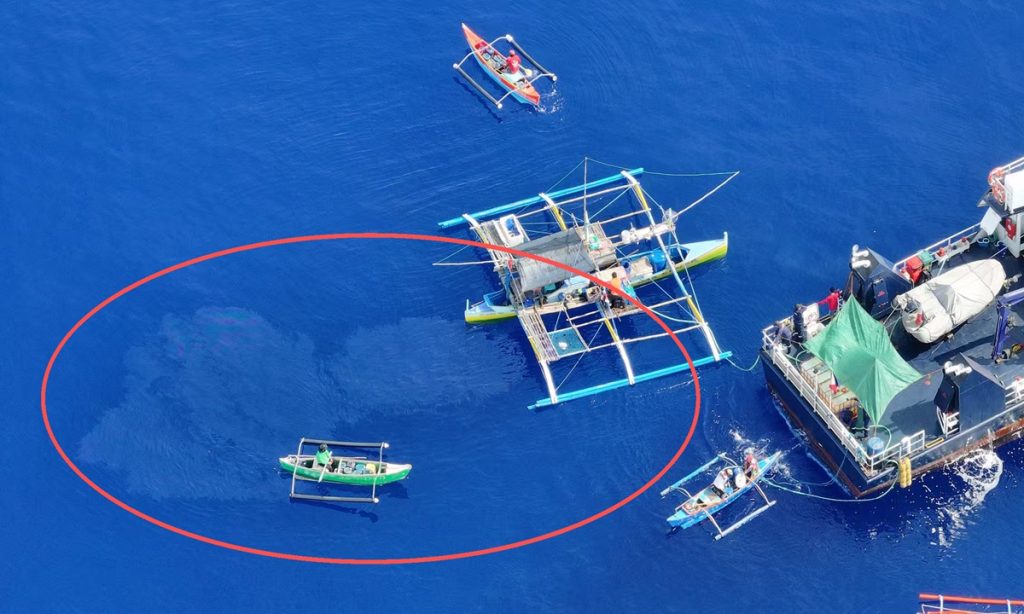
The Global Times reporter has learned that the so-called "new structure" at Huangyan Dao recently hyped by the Philippine side is in fact a temporary scientific research facility set up there by the South China Sea Institute of Oceanology under the Chinese Academy of Sciences. The floating in-situ sampling and experimental platform is designed to improve ecological monitoring, research and forecasting at Huangyan Dao.

Regarding the Philippine side's hype over the so-called "new structure" at Huangyan Dao, Chinese Foreign Ministry spokespersons responded twice at regular press conferences respectively on June 5 and June 9. The spokespersons said China has indisputable sovereignty over Huangyan Dao and its adjacent waters. Any activities carried out by China at Huangyan Dao, including scientific research, are the legitimate rights of a sovereign country.

New hype

According to Philippine media outlets including ABS-CBN, Philippine Coast Guard spokesperson Jay Tarriela displayed photos of the so-called "new structure" recently taken by the Philippine Coast Guard at a briefing on June 10 local time. Tarriela described the so-called "new structure" as a movable floating platform with a deck area of more than 30 square meters and fitted with metal poles.

The chief of staff of the Armed Forces of the Philippines, Gen. Romeo Brawner claimed in an official statement that the structure appeared to be equipped with antennas and that personnel were seen on it. As for the scientific research activities that China had made public, Tarriela gave a vague response, claiming he did not know its specific purpose. Some Philippine officials also claimed that China's activities could be a precursor to more permanent facilities.

After Philippine officials repeatedly sought to play up the issue, the South China Sea Institute of Oceanology under the Chinese Academy of Sciences, which conducted the research activity, released information on Wednesday about the operation and its findings.

The South China Sea Institute of Oceanology said that since May 20, 2026, it has led a comprehensive scientific expedition on the development, evolution and ecological resilience of Huangyan Dao. The expedition aims to deepen understanding of the patterns and trends in the development and evolution of Huangyan Dao's islands and reefs, the mechanisms sustaining coral reef biodiversity, and their ecological connectivity with islands and reefs in the Xisha and Nansha areas. So far, the research team has conducted a comprehensive survey covering the entire Huangyan Dao atoll.

The so-called "new structure" hyped by the Philippine side is in fact a floating in-situ sampling and experimental platform set up by the research team in the waters of Huangyan Dao. The platform can be used for core sampling, time-series observation of environmental factors, and in-situ experiments.

The samples and experimental data obtained from the expedition are of great value for studying the historical development process of Huangyan Dao, the physiological and ecological responses of coral reef organisms to changes in environmental factors, assessing geomorphological evolution and ecological changes in the protected area, and predicting the impact of global climate change, overfishing and other human activities on the ecological security of Huangyan Dao.

"The Philippine side should clearly recognize that the Huangyan Dao National Nature Reserve established by the Chinese government will not exist in name only. Instead, China will only step up its protection of Huangyan Dao," Yang Xiao, a research fellow at the Institute of Peaceful Development under the Chinese Academy of Social Sciences, told the Global Times.

Yang said such protection is reflected in two aspects: On the one hand, China will not allow Philippine personnel to enter Huangyan Dao and its adjacent waters to carry out destructive activities; on the other hand, China will make the protection of Huangyan Dao's ecology a priority, not only reducing the impact of human activities on the ecological security of Huangyan Dao, but also intensifying scientific research and accelerating ecological restoration there.

He further noted that Philippine officials often speculate that China may build "permanent facilities" at Huangyan Dao - such smears are in fact a case of "judging others by one's own petty standards." China has exercised effective control over Huangyan Dao, with maritime rights protection and law-enforcement forces maintaining a regular presence there.

"We can see that since last year, the Southern Theater Command of the Chinese People's Liberation Army and the China Coast Guard have issued monthly updates on combat-readiness patrols and law-enforcement patrols in the territorial waters, airspace and surrounding areas of China's Huangyan Dao," Yang said.

Yang said the Philippine side should recognize the reality that it cannot "meddle in" China's Huangyan Dao, face up to China's continued, peaceful and effective exercise of sovereignty and jurisdiction over Huangyan Dao, and stop its crude and meaningless sensationalization.

Sanctions

China's foreign ministry on Thursday announced sanctions against Philippine Defense Secretary Gilberto Teodoro Jr. who repeatedly made irresponsible remarks on China, which undermines China's legitimate interests and sabotages China-Philippines relations.

To uphold China's sovereignty, security and development interests, China has decided to prohibit Gilberto Teodoro Jr. and his spouse and child from entering the Chinese mainland, Hong Kong and Macao, and not allow organizations and individuals in China to engage in any transaction, cooperation or other activities with him and his spouse and child.

Before China's announcement of the sanction against Gilberto Teodoro Jr., on Wednesday, Philippine Secretary of Foreign Affairs Maria Theresa Lazaro claimed that establishing clear maritime boundaries between the Philippines and Japan is of vital importance to the country's national defense and "has nothing to do" with China. She added, "We should continue with our delimitation talks," even if China keeps objecting or increases pressure, Nikkei Asia reported.

Chinese experts on Thursday said the so‑called Japan-Philippines maritime delimitation talks concern an area east of China's Taiwan island. They noted the move carries ulterior purposes beyond bilateral discussions.

Ding Duo, Director of the Research Center for International and Regional Issues at the National Institute for South China Sea Studies, told the Global Times that the collusion between Japan and Philippines aims beyond "delimitation," but serves as stepping stone to squeeze China's maritime operational space in the waters east of the Taiwan Island.

After so-called delimitation, they could scheme to carry out security cooperation, military collaboration and naval exercises, confining China's maritime activities in this area, Ding elaborated.

The so-called cooperation between Japan and the Philippines cater to both countries' respective ambitions and carries strong Cold War undertones, analysts said, warning against Japan's dangerous neo-militarist resurgence and Philippines' adventurist tendency.

Kyrgyzstan secures first UN Security Council non-permanent seat as Germany suffers historic setback

A closely watched United Nations (UN) Security Council election delivered a mix of continuity and change on local time Wednesday, as Austria, Portugal, Trinidad and Tobago, Zimbabwe, and first-time member Kyrgyzstan secured seats as non-permanent member of the Security Council, while Germany suffered a notable setback, according to UN News.

The election came against the backdrop of widening geopolitical divisions and repeated deadlock within the UN body in resolving conflicts and preventing wars. The five countries were elected by the 193-member General Assembly to serve as non-permanent members of the Security Council for two-year terms beginning on January 1, 2027.

Austria and Portugal won the two seats allocated to the Western European and other States Group, while Trinidad and Tobago was elected from the Latin American and Caribbean Group and Zimbabwe from the African Group.

Kyrgyzstan secured the Asia-Pacific seat after defeating the Philippines in four rounds of voting. Germany, however, suffered what the media refers to as "a historic defeat" in the election, breaking its winning streak.

The Security Council has 15 members: five permanent members with veto power - China, France, Russia, the UK and the US - and 10 non-permanent members elected by the General Assembly for staggered two-year terms.

Bahrain, Colombia, the Democratic Republic of the Congo, Latvia and Liberia will remain on the Council through the end of 2027, providing continuity in its work.

The Security Council has the authority to impose sanctions, authorize peacekeeping missions, establish international tribunals and, in exceptional circumstances, authorize the use of force.

Although non-permanent members of the UN Security Council do not possess veto power, they can directly participate in the deliberation, voting, and agenda-shaping of issues concerning international peace and security. Their institutional influence should not be underestimated, Gao Wanni, the deputy dean of the School of Politics and International Relations at Lanzhou University, told the Global Times on Thursday.

Chen Hong, director of the Asia-Pacific Studies Center at East China Normal University, told the Global Times the election outcome reflects the UN member states' response to the principles of geographical balance, fair representation, and the broader trend toward a multipolar world.

Making history

One of the most dramatic and striking moment of the Wednesday election was the win for Kyrgyzstan. This marked not only a major diplomatic breakthrough for Bishkek, but also the return of Central Asian representation to the Security Council for the first time in nearly a decade, following Kazakhstan's 2017-2018 term, according to the UN official news site release and Central Asian media reports.

"A Truly Historic Moment! Thank You for Your Trust!" the Ministry of Foreign Affairs of Kyrgyzstan wrote in a post on X, attaching a video of the announcement of the final round of voting where Kyrgyzstan defeated the Philippines. In the final round, 142 countries voted in favor of Kyrgyzstan, a two-thirds majority.

After the victory, Kyrgyzstan's Foreign Minister Jeenbek Kulubayev told reporters "we understand now is a turbulent time" and said Kyrgyzstan will work together with other council members, the AP reported on Thursday.

The Philippine local media Inquier.net covered the close contest between the two countries while highlighting that "Kyrgyzstan is among 59 UN member states that have never served on the Security Council."

According to the Philippine News Agency, Malacanang presidential palace on Thursday said domestic political tensions may have contributed to the Philippines' unsuccessful bid for a non-permanent seat in the UN Security Council.

Pass Blue, an independent, US-based digital publication that monitors and reports on activities by the UN, reported on Wednesday that Kyrgyzstan campaigned on a commitment to the UN Charter, multilateralism and conflict prevention. The permanent representative, Aida Kasymalieva, described the race as a milestone in the country's post-independence development.

"This is not only about a seat," she said during a World Federation of United Nations Associations (WFUNA) session on May 20. "It's about the completion of a long chapter of state-building, democratic transition, national consolidation, and international engagement."

Kyrgyzstan's election reflects a deeper demand for representation. Among UN member states, there are numerous landlocked small and medium-sized countries like Kyrgyzstan, yet they have long remained on the margins of the Security Council agenda. In this election, a country that has never held a Security Council seat before defeated the Philippines — which possesses a stronger traditional diplomatic network — by a wide margin of 142 votes to 49. This in itself is a clear signal, Gao said.

The victory also carries broader regional significance. Central Asia sits at the intersection of several issues regularly discussed at the Security Council, including counterterrorism, water security, transnational crime and regional stability. Kyrgyzstan's term is expected to give the region a more direct platform in Council deliberations, the Times of Central Asia report noted.

Bitter defeat

Western media services such as Reuters emphasized more over the fallout of Germany, stating that Germany, which had lobbied hard for a seat, came third for the two places contested by the Western European and Others Group, with 104 votes, against 134 for Portugal and 131 for Austria.

Germany's leading role in rallying support for Ukraine and its close relations with Israel may have cost Berlin the chance of a seat ‌on the UN Security Council, German Foreign Minister Johann Wadephul said on Wednesday, Reuters reported in another report on Wednesday.

Speaking to the press after the vote, Wadephul called the outcome "a real disappointment." German Chancellor Friedrich Merz said: "We applied with conviction. We did not achieve our goal," local media DW reported.

According to RFI, this marks Germany's seventh bid for a non-permanent UN Security Council seat and its first-ever defeat. As Europe's largest economy, a G7 member and one of the major UN contributors, Germany had won all six previous campaigns.

DW noted that Germany is the second-largest contributor to the UN. The DW report also said that Wadephul, who had traveled to the UN in New York for the occasion, told the press afterwards that Germany's positions on the wars in Ukraine and Gaza may have influenced how states voted.

"It also may have cost us votes that Germany must always assume a special responsibility to Israel with regard to the Middle East conflict," Wadephul said.

Euronews wrote that diplomatic circles also viewed critically the fact that the German federal government had failed to clearly describe either the US or the Israeli attacks on Iran as violations of international law. Observers saw this as a potential handicap for the candidacy.

The Times headlined its report "Germany suffers historic UN Security Council defeat." A loss to Austria denies Berlin a seat, breaking a winning streak in the periodic ballots, per the Times.

Germany has been a non-permanent member of the Security Council six times to date: 1977/1978, 1987/1988, 1995/1996, 2003/2004, 2011/2012 and 2019/2020, per the federal government.

The defeats of Germany and the Philippines — both close US allies — show reliance on US-style alliances and bloc confrontation is no longer widely supported by the international community, Li Haidong, a professor at China Foreign Affairs University, told the Global Times on Thursday.

Through unilateral measures such as slashing UN funding, successively withdrawing from multilateral mechanisms, and selectively engaging in international affairs, the US has further worsened the international community's perception of the American-style global governance model, said the experts.

According to Li, the election signals expectations that global governance should shift toward greater equity, balance and stability.

Chinese climber completes Qomolangma-Lhotse ascent in 48 hours, conquers summit from both sides, becoming national first

Luan Yukun, a 33-year-old climber from North China's Hebei Province, completed a consecutive climb of Mount Qomolangma and Mount Lhotse in less than 48 hours, becoming the first Chinese mountaineer to have accomplished both the Qomolangma-Lhotse consecutive climb and earlier ascents of Mount Qomolangma from its southern and northern routes, China Central Television News (CCTV) reported on Sunday.

According to CCTV, Luan reached the summit of Mount Qomolangma at 11:33 am on May 20 and, instead of descending from Camp 4, he continued toward Mount Lhotse, reaching its summit at 11:31 am on May 22, according to CCTV. He had previously summited Mount Qomolangma from the south face of the mountain (on the Nepalese side) in 2023 and from the northern slope of China's Xizang Autonomous Region, in 2024. 

In a close-up image of Luan posted by CCTV in its coverage, on the summit of Mount Lhotse, Luan looked weathered by the climb, with deep marks from his oxygen mask pressed into his face. He said one finger was badly frostbitten and had turned slightly dark, while his right hand and feet were also affected. "The frostbite was quite serious this time," Luan said. "It is a mark left by the climb, and in a way, also a gift."

After serving in the military, Luan carried that drive into work and mountaineering. He climbed the first high-altitude snow mountain of his life in 2017 and summited Muztagh Ata in 2022. A failed Qomolangma-Lhotse attempt in 2023 became "a regret and a motivation." In 2024, he summited Qomolangma from the tougher northern route.

After returning from more than 8,000-meter to lower altitudes, Luan is often asked why he keeps climbing, he says the feeling is hard to explain, but "everything feels worth it." Mountaineering may not always be enjoyable at the moment, he said, yet the happiness and growth it brings last far longer. "A ship is safest in harbor, but that is not what ships are built for," Luan said.

Individuals punished for cyberbullying village official after spreading rumors about her wearing 'gold earrings' during flood relief work

Several individuals have been administratively punished for cyberbullying a village Party secretary in Central China's Hunan Province after spreading rumors about her wearing "gold earrings" while engaged in flood relief work, the Xinhua News Agency reported on Tuesday, citing China's Ministry of Public Security.

According to the report, Shimen County in Hunan Province was recently hit by heavy rainfall. A village cadre remained on the front line of flood control and disaster relief for several consecutive days, going door to door to alert residents, organizing evacuations, arranging temporary shelter, and delivering supplies. Her dedication moved many netizens.

However, while society was rallying to support disaster-relief efforts, a small number of netizens made groundless accusations against her because of the accessories she wore during an interview. They speculated that "the earrings weigh two liang (about 100 grams)," and posted belittling and mocking comments such as "ordinary rural women can't afford gold earrings" and "it would be more touching if she donated the earrings." Their actions interfered with flood relief efforts and created a highly negative impact, according to the Xinhua report.

Public security and cyber security authorities moved swiftly to investigate the case and handled 15 incidents of cyberbullying in accordance with the law. A 44-year-old man surnamed Qin, and a 45-year-old man surnamed Wei, among others, were given administrative penalties in accordance with the law, per Xinhua.

The cyber security department of the public security authorities said it will continue its "Clean Internet" campaign, focusing on tackling prominent online problems such as cyberbullying, online trolls, and online rumors, while cracking down on related illegal and criminal activities to safeguard the lawful rights and interests of the public and maintain order in cyberspace.

Property purchase inquiries rise following supportive policies released in rapid succession

The number of visitors to new properties and second-hand houses increased after a series of policies and measures boosting the real estate sector were released in rapid succession during the past week.

"Inquiries for new houses and second-hand houses have increased, with about 30 percent more visits on Saturday and Sunday compared to the previous week," a sales manager surnamed Hao at a Beijing branch of Lianjia, a leading housing agency in China, told the Global Times on Monday.

As one of the latest moves, the People's Bank of China (PBC), China's central bank, on Sunday night released four major policies regarding the real estate sector, including lowering the interest rate on mortgages, lowering the down payment ratio, improving refinance for low-income housing, and extending the duration of some real estate financial policies.

The adjustment in the pricing mechanism for mortgage rates indicated a significant reduction in mortgage rates for existing home loans, with an average estimated reduction of 0.5 percentage points, CCTV reported.

Also on Sunday night, first-tier cities such as Shanghai, Guangzhou and Shenzen released policies easing house purchases to help boost the market.

Guangzhou, the capital city of South China's Guangdong Province, announced the cancellation of various restrictions on households buying homes in the city on Sunday, effective from Monday.

Stocks related to the real estate sector surged on Monday, with some stocks surging to reach their daily trading limit.

CITIC Securities said in an analysis report published on Monday that the new housing policies are expected to release improved demand actively, optimize the stock, and promote the real estate market to reverse the downturn and stabilize. The construction of the new model of the real estate market and the recovery of the real estate market demand will coexist.

Ukraine peace proposal by China, Brazil calls for fairer, more just world order

China and Brazil, together with a number of countries from the Global South, have established a "Friends of Peace" platform on the sidelines of the 79th Session of the UN General Assembly, in a bid to seek peace amid the Ukraine crisis, which has been dragged on for more than two years. 

The move is another step forward after China and Brazil jointly issued a six-point consensus on their common understanding of the political settlement of the Ukraine crisis in May.

Ever since the Russia-Ukraine conflict started, Global South countries have avoided taking sides in the conflict. They also don't see eye to eye the way the Western countries deal with Russia in an international system that has long been dominated by the US-led West. The Global South countries, represented by China and Brazil, have delivered a message that is different from the self-centered West.

Historically speaking, Global South countries were beset by the dominance of the Global North through political and economic exploitation and had long been outside the center of international political arena. In other words, they were in a weak or even marginalized position. But in recent years, Global South countries have emerged and their voices can be heard clearly on the world stage. Even Western countries have taken notice of this trend. This is because Global South countries think independently and have the courage to pursue a fair and just international order.

The root cause of the Ukraine crisis is clear. So is the reason why it is dragging on for so long. The US and the West, with their inherent arrogance and self-righteousness, have been pushing forward NATO's eastward expansion without taking into account the special historical and geographical sensitivities of Russia and Ukraine, which ultimately led to the situation being out of control. As the initiator of the conflict, the US would rather prolong the conflict than end it, only to sustain its hegemony. During the more than two years' time, many opportunities for peace have been missed.

This time, again, the US has tried to dismiss the efforts made by Global South countries. When asked about the latest peace proposal, US Secretary of State Antony Blinken resorted to the old-fashioned cliché of China's "support" to Russia. 

Cui Heng, a lecturer from the Shanghai-based China National Institute for SCO International Exchange and Judicial Cooperation, believes this reflects the paucity of the US' diplomatic rhetoric. 

"The US only wants to shirk its responsibility in the Ukraine crisis. Few countries now buy the 'China responsibility' rhetoric," said Cui.

Cui noted that if the US were in the situation of Russia, it could have kicked NATO out of its sphere of influence. 

"In an international order dominated by the US, there is no such a thing as fairness and justice. In this context, why can't Global South countries push forward changes?" he asked. 

The Ukraine crisis is a tragedy of international politics and tragedy of the world. In the past, when faced with major regional conflicts or international conflicts, it was often Western countries that decided the final direction or ultimately played a role. But this time the situation is different. Unlike Western countries that choose sides, most countries in the Global South uphold a balanced and neutral position and champion peace. 

The emergence of Global South countries is offering hope to the Ukraine crisis. Perhaps the US and the West should ponder why they only bring war but the Global South could create conditions and atmosphere for peace talks. 

Chinese FM meets Russian, Ukrainian counterparts at UN, ‘proving China’s undoubtable stance for peace’

Chinese Foreign Minister Wang Yi had discussions on the Ukraine crisis, among other issues, with his counterparts from Russia and Ukraine when Wang met them separately on Wednesday. 

Chinese analysts said the positive response and appreciations from the two conflicting parties toward China's contribution just prove that accusations from a few countries over China's stance on the crisis are nonsense and laughable. 

China's exchanges and interactions with Russia and Ukraine at the UN have also exposed that some Western countries, especially the US, are not standing for peace, and don't care about the Ukrainian and Russian people who are suffering from the war; instead, they have selfish hegemonic interest in this issue, experts noted.

According to the Chinese Foreign Ministry on Thursday, Wang, also a member of the Political Bureau of the Communist Party of China Central Committee, met Russian Foreign Minister Sergei Lavrov and Ukrainian Foreign Minister Andrii Sybiha separately on the sidelines of the 79th Session of the UN General Assembly.

Wang said at the meeting with Ukraine's top diplomat that China is willing to work with Ukraine to maintain the momentum of stable development in bilateral relations. Wang emphasized that China has always advocated for peaceful resolution of conflicts, and this remains true for the Ukraine issue.

China has been closely monitoring the humanitarian situation in Ukraine, and has provided four batches of humanitarian aid so far, and is ready to offer additional assistance based on Ukraine's needs, Wang said. China is also willing to maintain communication with all parties including Ukraine, in an effort to achieve peace at an early date, he noted.

At the meeting with Wang, Sybiha reiterated Ukraine's adherence to the one-China policy and expressed the willingness to build a strong partnership with China, adding that Ukraine highly values China's stance on the crisis and its efforts for peace, according to the Chinese Foreign Ministry.

During his meeting with the Russian top diplomat, Wang said China will always stay true to the original aspiration of establishing diplomatic relations with Russia and continuously enrich their comprehensive strategic partnership of coordination for a new era for the greater well-being of people of both countries.

Lavrov said at the meeting with Wang that Russia is willing to work with China to push for greater development of bilateral relations. The two sides also exchanged views on the Ukraine crisis, according to the Chinese Foreign Ministry.

Chinese analysts said China has always kept close communication with both sides since the outbreak of the Russia-Ukraine conflict in 2022, and is still making great mediation efforts to try to stop the conflict and restore peace. This has already proven that China's stance for peace is undoubtable, but a few countries, especially the US, have kept blaming, accusing and distorting China's stance on the Ukraine crisis when they are trying to add fuel to the flame. These few countries are also spending huge amounts of their' taxpayers' money to prolong the deadly war.

Wang said on Tuesday at the UN headquarters while attending a UN Security Council high-level meeting on the situation in Ukraine that "any attempt to blame, attack or smear China on the Ukraine issue is irresponsible and will not succeed."

Selfishness, incompetence exposed

The US has frequently smeared and attacked China on the Ukraine issue. However, when Ukraine said it highly values China's stance on the crisis and its efforts for peace, the selfishness and hegemonic interest of Washington in the Ukraine crisis has completely been exposed. 

Zhang Hong, a research fellow at the Institute of Russian, Eastern European and Central Asian Studies of the Chinese Academy of Social Sciences, told the Global Times on Thursday that an effective and sustainable solution of Ukraine crisis should be based on reality and the respect to the reasonable concerns of both sides, but the one-sided support from the US-led West to Kiev has made the conflict to escalate. 

"The past two years have proved that the military support from the West to Ukraine has failed to promote peace but has extended and escalated the conflict time and again," Zhang noted. 

By preventing the war from ending, the US military-industrial complex can keep earning money from the massive military aid and Washington can keep its influence over the EU and maintain pressure on Russia, so when the US trashes China's stance, it's laughable and nonsense, said experts.

Nonetheless, the US attacks and smears China's stance in order to sow discord between China and the EU over the Ukraine crisis, Zhang said. "This kind of trick has just exposed the incompetence and selfishness of Washington in handling this crisis." 

Wang Yi on Wednesday also met with Josep Borrell, high representative of the European Union (EU) for Foreign Affairs and Security Policy, on the sidelines of the UN General Assembly in New York. Wang expressed his appreciation for Borrell's commitment and effort as the EU's top diplomat on promoting mutual trust and cooperation between the two sides.

Borrell, for his part, said China's rise is an unstoppable historical trend. China is already a strong country and will continue to grow stronger. The world needs China and Europe should strengthen cooperation with China.

The world is not peaceful as challenges are growing and conflicts keep cropping up, and countries need to work together to maintain peace and security, said Borrell. The two sides also exchanged views on the crisis in Ukraine.

Cui Heng, a research fellow with the Center for Russian Studies of East China Normal University, said that the US' attempts to sow discord between China and EU members by smearing China's stance on the Ukraine crisis did affect some EU members, but major countries like Germany and France still maintain strategic autonomy, and that's why the EU clearly understands that it needs to work together with China. 

Be realistic

Ukrainian President Volodymyr Zelenskiy on Wednesday rejected the China-Brazil peace proposal during his speech as the UN General Assembly, while Brazilian President Luiz Inacio Lula da Silva advocated on Tuesday at the same event for a plan for talks between Russia and Ukraine to end their conflict, Reuters reported. 

Zhang said Zelenskiy has high expectation to the peace plan. Yet, to be realistic, Ukraine needs to understand that the higher expectation it has, the more difficult it will be for all parties to reach a feasible plan. The conflicting parties can at least stop the conflict first and solve other complicated issues by negotiations, but if the conflicting parties refuse to do so, the war will be maintained in long term.

Another reason is that Ukraine is unable to make decisions on its own, as the US is the real key player behind this war. So, before Washington believes that it's time for a talk with Moscow to stop this war in Ukraine, we might not be able to see Ukraine make a clear decision and accept any peace proposal. However, China and Brazil, as well as other members who are calling for peace among the international community, will keep on working toward stopping this endless war, said experts. 

Aksu region achieves one-click 'full stop and full turn' for entire distribution network load for the first time

On September 19, State Grid Aksu Power Supply Company successfully achieved, for the first time, the one-click "full stop and full turn" of the entire 110 kV Sunshine distribution network load through power distribution automation. The successful application of this technology will elevate the practical level of distribution automation in the Aksu region to new heights.
The one-click "all-stop-all-turn" technology for the entire distribution network load station refers to a sequence control technology that enables one-click initiation and sequential execution of batch distribution network switch operations. The application of this technology is of great significance for improving power supply reliability, optimizing power system operation, and improving customers' electricity experience.

It has been reported that the traditional load transfer method for the whole station often involves complex processes and lengthy operations for transferring the distribution network load of four 10kV lines. The conventional on-site load transfer requires 8 operating points and 16 people, with simultaneous operations taking at least 30 minutes, which not only increases operational risk, but also negatively impacts on the user experience. However, by utilizing the one-click "full stop and full switch" technology for the entire distribution network load, four 10 kV lines can be operated through a single power adjustment and switching action. It only takes 1 minute to achieve "full stop and full rotation" of the entire station's distribution network load, an approach that greatly improves work efficiency and reduces operational risks.

To successfully complete this load transfer work, State Grid Aksu Power Supply Company planned and prepared in advance, organizing coordination among various disciplines, such as dispatching, mode, protection, automation, and local county companies. They conducted on-site terminal location verification, remote control preset, switch status verification, and remote signaling checks to ensure the smooth completion of the one-click "full stop and full turn" task for the 110 kV Sunshine Transformation and Distribution Network Load Station.

The successful application of this technology not only enhances the "zero perception" of customers' electricity consumption during operations, improving their overall electricity experience, but also paves the way for Aksu's distribution network to quickly adjust and cope with large-scale maintenance operations.

Next, State Grid Aksu Power Supply Company will continue to promote the functional innovation and construction of the distribution automation master station system. They will keep promoting the one-click "all-stop-all-turn" working method, achieve lean dispatching empowerment through automated means, and continue to pursue high-quality development to meet people's electricity needs for a better life.

Miles apart, yet close at heart: China-Africa cooperation deepens in new era

As the Forum on China-Africa Cooperation (FOCAC) unfolds, global attention turns to the strengthening partnership between China and Africa. As China and Africa discuss the path of Global South modernization, artworks have showcased the deep emotional and cooperative ties between them. 

The relationship between China and Africa is not a distant concept. From infrastructure projects to healthcare improvements and entrepreneurship, the collaboration between the two sides has expanded into an all-weather China-Africa community with a shared future for the new era  that goes beyond politics and economics and encompasses the emotional and psychological integration of the people of China and Africa.

Close Friends Across Continents, a three-episode documentary created by CCTV that recently aired, paints a vivid picture of the intertwined destinies of both regions through the lens of people-to-people exchanges, while also highlighting a robust, enduring partnership based on mutual respect and shared development goals.

Since the 20th century, China has played a key role in Africa's infrastructure development, a sector that remains crucial today. Projects like the Magufuli Bridge in Tanzania stand as symbols of this partnership. Spanning Lake Victoria, the bridge is set to eliminate commuting barriers for millions of people and strengthen social and economic ties between communities. 

For the engineers and workers who built it, this project was more than just a job - it was a commitment to creating a more connected and prosperous Africa. Across the continent, Chinese construction teams are building roads, railways, and bridges that not only increase economic opportunities but also enhance the quality of life for African communities.

Public service improvements, such as healthcare and education, are equally central to the China-Africa relationship. One standout example is the African Centers for Disease Control and Prevention, constructed with China's assistance. This state-of-the-art facility, along with Chinese-built hospitals, has become a pillar of Africa's healthcare infrastructure. These healthcare projects do more than save lives; they foster a sense of community and shared destiny between China and Africa.

The future of China-Africa cooperation lies not only in infrastructure and public service, but also in business in a variety of fields. In the past few years, the two regions have explored new models of cooperation in industries like renewable energy, healthcare technology, and more. Chinese companies have helped establish solar power plants and electric vehicle battery factories in Africa, promoting the sustainable development of the continent.

Joint ventures in medical testing technology have also modernized healthcare systems, helping Africa transform from a developing region to an emerging leader in high-tech industries. This shift is not just about economic growth, it is about empowering Africa to stand as a global leader, contributing to solutions that benefit both the continent and the world.

Ultimately, the connection between China and Africa is humanistic. The phrase "Miles apart, yet close at heart" perfectly captures the emotional and cultural bonds that have formed between the people of these two regions. As a global communication scholar, I deeply feel that the cooperation between China and Africa is based on the interactions of ordinary people - engineers, doctors, entrepreneurs - who aim at not only improving their lives but also creating lasting friendships.

We need to focus on the two-way interaction and multilateral development between China and Africa, especially the role that media in this era assigns to each of us. Building a high-level China-Africa community with a shared future and promoting the modernization of the Global South are the tasks and practices in which we must actively engage.

The author is a professor and deputy dean of the Institute for A Community with Shared Future at Communication University of China in Beijing, and vice chair of the International Communication Section of International Association for Media and Communication Research.