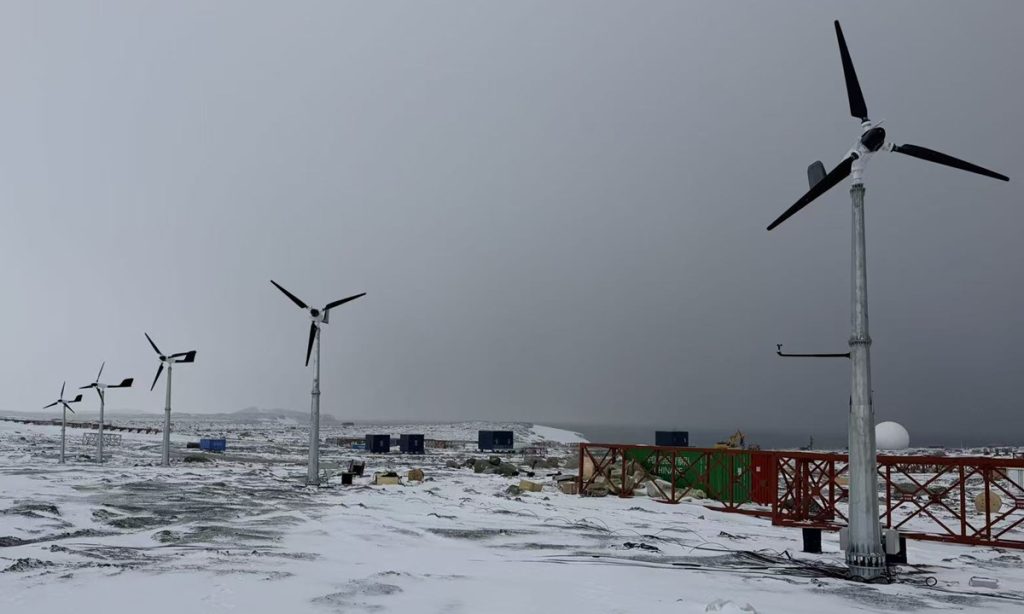
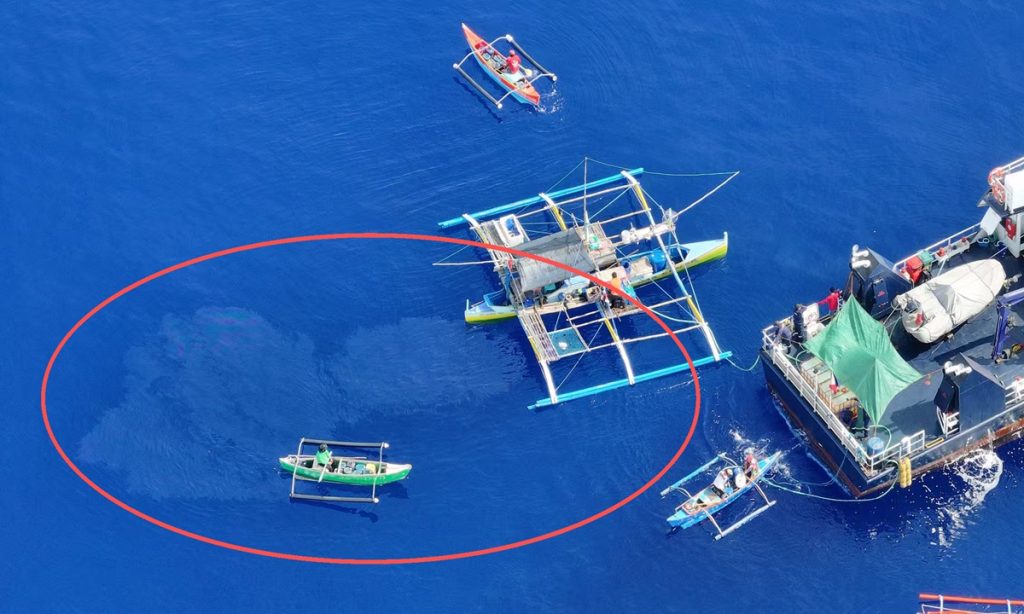
Recently, the Philippine side has repeatedly hyped up an alleged "new structure" that was observed inside the lagoon of China's Huangyan Dao. On Wednesday local time, the Philippine authorities held a briefing, releasing what it called "details" of the so-called floating structure found at China's Huangyan Dao, along with related aerial images, while making irresponsible remarks about China's normal activities at Huangyan Dao.
The Global Times reporter has learned that the so-called "new structure" at Huangyan Dao recently hyped by the Philippine side is in fact a temporary scientific research facility set up there by the South China Sea Institute of Oceanology under the Chinese Academy of Sciences. The floating in-situ sampling and experimental platform is designed to improve ecological monitoring, research and forecasting at Huangyan Dao.
Regarding the Philippine side's hype over the so-called "new structure" at Huangyan Dao, Chinese Foreign Ministry spokespersons responded twice at regular press conferences respectively on June 5 and June 9. The spokespersons said China has indisputable sovereignty over Huangyan Dao and its adjacent waters. Any activities carried out by China at Huangyan Dao, including scientific research, are the legitimate rights of a sovereign country.
New hype
According to Philippine media outlets including ABS-CBN, Philippine Coast Guard spokesperson Jay Tarriela displayed photos of the so-called "new structure" recently taken by the Philippine Coast Guard at a briefing on June 10 local time. Tarriela described the so-called "new structure" as a movable floating platform with a deck area of more than 30 square meters and fitted with metal poles.
The chief of staff of the Armed Forces of the Philippines, Gen. Romeo Brawner claimed in an official statement that the structure appeared to be equipped with antennas and that personnel were seen on it. As for the scientific research activities that China had made public, Tarriela gave a vague response, claiming he did not know its specific purpose. Some Philippine officials also claimed that China's activities could be a precursor to more permanent facilities.
After Philippine officials repeatedly sought to play up the issue, the South China Sea Institute of Oceanology under the Chinese Academy of Sciences, which conducted the research activity, released information on Wednesday about the operation and its findings.
The South China Sea Institute of Oceanology said that since May 20, 2026, it has led a comprehensive scientific expedition on the development, evolution and ecological resilience of Huangyan Dao. The expedition aims to deepen understanding of the patterns and trends in the development and evolution of Huangyan Dao's islands and reefs, the mechanisms sustaining coral reef biodiversity, and their ecological connectivity with islands and reefs in the Xisha and Nansha areas. So far, the research team has conducted a comprehensive survey covering the entire Huangyan Dao atoll.
The so-called "new structure" hyped by the Philippine side is in fact a floating in-situ sampling and experimental platform set up by the research team in the waters of Huangyan Dao. The platform can be used for core sampling, time-series observation of environmental factors, and in-situ experiments.
The samples and experimental data obtained from the expedition are of great value for studying the historical development process of Huangyan Dao, the physiological and ecological responses of coral reef organisms to changes in environmental factors, assessing geomorphological evolution and ecological changes in the protected area, and predicting the impact of global climate change, overfishing and other human activities on the ecological security of Huangyan Dao.
"The Philippine side should clearly recognize that the Huangyan Dao National Nature Reserve established by the Chinese government will not exist in name only. Instead, China will only step up its protection of Huangyan Dao," Yang Xiao, a research fellow at the Institute of Peaceful Development under the Chinese Academy of Social Sciences, told the Global Times.
Yang said such protection is reflected in two aspects: On the one hand, China will not allow Philippine personnel to enter Huangyan Dao and its adjacent waters to carry out destructive activities; on the other hand, China will make the protection of Huangyan Dao's ecology a priority, not only reducing the impact of human activities on the ecological security of Huangyan Dao, but also intensifying scientific research and accelerating ecological restoration there.
He further noted that Philippine officials often speculate that China may build "permanent facilities" at Huangyan Dao - such smears are in fact a case of "judging others by one's own petty standards." China has exercised effective control over Huangyan Dao, with maritime rights protection and law-enforcement forces maintaining a regular presence there.
"We can see that since last year, the Southern Theater Command of the Chinese People's Liberation Army and the China Coast Guard have issued monthly updates on combat-readiness patrols and law-enforcement patrols in the territorial waters, airspace and surrounding areas of China's Huangyan Dao," Yang said.
Yang said the Philippine side should recognize the reality that it cannot "meddle in" China's Huangyan Dao, face up to China's continued, peaceful and effective exercise of sovereignty and jurisdiction over Huangyan Dao, and stop its crude and meaningless sensationalization.
Sanctions
China's foreign ministry on Thursday announced sanctions against Philippine Defense Secretary Gilberto Teodoro Jr. who repeatedly made irresponsible remarks on China, which undermines China's legitimate interests and sabotages China-Philippines relations.
To uphold China's sovereignty, security and development interests, China has decided to prohibit Gilberto Teodoro Jr. and his spouse and child from entering the Chinese mainland, Hong Kong and Macao, and not allow organizations and individuals in China to engage in any transaction, cooperation or other activities with him and his spouse and child.
Before China's announcement of the sanction against Gilberto Teodoro Jr., on Wednesday, Philippine Secretary of Foreign Affairs Maria Theresa Lazaro claimed that establishing clear maritime boundaries between the Philippines and Japan is of vital importance to the country's national defense and "has nothing to do" with China. She added, "We should continue with our delimitation talks," even if China keeps objecting or increases pressure, Nikkei Asia reported.
Chinese experts on Thursday said the so‑called Japan-Philippines maritime delimitation talks concern an area east of China's Taiwan island. They noted the move carries ulterior purposes beyond bilateral discussions.
Ding Duo, Director of the Research Center for International and Regional Issues at the National Institute for South China Sea Studies, told the Global Times that the collusion between Japan and Philippines aims beyond "delimitation," but serves as stepping stone to squeeze China's maritime operational space in the waters east of the Taiwan Island.
After so-called delimitation, they could scheme to carry out security cooperation, military collaboration and naval exercises, confining China's maritime activities in this area, Ding elaborated.
The so-called cooperation between Japan and the Philippines cater to both countries' respective ambitions and carries strong Cold War undertones, analysts said, warning against Japan's dangerous neo-militarist resurgence and Philippines' adventurist tendency.
A closely watched United Nations (UN) Security Council election delivered a mix of continuity and change on local time Wednesday, as Austria, Portugal, Trinidad and Tobago, Zimbabwe, and first-time member Kyrgyzstan secured seats as non-permanent member of the Security Council, while Germany suffered a notable setback, according to UN News.
The election came against the backdrop of widening geopolitical divisions and repeated deadlock within the UN body in resolving conflicts and preventing wars. The five countries were elected by the 193-member General Assembly to serve as non-permanent members of the Security Council for two-year terms beginning on January 1, 2027.
Austria and Portugal won the two seats allocated to the Western European and other States Group, while Trinidad and Tobago was elected from the Latin American and Caribbean Group and Zimbabwe from the African Group.
Kyrgyzstan secured the Asia-Pacific seat after defeating the Philippines in four rounds of voting. Germany, however, suffered what the media refers to as "a historic defeat" in the election, breaking its winning streak.
The Security Council has 15 members: five permanent members with veto power - China, France, Russia, the UK and the US - and 10 non-permanent members elected by the General Assembly for staggered two-year terms.
Bahrain, Colombia, the Democratic Republic of the Congo, Latvia and Liberia will remain on the Council through the end of 2027, providing continuity in its work.
The Security Council has the authority to impose sanctions, authorize peacekeeping missions, establish international tribunals and, in exceptional circumstances, authorize the use of force.
Although non-permanent members of the UN Security Council do not possess veto power, they can directly participate in the deliberation, voting, and agenda-shaping of issues concerning international peace and security. Their institutional influence should not be underestimated, Gao Wanni, the deputy dean of the School of Politics and International Relations at Lanzhou University, told the Global Times on Thursday.
Chen Hong, director of the Asia-Pacific Studies Center at East China Normal University, told the Global Times the election outcome reflects the UN member states' response to the principles of geographical balance, fair representation, and the broader trend toward a multipolar world.
Making history
One of the most dramatic and striking moment of the Wednesday election was the win for Kyrgyzstan. This marked not only a major diplomatic breakthrough for Bishkek, but also the return of Central Asian representation to the Security Council for the first time in nearly a decade, following Kazakhstan's 2017-2018 term, according to the UN official news site release and Central Asian media reports.
"A Truly Historic Moment! Thank You for Your Trust!" the Ministry of Foreign Affairs of Kyrgyzstan wrote in a post on X, attaching a video of the announcement of the final round of voting where Kyrgyzstan defeated the Philippines. In the final round, 142 countries voted in favor of Kyrgyzstan, a two-thirds majority.
After the victory, Kyrgyzstan's Foreign Minister Jeenbek Kulubayev told reporters "we understand now is a turbulent time" and said Kyrgyzstan will work together with other council members, the AP reported on Thursday.
The Philippine local media Inquier.net covered the close contest between the two countries while highlighting that "Kyrgyzstan is among 59 UN member states that have never served on the Security Council."
According to the Philippine News Agency, Malacanang presidential palace on Thursday said domestic political tensions may have contributed to the Philippines' unsuccessful bid for a non-permanent seat in the UN Security Council.
Pass Blue, an independent, US-based digital publication that monitors and reports on activities by the UN, reported on Wednesday that Kyrgyzstan campaigned on a commitment to the UN Charter, multilateralism and conflict prevention. The permanent representative, Aida Kasymalieva, described the race as a milestone in the country's post-independence development.
"This is not only about a seat," she said during a World Federation of United Nations Associations (WFUNA) session on May 20. "It's about the completion of a long chapter of state-building, democratic transition, national consolidation, and international engagement."
Kyrgyzstan's election reflects a deeper demand for representation. Among UN member states, there are numerous landlocked small and medium-sized countries like Kyrgyzstan, yet they have long remained on the margins of the Security Council agenda. In this election, a country that has never held a Security Council seat before defeated the Philippines — which possesses a stronger traditional diplomatic network — by a wide margin of 142 votes to 49. This in itself is a clear signal, Gao said.
The victory also carries broader regional significance. Central Asia sits at the intersection of several issues regularly discussed at the Security Council, including counterterrorism, water security, transnational crime and regional stability. Kyrgyzstan's term is expected to give the region a more direct platform in Council deliberations, the Times of Central Asia report noted.
Bitter defeat
Western media services such as Reuters emphasized more over the fallout of Germany, stating that Germany, which had lobbied hard for a seat, came third for the two places contested by the Western European and Others Group, with 104 votes, against 134 for Portugal and 131 for Austria.
Germany's leading role in rallying support for Ukraine and its close relations with Israel may have cost Berlin the chance of a seat on the UN Security Council, German Foreign Minister Johann Wadephul said on Wednesday, Reuters reported in another report on Wednesday.
Speaking to the press after the vote, Wadephul called the outcome "a real disappointment." German Chancellor Friedrich Merz said: "We applied with conviction. We did not achieve our goal," local media DW reported.
According to RFI, this marks Germany's seventh bid for a non-permanent UN Security Council seat and its first-ever defeat. As Europe's largest economy, a G7 member and one of the major UN contributors, Germany had won all six previous campaigns.
DW noted that Germany is the second-largest contributor to the UN. The DW report also said that Wadephul, who had traveled to the UN in New York for the occasion, told the press afterwards that Germany's positions on the wars in Ukraine and Gaza may have influenced how states voted.
"It also may have cost us votes that Germany must always assume a special responsibility to Israel with regard to the Middle East conflict," Wadephul said.
Euronews wrote that diplomatic circles also viewed critically the fact that the German federal government had failed to clearly describe either the US or the Israeli attacks on Iran as violations of international law. Observers saw this as a potential handicap for the candidacy.
The Times headlined its report "Germany suffers historic UN Security Council defeat." A loss to Austria denies Berlin a seat, breaking a winning streak in the periodic ballots, per the Times.
Germany has been a non-permanent member of the Security Council six times to date: 1977/1978, 1987/1988, 1995/1996, 2003/2004, 2011/2012 and 2019/2020, per the federal government.
The defeats of Germany and the Philippines — both close US allies — show reliance on US-style alliances and bloc confrontation is no longer widely supported by the international community, Li Haidong, a professor at China Foreign Affairs University, told the Global Times on Thursday.
Through unilateral measures such as slashing UN funding, successively withdrawing from multilateral mechanisms, and selectively engaging in international affairs, the US has further worsened the international community's perception of the American-style global governance model, said the experts.
According to Li, the election signals expectations that global governance should shift toward greater equity, balance and stability.
Luan Yukun, a 33-year-old climber from North China's Hebei Province, completed a consecutive climb of Mount Qomolangma and Mount Lhotse in less than 48 hours, becoming the first Chinese mountaineer to have accomplished both the Qomolangma-Lhotse consecutive climb and earlier ascents of Mount Qomolangma from its southern and northern routes, China Central Television News (CCTV) reported on Sunday.
According to CCTV, Luan reached the summit of Mount Qomolangma at 11:33 am on May 20 and, instead of descending from Camp 4, he continued toward Mount Lhotse, reaching its summit at 11:31 am on May 22, according to CCTV. He had previously summited Mount Qomolangma from the south face of the mountain (on the Nepalese side) in 2023 and from the northern slope of China's Xizang Autonomous Region, in 2024.
In a close-up image of Luan posted by CCTV in its coverage, on the summit of Mount Lhotse, Luan looked weathered by the climb, with deep marks from his oxygen mask pressed into his face. He said one finger was badly frostbitten and had turned slightly dark, while his right hand and feet were also affected. "The frostbite was quite serious this time," Luan said. "It is a mark left by the climb, and in a way, also a gift."
After serving in the military, Luan carried that drive into work and mountaineering. He climbed the first high-altitude snow mountain of his life in 2017 and summited Muztagh Ata in 2022. A failed Qomolangma-Lhotse attempt in 2023 became "a regret and a motivation." In 2024, he summited Qomolangma from the tougher northern route.
After returning from more than 8,000-meter to lower altitudes, Luan is often asked why he keeps climbing, he says the feeling is hard to explain, but "everything feels worth it." Mountaineering may not always be enjoyable at the moment, he said, yet the happiness and growth it brings last far longer. "A ship is safest in harbor, but that is not what ships are built for," Luan said.
Several individuals have been administratively punished for cyberbullying a village Party secretary in Central China's Hunan Province after spreading rumors about her wearing "gold earrings" while engaged in flood relief work, the Xinhua News Agency reported on Tuesday, citing China's Ministry of Public Security.
According to the report, Shimen County in Hunan Province was recently hit by heavy rainfall. A village cadre remained on the front line of flood control and disaster relief for several consecutive days, going door to door to alert residents, organizing evacuations, arranging temporary shelter, and delivering supplies. Her dedication moved many netizens.
However, while society was rallying to support disaster-relief efforts, a small number of netizens made groundless accusations against her because of the accessories she wore during an interview. They speculated that "the earrings weigh two liang (about 100 grams)," and posted belittling and mocking comments such as "ordinary rural women can't afford gold earrings" and "it would be more touching if she donated the earrings." Their actions interfered with flood relief efforts and created a highly negative impact, according to the Xinhua report.
Public security and cyber security authorities moved swiftly to investigate the case and handled 15 incidents of cyberbullying in accordance with the law. A 44-year-old man surnamed Qin, and a 45-year-old man surnamed Wei, among others, were given administrative penalties in accordance with the law, per Xinhua.
The cyber security department of the public security authorities said it will continue its "Clean Internet" campaign, focusing on tackling prominent online problems such as cyberbullying, online trolls, and online rumors, while cracking down on related illegal and criminal activities to safeguard the lawful rights and interests of the public and maintain order in cyberspace.
China's widely watched annual "two sessions" kicked off on Monday this year. The "two sessions" refers to the annual sessions of National People's Congress (NPC) and the National Committee of the Chinese People's Political Consultative Conference (CPPCC), which are known as the country's top legislature and national political advisory body respectively.
The two sessions is a grand occasion that gathers ideas and wisdom of people of all walks of life across the country. It is an important opportunity for the world to better understand China's whole-process people's democracy, in which the people engage in democratic elections, consultations, decision-making, management, and oversight according to the law. Such democracy is not only shown in the votes taking place at the Great Hall of the People in Beijing, but also embodied in a motion submitted by a NPC deputy coming from a remote area, or a consultative meeting held among some residents living in a city suburb. It can be felt in many details of Chinese people's daily life.
During this year's two sessions, the Global Times is launching a series of stories to illustrate the whole-process people's democracy from some of such details. The first story is about an ordinary workday of a grass-roots service site of a district-level political advisory body in Shanghai suburb. There, the reporters took a closer look at this consultation site's efforts in fulfilling the Chinese democracy through solving "little things" that matter the daily life of local residents. The early morning sun shone through the windows into the room. Shanghai resident Ji Huiqi opened the window to enjoy some fresh air. But he frowned. He found his clothes hanging outside the windows covered with a thin layer of dust.
The Yingyuan residential community in Shanghai's suburban Jiading district that Ji lives in is a decades-old community which is currently under renovation. The renovation will bring this somewhat run-down community broader paths, beautiful exterior walls and better public facilitates, but months of renovating work has also caused residents inconveniences, such as noise and dust pollution.
Ji expressed the dust pollution to the Gengzhi consultation site, a grass-roots service site of the CPPCC Jiading District Committee that is responsible for collecting opinions of, and helping solve problems for, local people.
Only days later, Ji was invited to a democratic consultation meeting that specifically focused on how to bother the community residents during the renovation less.
The meeting was organized by, and held at, the Gengzhi consultation site. It kicked off a busy workday of Gengzhi, a platform of local CPPCC to practice the whole-process people's democracy at the most grass-roots level.
Ahead of the two sessions, during one-day visit to the Gengzhi consultation site, the Global Times reporters took a closer look at this consultation site's efforts in fulfilling the whole-process people's democracy through solving "little things" that matter the daily life of local residents.
9 am: a democratic consultation
Around 9 am in the morning, 74-year-old Ji arrived at the Gengzhi consultation site, ready to express his suggestions for "reducing inconveniences for residents during renovation," the topic of today's consultation meeting.
About 20 people attended the meeting. To Ji's surprise, they included almost all the parities related to this topic: resident representatives, renovation project managers, residential property managers and relevant functional departments of local government. Some members of CPPCC Jiading District Committee (also known as political advisors of the district) were also here, busy with taking notes of the residents' voices.
Every party spoke at the meeting. In Ji's small speech, he thanked the efforts the renovation project side had made in trying to bother residents less, such as the requirement of no construction work at weekends and in the early mornings. "It would be better if we could find a way to further reduce the dust pollution," he added.
The consultation meeting lasted 2.5 hours. Some of the problems were initially solved through discussions during the meeting. "We built an online chat group," Ji told the Global Times after the meeting. "From now on, we can directly report small problems from the renovation project side, like noise or dusts."
For the relatively more complicated problems, political advisors on the scene recorded them down, in preparation for further survey and discussion in the near future.
Ji praised this democratic consultation meeting as an efficient and friendly form to explore solutions. "I feel that we residents' opinions and ideas are highly valued. That's nice," he said and left Gengzhi consultation site with a smile.
The Gengzhi consultation site is located at the busy community integrated service center at Xincheng Road sub-district in Jiading. The sub-district is a township-level administrative division in China's urban areas.
Some 60,000 people live in the 5.14-square kilometer Xincheng Road sub-district. To better practice the whole-process people's democracy, the sub-district set up two services sites under guidance of the CPPCC Jiading District Committee - Gengzhi consultation site and Gengshan reading room - where local people can freely express their opinions, complaints and suggestions, especially those regarding to grass-roots governance.
Gengzhi, for instance, listens to and collects people's voices through four main ways, introduced Gengshan and Gengzhi's director Zhang Xiangqun, who is also a political advisor in Jiading district.
The democratic consultation meeting that resident Ji participated in that morning is one of the ways, Zhang said. "The other three include offline letter boxes, survey questionnaires, and a monthly project named 'room for people's voice,'" she told the Global Times. "The last Thursday of every month, local political advisors talk to the residents at this room face to face."
In recent years, the CPPCC Jiading District Committee has set up working stations for its political advisors at all Jiading's 12 sub-districts and towns, said Wang Yan, a staffer with committee who is in charge of the issues related to the working stations.
Based on the current working stations, the committee worked with the Xincheng Road sub-district management and established two front-line service sites Gengzhi and Gengshan in July 2023, so as to get closer to the grass-roots people, Wang said.
"In the past, some people may felt distant from the CPPCC," she told the Global Times at Gengzhi. "But now, we found that more and more residents are willing to go to these service sites that are so close to their homes, and they are pleased to participate in consultations and express their views." 2 pm: vote to make decision
After a lunch break, at around 2 pm , several residents at Canghai residential community waited in a line for a vote.
Witnessed by the Gengzhi staffers and local political advisors, they in turn put a piece of paper into a red box. These voters were resident representatives of the community. Before casting the vote, they had spent days collecting opinions of almost all the community's 4,532 residents in detail.
With Gengzhi's help, they were using the democratic method of voting to decide one of the biggest concerns of the community residents in the past three months: whether to put into use the community's public charging pile for electric motorcycles.
The irregular charging of the e-motorcycles used to be a headache for the community. Instead of charging in a public area, some lower-floor residents liked to charge their e-motorcycles directly through a long wire from their homes, as household electricity costs less.
"You could see many electric wires go through the windows of their homes and fall on the ground, connected with the e-motorcycles they parked downstairs," recalled resident Sun Jianming. "This was a huge fire safety hazard."
Some residents expressed their complaints to Gengzhi, which later discussed with the sub-district and community staffers to find a solution - installing public charging piles.
The community started to prepare for the charging pile installation since December 2023. Local grass-roots officials and some resident volunteers door-to-door publicized fire safety knowledge, and asked for opinions on the payment method of the charging piles.
Discussion, consultation and opinion collection have been the norm of this residential community for the past three months. As the concept of the whole-process people's democracy has been deeply rooted in people's hearts, local residents, particularly the young ones, have a willingness to participate in social and community governance, said Zhou Zhiliang, an official of Xincheng Road sub-district who co-leads Gengzhi and Gengshan.
Also, through months of exploration and practice since Gengzhi and Gengshan were established, "we found that our sub-district officials and residential community staffers have changed their working concepts," Zhou told the Global Times.
In the past, a few of the local grass-roots officials might be afraid to face complaints, Zhou said. But now, they actively listen to the residents, and they truly feel gratified and glad for helping residents solve problems, he noted.
As for the charging pile installation and payment method, at last, the residential community managers planned to spend a part of the community's public revenue (such as parking fee) in buying "charging cards." The cards, each of which contains 120 times of e-motorcycle charging per year, will be sent to the community residents for free, according to Sun.
Will the residents feel satisfied with this plan? That afternoon, some resident representatives organized a democratic vote which includes all their neighbors. They agreed that, the plan would be approved if the approval rate exceeded 50 percent.
Hours later after the vote, Sun told the Global Times that the vote results came out.
"More than 88 percent approved," he said with excitement. 7 pm: a political advisor's notebook
The sky gradually turned dark around 7 pm. Sitting by a table at Gengzhi, Xu Minghua carefully reviewed the notes he took this morning, at the consultation meeting he attended.
Residents' complaints and suggestions about the inconveniences caused by the renovation work were all on X u's notebook. "The residents' opinions were very precious and valuable. I'm thinking about to turn them into a proposal," said Xu, a political advisor of Jiading district.
This proposal will be submitted to the online platform of Jiading district's political advisory body, becoming an important reference for the work of local government and related policy makers, Xu explained.
According to Gengzhi and Gengshan's director Zhang, the two service sites have received some 140 pieces of complaints and suggestions since being established. Among them, about 100 pieces have been solved or adopted by the sub-district-level officials and functional departments. The remaining more complicated 40 pieces are sent to local political advisors, who will report them to the upper levels through proposals.
In response to some western media's smear, which defamed the two sessions as a "stage to put on a show," Xu has many to say. As a private entrepreneur, Xu has been serving as a political advisor in Jiading district for eight years. Each year, Xu writes and submits nearly 10 proposals based on the voices of grass-roots residents. He said that his proposals focus on the matters that residents concern most about, such as the fire-fighting equipment in garages and "many of my proposals have been adopted."
He mentioned a recent proposal he submitted, which was about the unreasonable double yellow lines on the road of a busy street corner. Local transport department adopted the proposal and made a change within a month.
"Very efficient," Xu praised.
Xu's proposals, as well as the people's voices that Gengzhi collects, are windows for the outside world to see how China's whole-process people's democracy is practiced in the grass-roots.
In November 2019, Chinese President Xi Jinping said Chinese people's democracy is a type of "whole-process democracy," during his inspection tour in Shanghai. It was the first time this term was used publicly.
These years, Shanghai has made various efforts in promoting and improving democratic governance and consultation at the grass-roots level, said some local NPC deputies and CPPCC members. The city is trying hard to make it not only the place where the "whole-process people's democracy" was first proposed, but also the place where this concept is best practiced, they noted.
In Jiading district, the local political advisory body is establishing and improving more grass-roots serves sites, to enhance the people's sense of gain and satisfaction.
"We strive to transform the concept of the whole-process people's democracy into the arrangements of the CPPCC that have more complete participation, better developed mechanism and procedure, and richer platforms,"Yang Li, chairman of the CPPCC Jiading District Committee, told the Global Times.
Big models, robots, intelligent manufacturing, autonomous driving… In recent years, AI (artificial intelligence) has frequently made headlines around the world, becoming a hot topic of discussion. The emergence of generative AI programs has also caused unemployment anxiety.
The development of technology has indeed brought challenges in various aspects such as ethics and law. But at the same time, many experts advocate that human should see technology as a tool, with the ultimate purpose of serving humanity, making human life and work more efficient and comfortable.
In real life, AI has already permeated all aspects of human society, helping with scientific research in laboratories, assisting in the restoration of mysterious ancient scrolls at archaeological sites, and helping to find abducted children in the vast sea of people.
In light of this, the Global Times has launched the "AI empowers industry, improves people's livelihoods" series, showcasing the tremendous energy and broad prospects that AI brings to various industries.
This is the first installment in this series. In this story, we explore how AI helps people reconnect with their loved ones from beyond the grave, make up for lost time, and continue family ties in the virtual world.
"Mom, I want to eat Moo Shu Pork."
"Okay, let me prepare the meat. I'm going to tell you when I'm done."
Zhu Rui's mother replies with a smile. Wearing a rosy pajama with a big Mickey Mouse caricature on it, the lady in her 60s sits in a chair with her hands naturally folded. She looks at her son with tender eyes - from the computer screen.
This is a small conversation between Zhu and his "digital mom," an interactive virtual role that Zhu recently made with AI technology. The virtual mother looks so lifelike that it looks as if Zhu is having a video call with his real mother, instead of a program built based on numerous AI algorithms.
After suffering from cancer for five years, Zhu's mother's diagnosis sadly took a turn for the worse this year. His deep love for his ailing mother pushed Zhu to make a digital doppelganger of her, which can help carry his memory of his mother in the near future.
Zhu is among a growing number of Chinese people who try to make digital doppelgangers of their deceased or elderly family members. With the rapid development of AI technology, the"digital resurrection" of deceased loved ones is practically becoming an industry in the country, with controversies following close by, of course.
'Digital mom'
The so-called "digital resurrection" is based on historical data such as photos and videos, using AI technology to reproduce the voice, image, and behavior of deceased individuals, generating similar outputs.
The first time Zhu heard of "digital resurrection" was in the spring of 2023. He watched various "digitally resurrected relatives" online, thinking about making a digital doppelganger of his mother, who, in his words, probably doesn't have much time left.
"While taking care of my mom, I hoped that I could make a digital version of her, as a special memory that she can leave for her loved ones," Zhu told the Global Times. "I'm in a race against time. I want to get the thing done while she is still here."
Zhu said he was perhaps the first-ever person in China to make a digital doppelganger of a family member who is still alive. Unlike creating a digital doppelganger of the departed loved one based on limited materials, Zhu could take as many photos and videos of his mother as possible to make his "digital mom" more realistic.
It, nonetheless, took Zhu some time to convince his mother. "The older generation knows very little about AI technology. My mom had no idea what a 'digital doppelganger' was; she felt it a bit strange [about the concept], but anyway, she trusted me unconditionally," Zhu said. "We are closest to each other in this world."
As the co-founder of a tech company, however, Zhu was not as familiar with AI himself at the very beginning. Step by step, he taught himself a series of AI models and tools that helped create his "digital mother," from Kimi and GPT-4 to popular applications including Midjourney and Heygen. Within some 20 days, this fast learner successfully created a preliminary version of his "digital mother" with the help of his AI industry friends.
Zhu clearly remembers the first time his "digital mother" eventually appeared on screen and smiled at him. It was around 5 am, after he had stayed up all night making some final adjustments. He was impressed but actually "not very excited." "This version was not yet perfect due to my limited time and skill," said Zhu. "I thought I could do better."
In February, a video telling Zhu's story about making a "digital mother" went viral online, drawing people's attention to this new way of cherishing the memory of their loved ones. Zhu said that he is thinking about making a miniseries based on the ordinary Chinese people who try to create their "digital families." It will be a nonprofit project aiming to discuss topics like life, death, family, and love under the context of AI technology, he added.
For those who would like to be a part of the project, Zhu said he may help them create a "digital family" for free. "I hope that a digital doppelganger can help relieve the pain of those who lost their loved ones," he told the Global Times. "This is the meaning of AI technology." Emerging business
As early as 2016, HereAfter founder James Vlahos built a chatbot that responds like his dead father, or Dadbot, based on data left by his father. People quickly got in touch with Vlahos after the creation of Dadbot, asking if he could make them bots of their own.
In China, "digital resurrection" caught the public's attention during the Qingming Festival in 2023 when an influencer on Bilibili uploaded a clip of his AI-revived grandma.
The business was cast in the spotlight again recently after Chinese renowned musician Tino Bao (Bao Xiaobo) unveiled to the public his "revived" daughter with AI technology.
Zhang Zewei, founder of AI company Super Brain in Nanjing, East China's Jiangsu Province, told the Shanghai Observer that his team has completed more than 1,000 "resurrection" orders. With the Qingming Festival approaching, they receive four to five dozen related inquiries every day, the Shangguan Observer reported on Wednesday.
Most of Zhang's users have a similar starting point to Zhu. They all have a strong desire to "see their loved ones again"; some families have lost their only child in middle age, and the parents are unable to overcome the pain of losing their child; and some people have lost their partners of many years, and are hoping to see the person they miss day and night again, even if it's just a brief glimpse on the screen.
However, the innovation also comes along with controversies.
Recently, a video blogger "resurrected" late stars through AI without obtaining permission from the stars' families. The father of late Chinese singer-actor Qiao Renliang has required the video blogger to remove the video and said that the move reopened his old emotional wounds.
Many netizens and law experts also characterized the move as offensive to family members of the deceased and violated portrait rights and privacy, calling for more complete and detailed regulations and management to catch up with the impact of the market of the rapid development of AI technology.
A search on Taobao with the keywords "AI, digital life, resurrection" on Wednesday yielded hundreds of results. According to these results, customers can get an audio clip of their late relatives by paying 99 yuan ($13.6), get a video clip of late relatives talking by paying 198 yuan, and interact with "resurrected relatives" via a certain app if they pay 498 yuan.
One of the stores also claimed to provide a service that teaches customers to create a digital life. Customer service representatives at the store told the Global Times that the app was developed by themselves and "it was very easy to learn." Tuition and the app jointly cost only 1,000 yuan, according to the customer service representative.
A more important problem may be the overly realistic interaction of the digital doppelganger, as Zhu said. "It is a double-edged sword that offers users a very good immersive experience, but may also bring huge hidden troubles."
Smooth, natural conversations are supported by the strong computing power of the AI models, which is very expensive. What if one day, the customers cannot afford the money and have to turn "the digital relative off?" Zhu questioned.
Moreover, overly realistic and natural interaction may make people addicted to the virtual world. Especially for those who lose their loved ones,"they may feel it is harder to move on," Zhu said.
Era of 'digital humans'
But Zhang still expresses full optimism about the business. He believes that with technological progress, the concept of "AI resurrection" will continue to evolve. In the future, there will be more AI digital human products such as digital immortality and digital companionship, in addition to a short video or a chatbot.
Some other observers echoed Zhang's sentiment. They pointed out that "digital resurrection" is an emerging subdivision of digital humans while the industry is moving toward a new stage of AI-driven, tool-based, and low-cost with the empowerment of large models.
At present, digital humans mainly appear as intelligent customer service representatives on e-commerce platforms and public service portals, and they are also showing huge application potential in the consumer market, such as in the field of education. But as technology advances and demand evolves, the application market for digital humans will further broaden. It is a trend for more middle and small teams flooding into the industry to provide human solutions for small merchants and individuals, according to industry insiders and observers.
In the future, virtual digital humans will become more intelligent. They will gradually possess the ability to see, understand, and express themselves, allowing AI-generated and driven virtual digital humans to more comprehensively and deeply integrate into various fields such as film and television, finance, and cultural tourism.
Zhang Rui, founder and executive director of the Art Robot company in Beijing, told the Global Times that an AI product may be able to understand and express human feelings in 5 to 10 years.
According to data from iMedia Research, in 2022, the market size of this industry reached 12.08 billion yuan, while also driving the surrounding market size to reach 186.61 billion yuan. It is estimated that by 2025, the core market size of virtual digital humans will reach 48.06 billion yuan, and the surrounding market size driven by such growth may be close to 640.27 billion yuan.
Regulations are also on the way. In 2019, China issued principles of next-generation AI governance. In 2021, the country published the "Ethical Norms for the New Generation Artificial Intelligence," aiming to guide activities in the entire lifecycle. In 2023, China further released its regulations on deep synthesis Internet information services and Interim Measures for the Management of Generative Artificial Intelligence Services to boost AI development while safeguarding cybersecurity.
Chinese social media platforms have also enacted specific measures for users in terms of producing AI-generated content, vowing strict punishment for those who violate the rules by using AI to generate virtual characters to publish content that goes against scientific knowledge, fabricates information and spreads rumors.
The era of one "digital human" per person is coming, industry insiders said.
At the invitation of French President Emmanuel Macron, Chinese President Xi Jinping kicked off his state visit to France on May 5. It coincides with the 60th anniversary of the establishment of diplomatic ties between China and France, and is of great significance to building on past achievements and opening up new prospects for bilateral relations.
During this visit, achieving carbon neutrality goals will, once again, be an important consensus reaffirmed by China and France, in relation to which, the joint promotion of nuclear energy cooperation and development as an important cornerstone for the two countries to achieve carbon reduction goals has attracted great attention.
Yu Jianfeng, Chairman of China National Nuclear Corporation (CNNC), and Jean-Bernard Lévy, Chairman and Chief Executive Officer of Electricité de France (EDF) jointly released A Prospective Study on "Bluebook" on Nuclear Energy to Support for Low Carbon on Monday in Paris.
"China and France, as major nuclear energy-producing countries in the world, play an irreplaceable role in promoting nuclear energy to address climate change and low-carbon transformation," Yu said.
He noted that nuclear energy cooperation is an important part of the comprehensive strategic partnership between China and France. Under the strategic guidance of President Xi and President Macron, nuclear energy enterprises in the two countries have adhered to the principle of "walking on the two legs of technological cooperation and industrial cooperation," and have achieved fruitful results.
The Global Times learned from the CNNC that the cooperation between the CNNC and the EDF opens a new chapter in the two countries' nuclear energy cooperation. This not only reflects the concrete implementation of the important consensus reached by the top leaders of the two countries, but also marks the 40th anniversary of the two countries' nuclear energy cooperation and witnesses the 60th anniversary of the establishment of diplomatic relations between China and France.
The move will also support China in building an innovative nuclear energy international cooperation network. In the future, the two countries will leverage their strengths to build a new pattern of cooperation and development that is interconnected and driven by innovation, supported by industry to promote the improvement of global nuclear governance, and make greater contributions to the economic and social development of China and France, as well as the construction of a global community of shared future for mankind.
One of the most stable cooperation areas
The nuclear energy cooperation between China and France has a long history and continues to deepen. Since the signing of the first cooperation agreement on the peaceful use of nuclear energy in 1982, China and France have always adhered to the principle of equal emphasis on scientific and industrial cooperation. Nuclear energy cooperation has become one of the most stable cooperation areas between the two countries.
As one of the earliest international nuclear energy companies to cultivate business in China, the EDF has been operating in China for more than 40 years and has become one of the largest foreign investors in China's power generation and energy services industry.
For a long time, the EDF has developed and deepened its partnership with the CNNC. The two sides regularly hold high-level meetings, and their cooperation covers multiple areas such as nuclear power research and development, construction, operation and maintenance, and fuel, achieving numerous results.
The CNNC and the EDF have actively participated in the interactive activities of international organizations, sending experts to support the work of international organization technical groups, conducting international research projects, and promoting international coordination and standardization. For example, they participated in the International Atomic Energy Agency (IAEA)'s nuclear safety standards development work, especially the recent Nuclear Harmonization and Standardization Initiative (NHSI) small modular reactor regulatory forum activities initiated by the IAEA, which is aimed at promoting the development of universal standards for small modular reactors, coordinate unified regulatory requirements, and promote the safe and reliable deployment of small modular reactors worldwide.
The EDF and the CNNC have also made important contributions to the standardization work of international standardization organizations and the International Electrotechnical Commission.
As the main force of China and France's nuclear energy technology cooperation, the CNNC has established long-term friendly cooperation relationships with French partners and achieved fruitful cooperation results. In the more than 40 years of nuclear energy technology cooperation, the CNNC and the French Atomic Energy Commission have established seven collaborative laboratories in areas such as reactor thermal hydraulics, severe accident management, aging and life management of pressurized water reactors, fast reactors, nuclear fusion, geological disposal of high-level radioactive waste, decommissioning, and radioactive waste management. The two sides also signed and implemented over 500 special cooperation projects.
The CNNC has also successfully held six nuclear energy technology innovation seminars with the EDF, achieving good results in areas such as severe accidents, additive manufacturing, and material research.
Furthermore, the CNNC has also formed a consortium with Framatome to successfully bid for and implement the main machine installation project of the International Thermonuclear Experimental Reactor (ITER), and have conducted good cooperation with the Orano Group in areas such as the research on uranium resources. To jointly build "artificial sun"
Cooperation in the peaceful use of nuclear energy has become an important part of the comprehensive strategic partnership between China and France. The scope of nuclear energy cooperation between the two countries is wide-ranging and diverse, but the most "high-energy" project undoubtedly is the ITER large-scale scientific project that the two countries are jointly working on.
Referred to as the world's largest "artificial sun," the ITER project is currently the largest and most influential international scientific project in the world, carrying the hopes of humanity for the peaceful use of nuclear fusion energy.
The ITER device is a superconducting tokamak capable of producing large-scale nuclear fusion reactions, which will help humanity move further toward a continuous source of clean energy. Since its establishment in 2007, the ITER has been one of the largest international scientific engineering cooperation projects in the world. France is the location of the ITER project construction and headquarters, while China is one of the seven equal member parties of the ITER project, contributing 9.09 percent of the construction phase and 10 percent of the operation and decommissioning phase funding.
China joined the ITER project in 2006. Since the implementation of the project, China has always adhered to its international commitments, with Chinese enterprises and researchers bravely shouldering heavy responsibilities and working together with international counterparts to contribute Chinese wisdom and strength to the smooth progress of the project.
The CNNC has been actively involved in the development of the world's largest "artificial sun." In September 2019, a China-France consortium led by the CNNC signed the TAC-1 installation contract with the ITER, marking China's deep involvement in the installation of the core equipment of the tokamak device - the "heart" of the experimental reactor.
On February 29, 2024, the ITER organization signed a new the vacuum chamber module assembly contract with the consortium. China will once again undertake the installation of the core equipment, contributing wisdom and strength to the ITER project alongside France.
Shen Yanfeng, General Manager of the CNNC, said that the signing of the agreement means that the China-France consortium led by the CNNC has become the sole contractor for the main host installation of the ITER project. This demonstrates the CNNC's commitment to implementing President Xi's important instructions, opening up to the outside world, deeply participating in the global nuclear industry chain cooperation, building a new development pattern, promoting high-quality development of the nuclear industry, accelerating the advancement of China's modernization, and striving to create a vivid practice of a global community of shared future for mankind.
This will greatly enhance China's participation and contribution in international large-scale scientific projects, and help implement the "three-step" development strategy of nuclear energy - thermal reactors, fast reactors, and fusion reactors, Shen said.
Direction for nuclear energy development
The release of the "bluebook" undoubtedly takes the cooperation between China and France in the nuclear energy field to a new level.
The Global Times learned that the "bluebook" is the first strategic planning soft science cooperation between Chinese state-owned nuclear energy enterprises and partners in developed Western countries in recent years, marking a significant increase in China's nuclear industry strategic planning and soft science research capabilities and international influence, with obvious uniqueness and importance.
"The 'bluebook' is cooperation between China and France at the strategic research level in the field of nuclear energy, which has never happened before. It was included in the plan during French President Macron's visit to China in 2023," Luo Qingping, President of the China Institute of Nuclear Industry Strategy under CNNC, told the Global Times.
The release of the "bluebook" at the historical moment of the 60th anniversary of the establishment of diplomatic relations between China and France can also be seen as the opening of a new chapter in the nuclear energy cooperation of the two countries. In the future, China and France can combine the contents of the "bluebook" to deepen cooperation in promoting nuclear energy development, including cooperation in exploring third-party markets.
The Global Times found that the "bluebook" interprets the development ideas and practices of China and France in the field of nuclear energy through historical reviews and strategic research, providing an in-depth analysis of the future nuclear energy industry from a macro perspective.
The research mainly covers the current global status and trends of nuclear energy development, the role of nuclear power in addressing the climate change, progress in nuclear power safety and related technology standards, and measures to enhance the economic efficiency of nuclear power coupled with other new energy sources, systematically describing the current status of nuclear energy development and good practices in China and France.
In addition, the "bluebook" fully demonstrates China's strength in nuclear power construction, including its strength in third-generation nuclear power, fourth-generation nuclear power, small modular reactors, and the entire industry chain service capabilities.
It also describes important nuclear power products in China, such as the Hualong One, Linglong One, high-temperature reactors, and fast reactors, making it easier for the international community to understand China's nuclear power technology and product capabilities.
The release of the "bluebook" can expand the influence of Chinese nuclear power companies, especially the CNNC. Through the preparation of the "bluebook," China and France can reach a consensus on nuclear energy technology at the strategic level and enhance the international influence of nuclear energy technology in both countries.
The "bluebook" proposes three initiatives. First, China and France jointly advocate that every country in the world has the right to develop nuclear power, but safety must be the top priority in the development process, meaning that nuclear power must be developed under reliable safety supervision. Second, it points out to the world that nuclear energy can effectively support low-carbon development. China's future nuclear energy technologies such as small modular reactors and nuclear fusion are important solutions to the global energy problem. Third, it calls for urgent action to address the crisis caused by climate change, emphasizing that energy transformation is imperative, and the development of nuclear power is undoubtedly an effective approach.
Based on this "bluebook," there is a possibility of creating an internationally significant guiding document. The IAEA is also very interested in this "bluebook." Next, the CNNC will communicate with the IAEA to try to include the "bluebook" in their publication list for global promotion.
A green future for humanity
According to data in the "bluebook," as of the end of December 2023, France has an installed nuclear power capacity of 61.37 gigawatts in operation, ranking second in the world, with an additional 1.63 gigawatts under construction. China has an installed nuclear power capacity of 53.15 gigawatts in operation, ranking third in the world, with an additional 23.72 gigawatts under construction. Both China and France are major nuclear energy-producing countries, with CNNC and EDF as key players in global nuclear energy development, each having their own advantages in nuclear power construction, operation, maintenance, and fuel supply, accumulating rich experience in the development of nuclear energy.
The continued cooperation between the two countries will provide strong momentum for the utilization and development of global clean energy technologies. China and France will continue to deepen cooperation in multiple areas such as nuclear engineering, nuclear power operation, and nuclear fuel cycle. They will promote the synergy between nuclear energy and renewable energy, formulate public policies focusing on low-carbon growth, accelerate the development of renewable energy such as hydropower, wind power, solar power, and geothermal energy, extend the lifespan of existing nuclear power plants, initiate new nuclear power construction projects, and optimize the cost of energy transition.
Furthermore, the two sides will cooperate to promote advanced nuclear energy technologies such as small modular reactors and fusion reactors. They will work together to advance the commercial deployment of small modular reactors. They will also strengthen international cooperation in the field of nuclear fusion research, the Global Times learned from the CNNC.
At the same time, they will promote the comprehensive application of nuclear energy, popularize technologies such as nuclear heating, seawater desalination, and hydrogen production, diversify the forms of nuclear energy utilization, and reduce greenhouse gas emissions.
They will also conduct research on the impact of climate change using nuclear technology, playing a special role in addressing issues such as water scarcity, soil erosion, land degradation, and increased diseases and pests in plants and animals caused by climate change.
Looking to the future, the CNNC and the EDF have reached a consensus that nuclear energy development is a realistic and important choice in the transition to a clean, low-carbon, safe, and efficient modern energy system, especially as nuclear energy expands from electricity generation to heating, steam supply, hydrogen production, and other applications, potentially accelerating the decarbonization of high-emission industries. The deepening cooperation in the nuclear energy field between China and France will undoubtedly bring more solutions and surprises to humanity.
As a strategic industry, the low-altitude economy is emerging as a forerunner in developing new quality productive forces across China, including the southern island province of Hainan.
On April 24, a remarkable show unfolded as a drone departed from an airport in the provincial capital Haikou and embarked on a three-hour flight to transport a batch of shrimp seedlings from the province's Wenchang City to an airport in Zhuhai, located in the neighboring Guangdong Province, marking the first cross-sea public cargo transport through drone from Hainan to Zhuhai.
"This drone transport will greatly reduce transportation time and enhance the survival rate of aquatic seedlings, thereby playing a crucial role in cost reduction and efficiency improvement," said Yun Yongchao, general manager of a local marine biotechnology company in Wenchang.
He added that aquatic products were previously transported by land and ferry to Guangdong, taking about 13 hours, leading to high losses. "This cross-sea drone flight is a new model that provides us with a new transportation choice."
This cross-sea drone transportation exemplifies the advancement of new quality productive forces in Hainan, greatly improving the transportation efficiency of agricultural products between Hainan and Guangdong. It also contributes to the reduction of logistics costs and injects fresh vitality into the development of the low-altitude economy in both provinces.
As the only tropical island province in China, Hainan has over 300 days available for flights annually, which offers unique environmental advantages for developing the low-altitude economy.
In 2010, Hainan became one of the first pilot regions for low-altitude airspace management reform in the country. The province released a map for unmanned aircraft in 2023, demonstrating early and ongoing efforts to open up low-altitude airspace in the country.
According to Hu Qingqun, deputy general manager of China General Aviation Co., Ltd., as one of the first regions in the country to carry out low-altitude airspace management reform, Hainan has continuously strengthened the foundation for the development of the low-altitude economy by constructing general aviation airports throughout the province.
He noted that Hainan has established a relatively complete low-altitude management system and an efficient infrastructure service system.
In recent years, Hainan has developed its low-altitude economy according to local conditions, leading the country in low-altitude tourism, aviation sports, emergency rescue and other fields.
In 2023, Hainan ranked first in the country in terms of aerial tours and skydiving flights, with about 13,700 hours of flight time, 152,000 takeoffs and landings, and 364,800 passengers, accounting for approximately 45.9 percent, 63.2 percent and 61.1 percent of the national total, respectively, making Hainan the leading province in China's low-altitude tourism, according to official data.
"As a free trade port, Hainan enjoys more preferential policies. Key technologies such as drones and electric aircraft capable of vertical take-off and landing are developing rapidly. At the same time, people's demand for convenient travel and leisure tourism is increasing, and so is the market," said Li Yan, general manager of Sanya Base of China Southern Airlines General Aviation Co., Ltd.
At present, Hainan has more than 160 locally registered general aviation companies and nearly 50 non-local general aviation companies.
Guo Yao, an official of the Hainan Provincial Development and Reform Commission, said that in the future, Hainan will harness its natural resource advantages to focus on commercial short-haul transportation, low-altitude tourism consumption, and marine economic development. This strategic focus aims to establish the province as a pilot demonstration area for the low-altitude economy and to inject new momentum into the high-quality development of the Hainan Free Trade Port.
A technician inspects the germination status of experimental rice seeds in the three-dimensional seedling-growing greenhouse of a 5G smart farm in Haizhou district, Lianyungang, East China's Jiangsu Province on May 8, 2024. Haizhou district has vigorously implemented science and technology to strengthen agriculture and accelerate rural revitalization. Photo: VCG