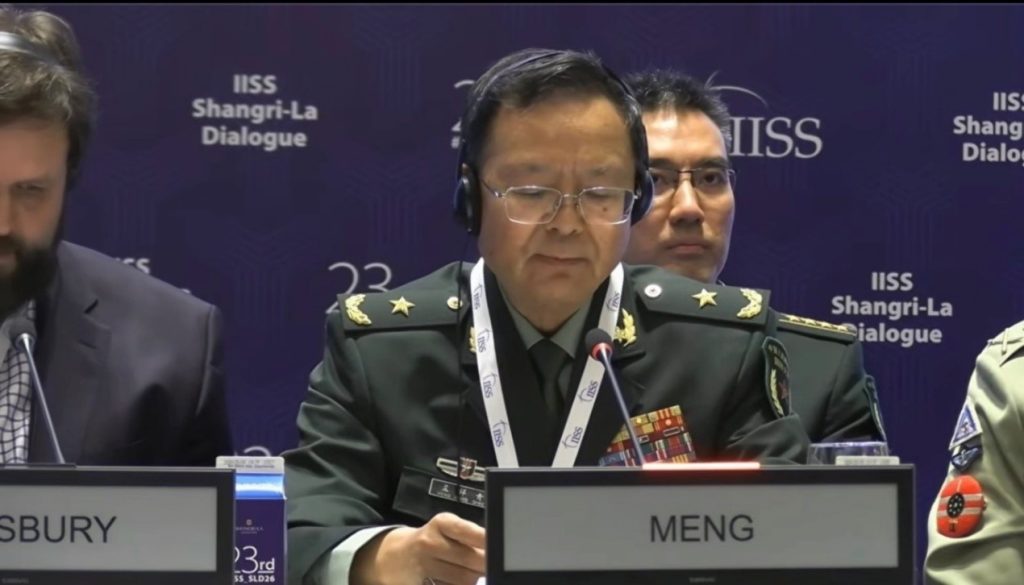
AI-related topics are among the highlights of this year's Shangri-La Dialogue. On Saturday afternoon, Meng Xiangqing, the head of China's delegation to the 23rd Shangri-La Dialogue (SLD) responded to questions on AI development during a parallel session and said that China stresses that the final decision-making authority over weapon systems must remain in human hands, and that it opposes the development and use of lethal intelligent weapons that lack human control.
Meng said that, historically, every major scientific and technological invention has had two significant impacts on human society: on the one hand, it has brought tremendous development; on the other, it may also bring enormous disasters.
Speaking about the impact of AI on warfare, Meng said several military conflicts in recent years have profoundly reflected the influence of AI, while also showing, to a considerable extent, a more dangerous trend in the militarized use of AI. For example, various large models are playing an increasingly important role in decision-making, meaning AI is providing support for war-related decisions.
As a responsible major country, China has played an active role in managing emerging technologies. In his remarks before the interactive session, Meng said it is important to actively manage the risks of emerging technologies and prevent a "rules vacuum" in the military field. Allowing algorithms to control matters of life and death could very likely lead to technological loss of control, and even turn scenes from the US film The Terminator into reality. At all times, the control of war and relevant weapon systems must be firmly kept in human hands, he said.
China has submitted a position paper on regulating the military application of artificial intelligence under the framework of the UN Convention on Certain Conventional Weapons, and supports reaching a legally binding international instrument when conditions are mature, said Meng.
When asked to comment on claims by Benjamin Leon, the US Ambassador to Spain, that China is starting to penetrate into critical areas and Spain must be really careful about this, a spokesperson for the Chinese Embassy in Spain said on Thursday that the US Ambassador to Spain has made groundless accusations and smears against China and Chinese companies, and arbitrarily meddled in China-Spain cooperation, and China firmly rejects such erroneous claims.
The spokesperson made the remarks when also asked to comment on the US ambassador's claims that China aims to secure dominance in critical technologies through enterprises including Huawei which pose "an unacceptable risk" to US national security, and claims that China uses unfair trade practices and economic coercion to expand its strategic influence.
The Chinese Embassy spokesperson stated that China and Spain are both sovereign, independent countries. Bilateral cooperation is always based on the principles of mutual respect, equality and mutual benefit. It is a choice made by the two countries for their own interests, serves the fundamental and long-term interests of both peoples, targets no third party, and will not be subject to outside interference or restrictions. In fact, the deepening of friendly cooperation between China and Spain has received strong support from all walks of life in both nations, the spokesperson added.
"China has always championed open cooperation in science and technology based on mutual respect, fairness, equality and non-discrimination. Chinese firms such as Huawei have operated in Spain in full compliance with local laws and regulations for years, fulfilled social responsibilities, and contributed greatly to local economic and social progress. Arrogance, prejudice and arbitrary labeling can solve no problems and will only harm all parties concerned," the spokesperson continued.
The international community is clear about which country is bent on erecting technological barriers, building a "small yard with high fences," pushing for decoupling and severing industrial and supply chains, and abusing tools such as tariffs, export controls, long-arm jurisdiction and unilateral sanctions, the spokesperson said.
The allegations against Chinese enterprises by the US Ambassador to Spain are totally unfounded in terms of technology and facts, and represent nothing but blatant anti-China political manipulation, according to the embassy spokesperson.
"We hope the US Ambassador to Spain will earnestly implement the important consensuses between the two heads of state, do more that are conducive to boosting mutual trust, and stop making reckless comments and hyping up the so-called 'China threat'," the spokesperson said.
Multiple regions across China on Sunday issued red alerts for rainstorms as heavy, prolonged torrential rain continued to batter the southern and central parts of China, which has resulted in flash flooding, landslides and mudslides. In particular, torrential rain in Southwest China's Chongqing has resulted in three deaths and at least 19 people missing, media reported on Sunday.
An extreme rainstorm hit Chongqing's Yongchuan district from late Saturday to early Sunday morning, with rainfall in the Chashan Zhuhai community in the district reaching 296.6 millimeters from 2 am to 4 am and peak hourly rainfall of 103.6 millimeters. The sudden downpour had left three dead and 17 people missing as of 2:30 pm on Sunday, China Central Television (CCTV) reported on Sunday.
In addition, two people were also unaccounted for after the rain lashed Beibei district in the municipality, according to the Xinhua News Agency.
Following the flooding, the flood control and drought relief headquarters at both the municipal and district levels in Chongqing swiftly activated emergency response measures, with over 400 personnel from public security, emergency response, and fire services deployed to the scene for rescue and emergency operations.
Rescue operations were still underway at full scale as of press time. A total of 168 people have been evacuated and 82 have been relocated and resettled in emergency response efforts, CCTV reported.
After consultation and risk assessment, the Chongqing flood control and drought relief headquarters decided to upgrade to a Level-I flood control emergency response at the city level in the Yongchuan district starting at 2 pm on Sunday.
According to the municipal hydrological monitoring center, heavy rainfall has pushed water levels above warning marks at 37 monitoring stations on 22 small and medium-sized rivers across Chongqing, per CCTV.
China's Ministry of Water Resources and the China Meteorological Administration jointly issued a red alert for flash flood disasters, forecasting very high risks of flash floods (red alert) in localized areas in western Anhui Province and eastern Hubei Province from 8 pm on Sunday to 8 pm on Monday, while other regions, including western Zhejiang, western and southern Anhui, northeastern Jiangxi, and eastern Hubei have a high risk of flash floods (orange alert) triggered by short-duration intense rainfall, China Central Television reported on Sunday.
In Central China's Hubei Province, the meteorological authority in Wuhan city issued a red rainstorm alert on Sunday morning, warning of over 100 millimeters of rainfall within three hours in some areas and risks of urban and rural waterlogging and geological disasters, and flooding in small and medium-sized rivers, and advising the suspension of public gatherings, classes, and business activities, the Hubei Daily reported on Sunday.
This is the second red alert for rainstorms issued by Wuhan within a week, following another red alert released on the evening of May 18. Statistics show that Wuhan has issued a total of 14 rainstorm warnings over the past week, according to the Hubei Daily.
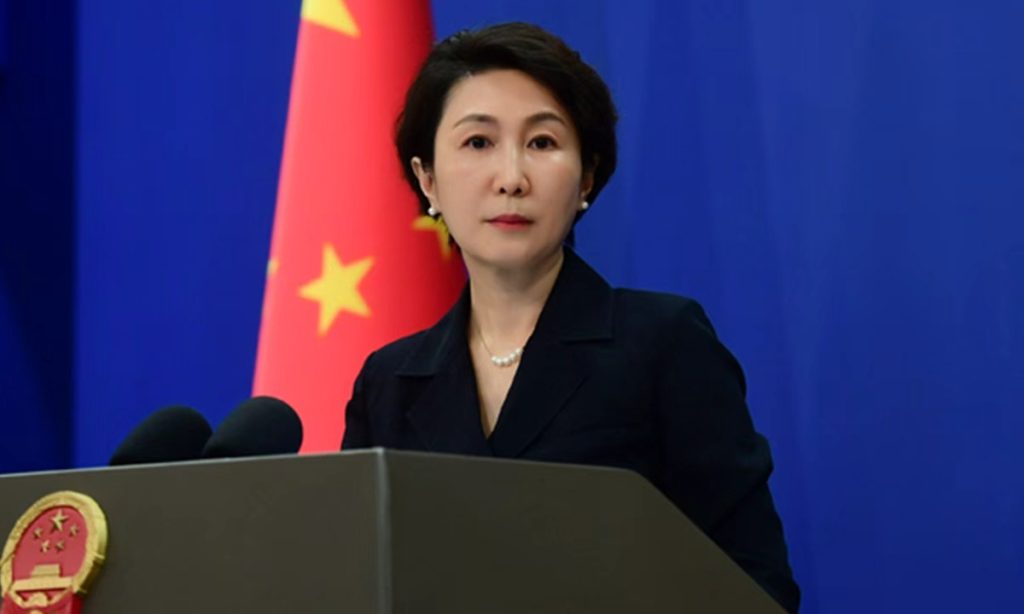
Chinese Foreign Ministry spokesperson Mao Ning said on Monday that claims of "Taiwan independence" separatists are "not worth commenting on," stressing that Chinese military activities have always been in line with international law and practice.
Mao made the remarks when asked to comment on claims made by Taiwan regional authorities that the Chinese mainland deployed more than 100 vessels last week in waters stretching from the Yellow Sea to the South China Sea, with some reportedly near South Korea, Japan and the Philippines.
In her response, Mao also pointed out that China has always been a constructive force in safeguarding regional peace and stability.
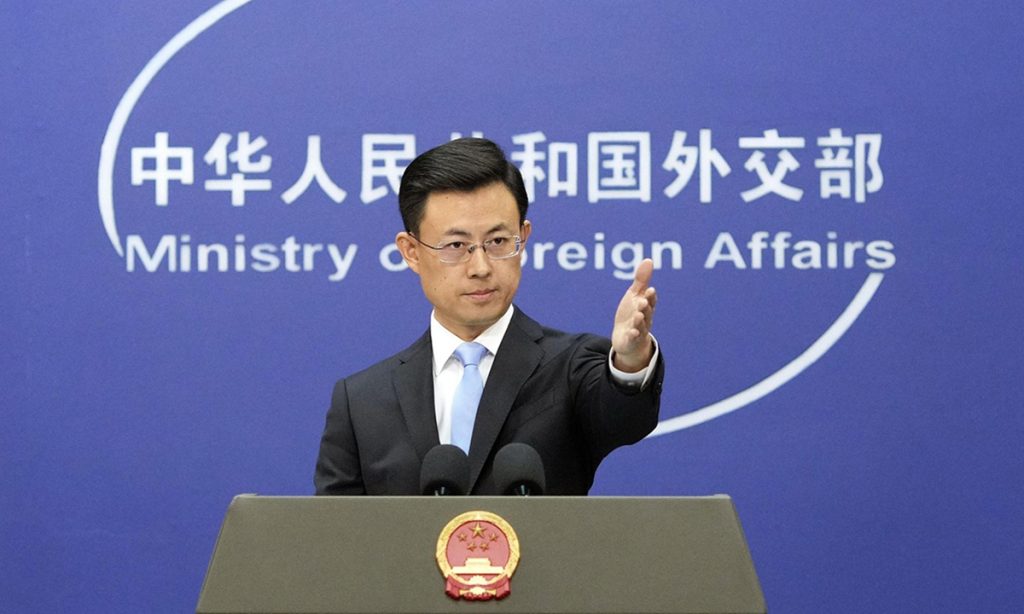
The latest data shows that Japan's defense spending in 2025 increased by 9.7 percent, with both the total amount and its share of GDP reaching record highs, while arms imports surged 76 percent over the past five years. Despite defense spending having risen for 14 consecutive years, right-wing forces in Japan are still clamoring for further increases in military expenditure. This once again shows that Japan is peeling away the disguise of its so-called "peaceful nation" layer by layer and steadily moving down the wrong path of "neo-militarism," Guo Jiakun, a spokesperson for the Chinese Foreign Ministry, said at a regular press conference on Friday.
Guo's remarks were made when asked to comment on reports that Japan's Liberal Democratic Party (LDP) has proposed a draft recommendation calling for higher defense spending targets, citing countries whose defense expenditures account for 3 to 3.5 percent of GDP as references, while Japan only surpassed the 2 percent threshold last year. Meanwhile, sales revenue from defense related businesses among Japan's major military industrial companies has also risen sharply in recent years.
Guo said that a series of documents with full force under international law, including the Potsdam Declaration and the Japanese Instrument of Surrender, clearly stipulated that Japan must be "completely disarmed" and must not maintain industries which would re-arm it for war.
Japan's Constitution also made strict restrictions on the country's military forces, the right of belligerency and the right to war, while a series of related laws established principles such as "exclusively defense-oriented policy."
The military-industrial complex was one of the key driving forces behind Japanese militarism's hijacking of the state and its path toward expansion and aggression in history, Guo said.
"Today, however, right-wing forces in Japan are pushing for surging defense spending and loosening restrictions on exports of lethal weapons, once again supporting the development of the military industry, and even attempting to turn it into an economic pillar to facilitate military expansion and war preparations and serve the process of remilitarization," the spokesperson said.
The spokesperson urged Asia-Pacific countries to remain highly vigilant against and firmly oppose Japan's reckless moves toward "neo-militarism," and jointly safeguard peace and order in the Asia-Pacific region.
Russian President Vladimir Putin arrived in Beijing on Tuesday night for a state visit to China.
At the invitation of Chinese President Xi Jinping, Putin is visiting China from May 19 to 20. This is Putin's 25th visit to China. The two presidents will exchange views on bilateral relations, cooperation in various fields, and international and regional issues of mutual interest, according to China's foreign ministry.
This year marks the 30th anniversary of the establishment of the China-Russia strategic partnership of coordination and the 25th anniversary of the signing of the China-Russia Treaty of Good-Neighborliness and Friendly Cooperation.
The two sides will take this opportunity to continue deepening and elevating relations between China and Russia, so as to inject more stability and positive energy into the world, a Chinese foreign ministry spokesman said.
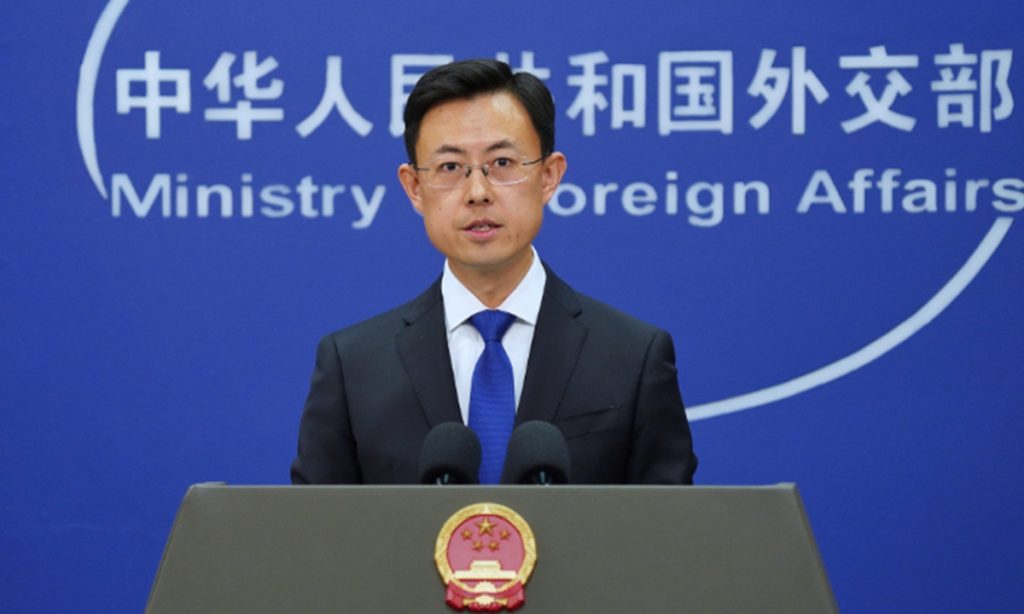
China stands ready to work with the US to translate the new vision into actions in the same direction and jointly work for a steady, sound and sustainable development of China-US relations, Guo Jiakun, spokesperson of Chinese Foreign Ministry, said on Thursday.
A Reuters reporter said that President Xi talked about a new positioning in ties with the US and also he said both leaders agree that building a constructive and strategically stable relation will guide ties in the next three years and beyond. The reporter asked if the spokesperson could elaborate on the new positioning in ties.
President Xi Jinping and President Trump held talks this morning. Both sides agreed on a new vision of building a constructive China-US relationship of strategic stability. This will provide strategic guidance for China-US relations over the next three years and beyond, Guo said.
"Constructive strategic stability" means positive stability with cooperation as the mainstay, healthy stability with competition within proper limits, constant stability with manageable differences, and lasting stability with expectable peace, Guo noted.
In response to a second question about Taiwan question mentioned by the Chinese leader, Guo said that President Xi Jinping noted during the talks with President Trump, the Taiwan question is the most important issue in China-US relations. If it is handled properly, the bilateral relationship will enjoy overall stability. Otherwise, the two countries will have clashes and even conflicts, putting the entire relationship in great jeopardy.
"Taiwan independence" and cross-Strait peace are as irreconcilable as fire and water. Safeguarding peace and stability across the Taiwan Strait is the biggest common denominator between China and the US. The US side must exercise extra caution in handling the Taiwan question, Guo said.
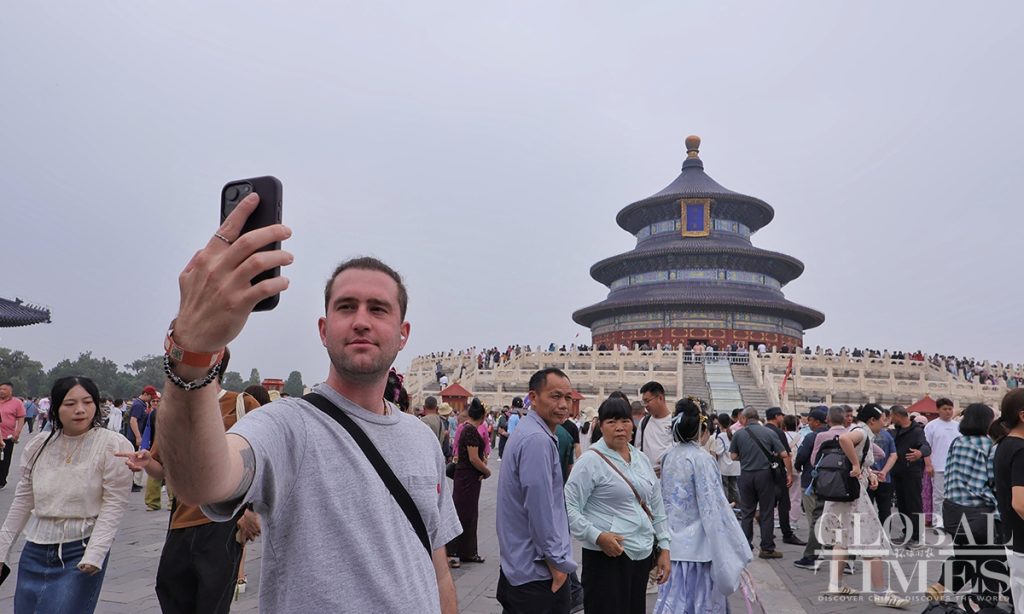
"This is the matching photo spot where Chinese and US heads of state posed for pictures yesterday. Come take a photo here for a keepsake," such exclamations rippled across the front of the Hall of Prayer for Good Harvests in Beijing's Temple of Heaven on Friday afternoon. Crowds of tourists flocked to the very same spot where two leaders had posed for photos the previous day, to check in and recreate the iconic shots, the Global Times reporters saw at the site. Arriving at the Hall of Prayer for Good Harvests at around 2 pm on Friday, the reporters noted that the exact location where the two leaders posed for photos during their meeting a day earlier has become a popular check-in spot for both Chinese and foreign tourists.
Reporters also witnessed visitors calling out to their family and friends in turn to stand at the same photo spot that best recreates the vantage point used by the two leaders, capturing precious moments. Adelson (pseudonym), a tourist from the US, told the Global Times that having his photo taken at this matching photo spot was "impressive," adding, "I think my family will think that's pretty neat."
He also said that he was excited that the two countries are talking and having dialogue. As China and the US strengthen their relations, Adelson believes people from both countries will benefit. "We have opportunities for win‑win relationships to better both countries and learn a lot from each other. I think Americans have a lot to offer, and so do the Chinese," he said.
Danusha Seneviratne, a visitor from Australia, said he would "never forget" witnessing such a historic moment in Beijing. Standing at the iconic spot where the two heads of state posed for pictures, he said he found it "really symbolic." In Danusha's view, the Temple of Heaven stands as a symbol of peace and harmony, making it entirely fitting for the meeting between the two leaders. He said [talks were] all about harmony and bringing the world together, and "I think China is a fantastic place to do that."
Another Australian visitor, Tim, said he had anticipated increased crowds at the Temple of Heaven given the previous day's meeting between the two leaders, yet he had not expected such a massive turnout.
Besides the throngs of international tourists visiting the Temple of Heaven and snapping photos at the exact location, numerous domestic travelers from across the country are also among the queue of visitors taking photos. Zhang Xiangrun, a 19‑year‑old student from Suqian, East China's Jiangsu Province, told the Global Times that seeing crowds flocking to the matching photo spot reflected the widespread attention the meeting attracted both in China and internationally, and he can also feel the pride in the nation's prosperity from Chinese visitors' big smiles.
"Come and see - this is where the leaders of the two countries posed for their picture!" Global Times reporters repeatedly overheard the excited exclamation at the site. A tourist surnamed Gao from Nantong, Jiangsu Province, was one of them. Standing at the matching photo spot, she pointed excitedly to tell the reporters that "this is the very vantage point where the two state leaders posed for photos yesterday."
"I wish for world peace and national prosperity," Gao said sincerely after taking her picture, gazing toward the Hall of Prayer for Good Harvests, which she described as a symbol of harmony.
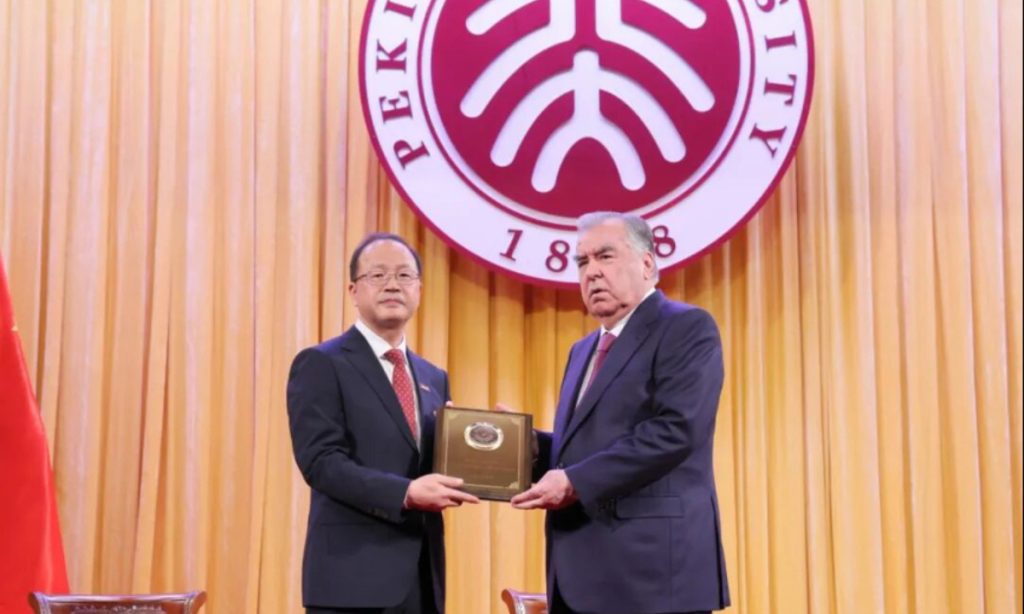
A ceremony conferring an honorary professorship on Tajikistan’s President Emomali Rahmon, along with a speech event, was held at Peking University on Tuesday, the university said on Wednesday. Rahmon, who is currently on a state visit to China, reviewed the achievements of bilateral cooperation across multiple fields during his speech, expressed hope for further promoting civilizational exchanges and educational cooperation between Tajikistan and China, and encouraged young people to study diligently and strive for progress, the university said.
He Guangcai, Secretary of the CPC Peking University Committee and Chair of the Peking University Council, and Gong Qihuang, President of the university, presented President Rahmon with the honorary professor plaque and certificate, conferring upon him the title of Honorary Professor of Peking University in recognition of his outstanding contributions to deepening China-Tajikistan friendship and cooperation, safeguarding regional peace and stability, promoting regional economic and social development, and advancing reforms in regional and global governance systems, according to the university.
Rahmon is currently in China for a state visit from May 11 to 14, according to the Chinese Foreign Ministry.
Tajikistan has always attached great importance to cooperation with China in higher education, scientific and technological innovation, and academic exchanges, viewing them as among the most important components of bilateral relations, Rahmon said during the ceremony, according to the university’s website.
Enthusiasm among Tajik youth for studying in China has continued to grow, while the number of Confucius Institutes and Luban Workshops in Tajikistan has steadily increased, he said, the university’s website showed.
Since 2005, Peking University has admitted a total of 47 students from Tajikistan, and to date, more than 10,000 Tajik students have completed their studies at Chinese universities, per the university.
Rahmon also expressed his expectation that Tajikistan and Chinese universities, including Peking University, will further deepen cooperation across various fields in the future. Drawing on his own personal experience, he also encouraged the younger generations of both countries to expand their knowledge and jointly write a new chapter in China-Tajikistan good-neighborly friendship and the Silk Road spirit, according to the university’s website.
Rahmon was born to a peasant family on October 5, 1952, in Tajikistan's Dangara district. He graduated from Technical Lyceum No. 40 of Kalininabad city (presently Sarband) in 1969, and served in the Pacific Navy Military Force from 1971 to 1974. In 1982, he graduated from the Faculty of Economics at the Tajik National University, according to the Xinhua News Agency.
Editor's Note: This year marks the 80th anniversary of the beginning of the International Military Tribunal for the Far East, also known as the Tokyo Trial. More than a legal proceeding, it was shaped by "decisive moments in history": prosecutors pursuing evidence, witnesses testifying, and judges upholding justice amid geopolitical strain. Eight decades on, Chinese collectors and scholars continue to unearthing archives, filling gaps in history, and advance unfinished justice—reinforcing historical conclusions with primary sources and drawing lessons for the present.
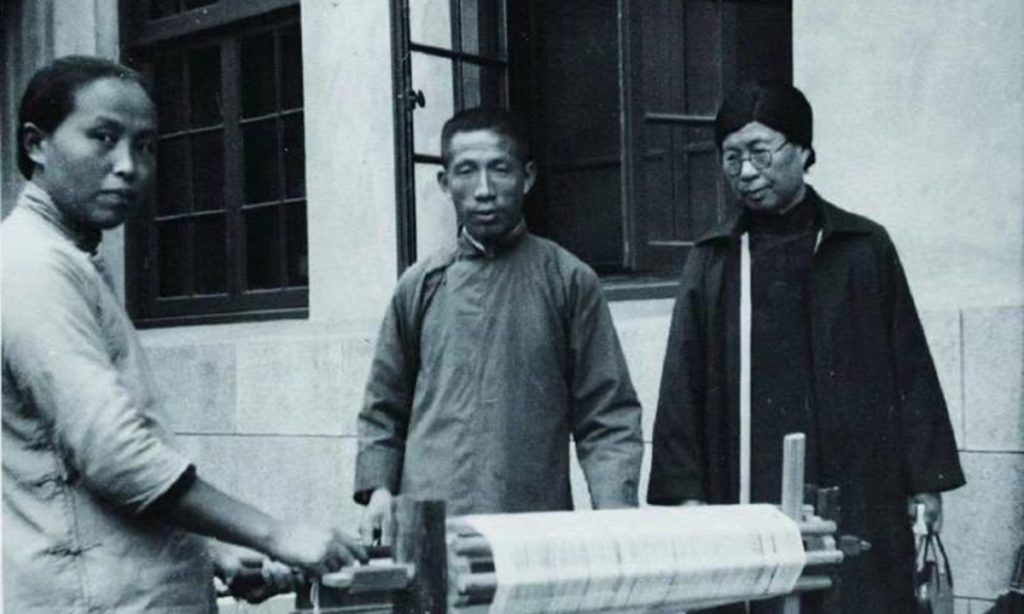
Cheng Ruifang, who documented the Japanese atrocities in Nanjing in her diary between December 8, 1937 and March 1, 1938, later submitted a written testimony based on her experiences to the 1946 International Military Tribunal for the Far East. Her diary is also regarded as the diary of the "Chinese Anne Frank" for its firsthand account of suffering and survival during wartime.
"Now it is midnight. I am sitting here to write this diary and cannot go to sleep because tonight I have experienced the taste of being a slave of a toppled country … After collecting more information, [we] heard that eleven girls, all told, were dragged away tonight. [We] did not know where they would be dragged to and be molested. I wanted to cry. What kind of future would these girls have?"
On the night of December 17, 1937, Cheng Ruifang, the housemaster of Ginling College and the head of the Health Unit of the Fourth District (Ginling College Refugee Shelter) of the Nanjing Safety Zone, wrote in her diary that she "could not help but feel heartbroken."
At the time Cheng Ruifang was already 62 years old. After the fall of Nanjing, she remained and, together with Minnie Vautrin, a US missionary and head of the Ginling College Refugee Shelter, and Chen Feiran, formed a "three-person emergency committee." Vautrin later described her as "an excellent general," according to the People's Daily Overseas Edition.
Due to health reasons, Cheng Ruifang was later unable to testify in person at the International Military Tribunal for the Far East. However, she submitted a written testimony to the tribunal, which was admitted as prosecution exhibit No.308.
In her statement, she wrote: "I am 71 years old and serve as the housemother of Ginling Women's College. After the fall of Nanjing in December 1937, the campus was declared a safety zone … Ginling Women's College sheltered more than 10,000 women and children." She then listed several instances of rape, looting and killings committed by Japanese soldiers on campus that she had witnessed, per the report.
Jiang Liangqin, a professor of the Department of Chinese History at Nanjing University, told the Global Times that, after rigorous academic comparison, Cheng Ruifang's testimony is fully consistent with her diary entries, which are even more detailed and comprehensive. Her diary has thus become key evidence in documenting Japanese wartime atrocities in China.
"Previous studies on the Nanjing Safety Zone have largely focused on Western participants. In reality, however, only some 20 Westerners remained in Nanjing and were responsible for protecting more than 200,000 refugees. As a result, much of the day-to-day administrative work in the refugee camps, including management and the provision of food and fuel, was carried out through the coordinated efforts of Chinese personnel," Jiang noted.
The expert added that through Cheng' s words, it is clear she was a woman with stable emotions and great practical ability. There were times when even Minnie Vautrin could not resolve certain problems, but Cheng Ruifang was able to handle them successfully.
"From a historical perspective, the diary of Cheng Ruifang provides a direct and valuable account of the crucial work carried out by Chinese administrators, organizers, and frontline staff in the Nanjing Safety Zone. It helps correct earlier scholarship that focused heavily on Western participants while largely overlooking the contributions of the Chinese staff. As such, it stands as an important source for understanding how the Safety Zone actually functioned on the ground."
Jiang further observed that Cheng, as a Chinese eyewitness, offers a perspective that complements the diaries of Westerners. For example, her detailed descriptions of Vautrin's emaciated appearance and extreme exhaustion are not found in Vautrin's own diary, according to the expert.
The Diary of Cheng Ruifang is not only the first known account of the Nanjing Massacre recorded by a Chinese eyewitness based on her own experiences, but also the only surviving testimony from a Chinese woman' s perspective.
Jiang said the diary offers a rare window into the resolve of Chinese workers in the Nanjing Safety Zone, their efforts to aid fellow civilians, and the emotional toll of living under occupation. It provides invaluable firsthand material for understanding the survival conditions, moral courage and mutual support of ordinary Chinese people during the massacre.
"That's precisely why the diary of Cheng Ruifang is so invaluable," the expert added.