Dive into 'Chinese Anne Frank's Diary': A historian revisits a firsthand record of the Nanjing Massacre
Editor's Note: This year marks the 80th anniversary of the beginning of the International Military Tribunal for the Far East, also known as the Tokyo Trial. More than a legal proceeding, it was shaped by "decisive moments in history": prosecutors pursuing evidence, witnesses testifying, and judges upholding justice amid geopolitical strain. Eight decades on, Chinese collectors and scholars continue to unearthing archives, filling gaps in history, and advance unfinished justice—reinforcing historical conclusions with primary sources and drawing lessons for the present.
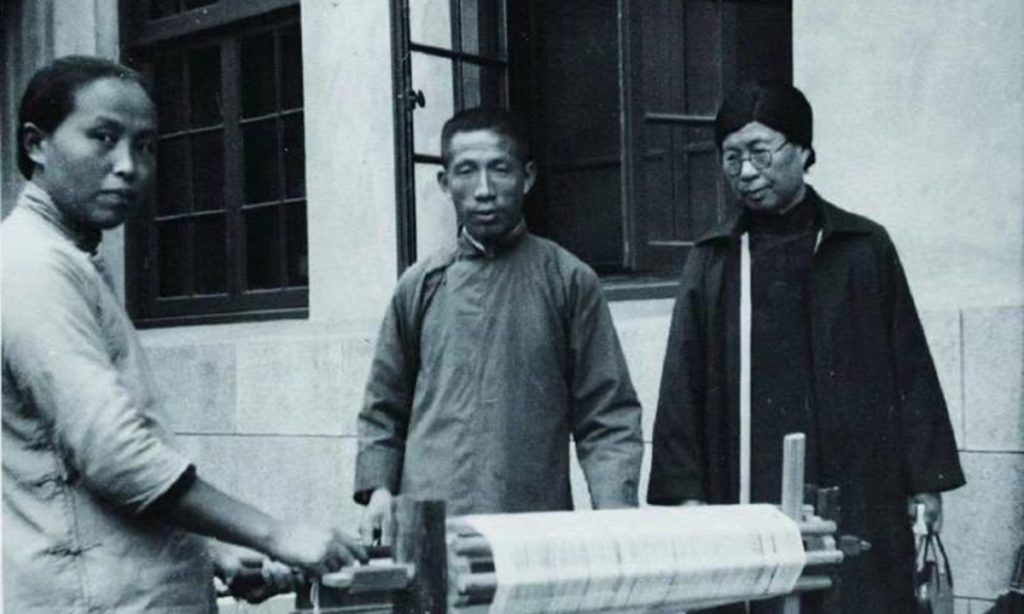
Cheng Ruifang, who documented the Japanese atrocities in Nanjing in her diary between December 8, 1937 and March 1, 1938, later submitted a written testimony based on her experiences to the 1946 International Military Tribunal for the Far East. Her diary is also regarded as the diary of the "Chinese Anne Frank" for its firsthand account of suffering and survival during wartime.
"Now it is midnight. I am sitting here to write this diary and cannot go to sleep because tonight I have experienced the taste of being a slave of a toppled country … After collecting more information, [we] heard that eleven girls, all told, were dragged away tonight. [We] did not know where they would be dragged to and be molested. I wanted to cry. What kind of future would these girls have?"
On the night of December 17, 1937, Cheng Ruifang, the housemaster of Ginling College and the head of the Health Unit of the Fourth District (Ginling College Refugee Shelter) of the Nanjing Safety Zone, wrote in her diary that she "could not help but feel heartbroken."
At the time Cheng Ruifang was already 62 years old. After the fall of Nanjing, she remained and, together with Minnie Vautrin, a US missionary and head of the Ginling College Refugee Shelter, and Chen Feiran, formed a "three-person emergency committee." Vautrin later described her as "an excellent general," according to the People's Daily Overseas Edition.
Due to health reasons, Cheng Ruifang was later unable to testify in person at the International Military Tribunal for the Far East. However, she submitted a written testimony to the tribunal, which was admitted as prosecution exhibit No.308.
In her statement, she wrote: "I am 71 years old and serve as the housemother of Ginling Women's College. After the fall of Nanjing in December 1937, the campus was declared a safety zone … Ginling Women's College sheltered more than 10,000 women and children." She then listed several instances of rape, looting and killings committed by Japanese soldiers on campus that she had witnessed, per the report.
Jiang Liangqin, a professor of the Department of Chinese History at Nanjing University, told the Global Times that, after rigorous academic comparison, Cheng Ruifang's testimony is fully consistent with her diary entries, which are even more detailed and comprehensive. Her diary has thus become key evidence in documenting Japanese wartime atrocities in China.
"Previous studies on the Nanjing Safety Zone have largely focused on Western participants. In reality, however, only some 20 Westerners remained in Nanjing and were responsible for protecting more than 200,000 refugees. As a result, much of the day-to-day administrative work in the refugee camps, including management and the provision of food and fuel, was carried out through the coordinated efforts of Chinese personnel," Jiang noted.
The expert added that through Cheng' s words, it is clear she was a woman with stable emotions and great practical ability. There were times when even Minnie Vautrin could not resolve certain problems, but Cheng Ruifang was able to handle them successfully.
"From a historical perspective, the diary of Cheng Ruifang provides a direct and valuable account of the crucial work carried out by Chinese administrators, organizers, and frontline staff in the Nanjing Safety Zone. It helps correct earlier scholarship that focused heavily on Western participants while largely overlooking the contributions of the Chinese staff. As such, it stands as an important source for understanding how the Safety Zone actually functioned on the ground."
Jiang further observed that Cheng, as a Chinese eyewitness, offers a perspective that complements the diaries of Westerners. For example, her detailed descriptions of Vautrin's emaciated appearance and extreme exhaustion are not found in Vautrin's own diary, according to the expert.
The Diary of Cheng Ruifang is not only the first known account of the Nanjing Massacre recorded by a Chinese eyewitness based on her own experiences, but also the only surviving testimony from a Chinese woman' s perspective.
Jiang said the diary offers a rare window into the resolve of Chinese workers in the Nanjing Safety Zone, their efforts to aid fellow civilians, and the emotional toll of living under occupation. It provides invaluable firsthand material for understanding the survival conditions, moral courage and mutual support of ordinary Chinese people during the massacre.
"That's precisely why the diary of Cheng Ruifang is so invaluable," the expert added.